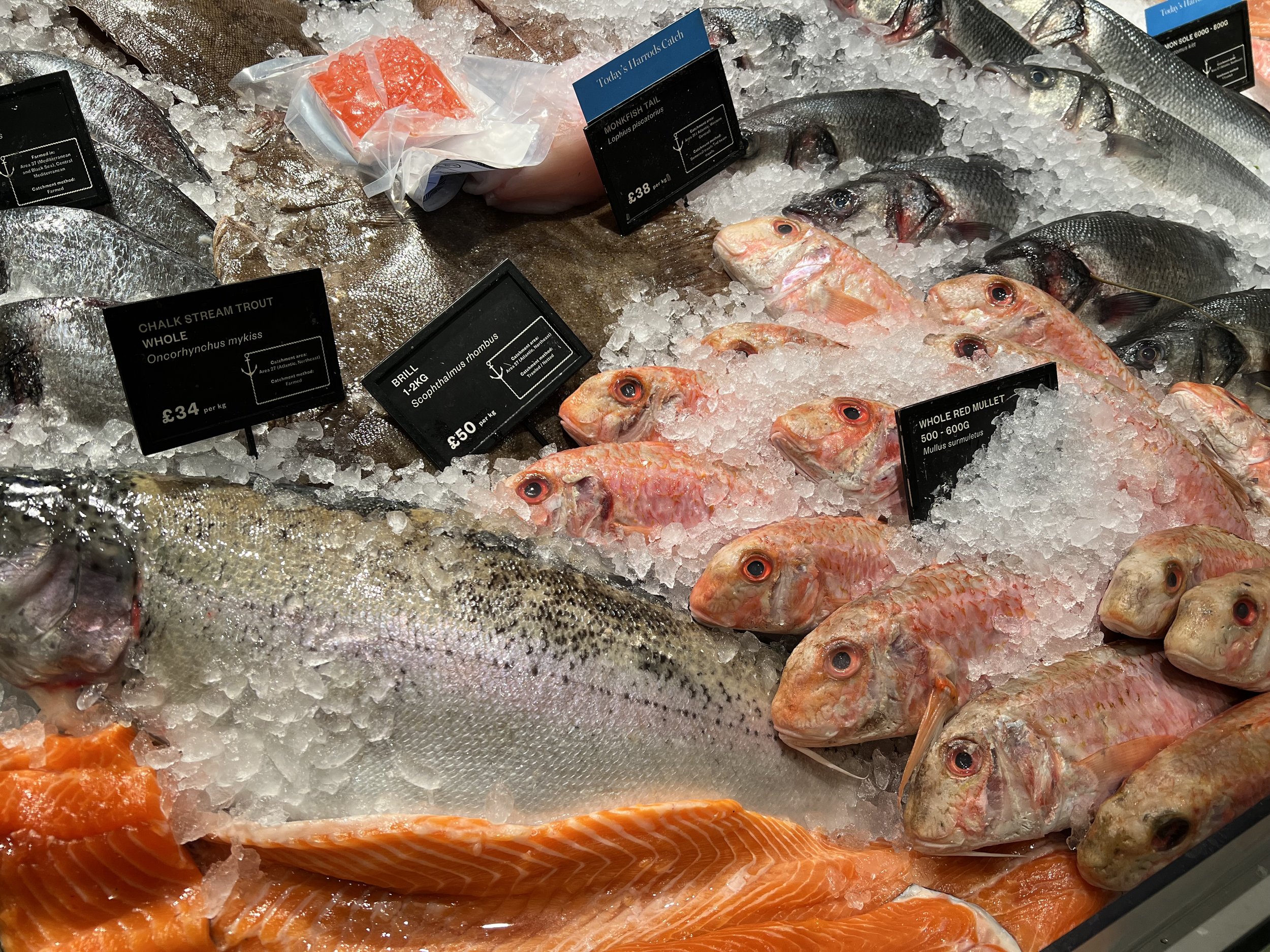
Feb 05 - Mar 12 · Week One · Macro Unit
Macro UX: Eat the Rich
Revati Banerji I MA UX Design I London College of Communication
Brief: Design a currency based on food
Team: Niki Marathia · Keya Bangera · Mary Mehtarizadeh · Ayesha Saleem · Eniola Aminu · Oindrilla Sinha · Mathew Yue · Jaime Santos Guerrero
Macro UX began with a series of briefs set by industry partners. We were assigned to work with Revolut, a fintech company, in collaboration with Manfredi Montaretto Marullo (Product Designer) and Gwendolyn Peh (Head of Product Design, Crypto, CX, AI). This was particularly exciting as they would review our work throughout the five-week timeline, giving us industry insight and potentially connecting us to future opportunities.
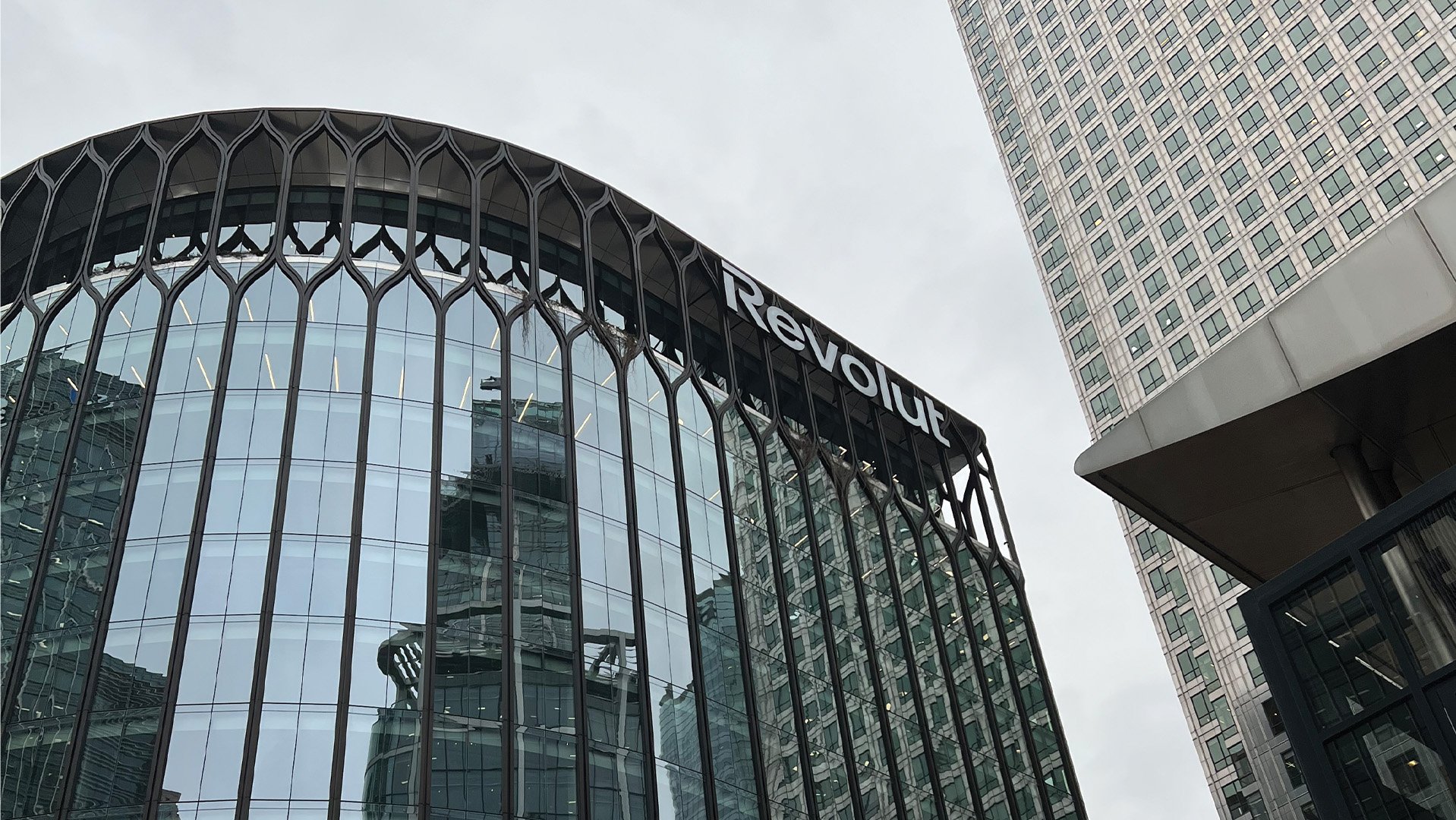
Fig. 1. Our partner for the Macro UX brief, Revolut, headquartered at Canary Wharf, London. Photographed by the author.
We began our secondary research with a reading quoted in the brief:
“If food is treated as a code, the messages it encodes will be found in the pattern of social relations being expressed.” — Mary Douglas, Deciphering a Meal, 1972
Douglas (1972) describes food as a system of communication rather than simply nourishment. She analyses how eating follows structured patterns, from breakfast to the last nightcap, across the routine week and through special occasions such as fast days and celebrations. These patterns reveal hierarchy, relationships, and boundaries, where access to certain meals and food experiences signals levels of inclusion, status and social capital.
Secondary Research
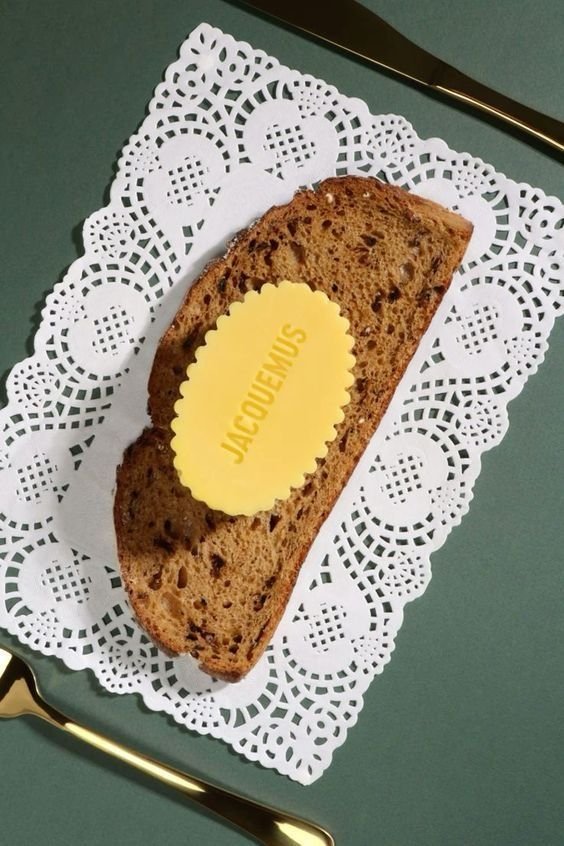

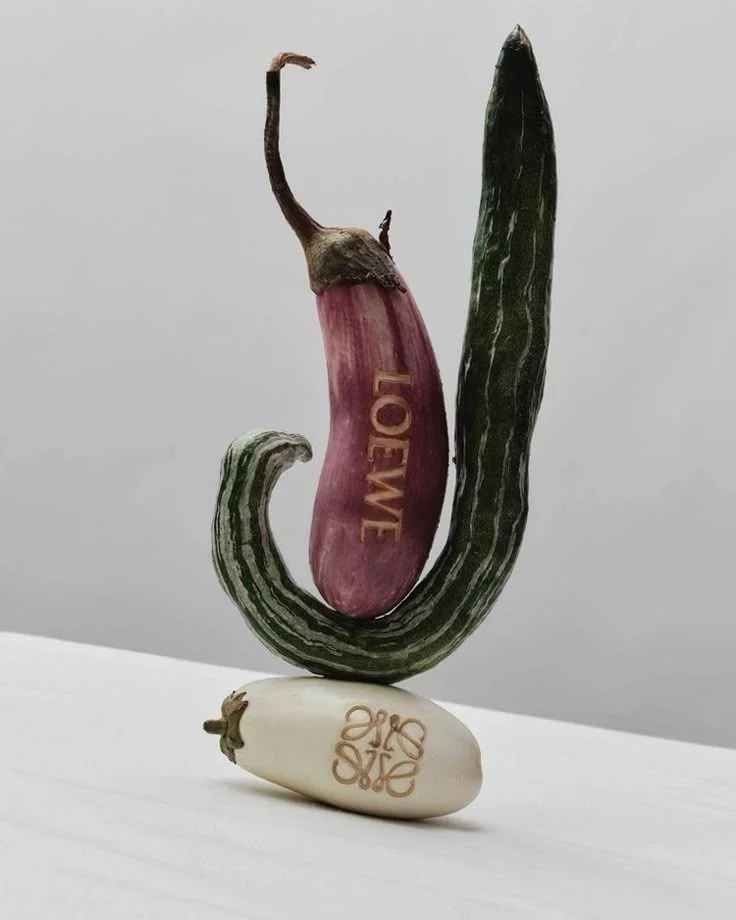
Fig. 4. Examples of how everyday ingredients are used in sensory marketing to position high-end products.
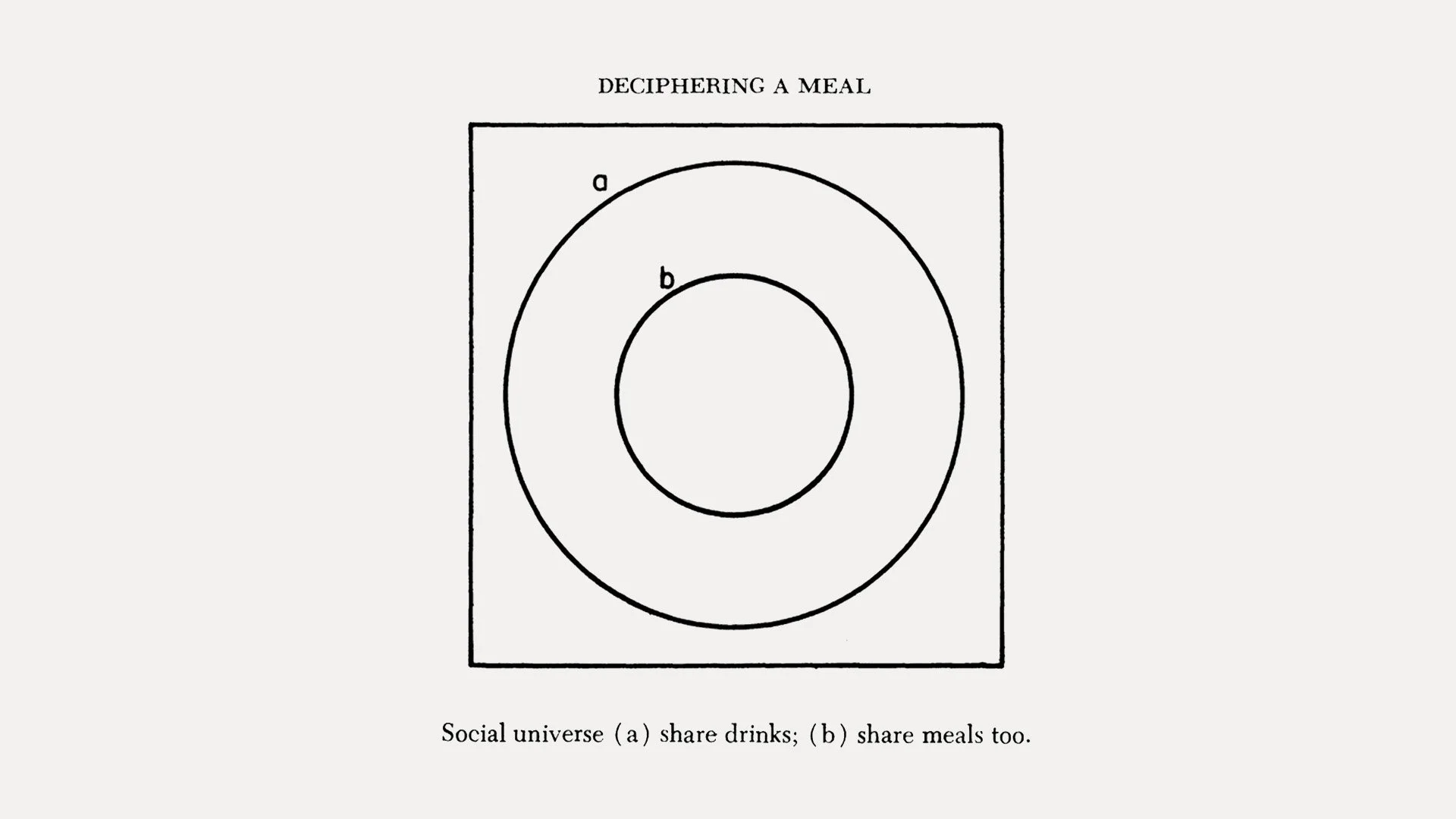
Fig. 2. Drinks versus meals signal different levels of social proximity. Drinks are more widely shared, while meals are reserved for a smaller, more intimate circle (Douglas, 1972).
Building on this, Berger’s essay The Eaters and the Eaten (1976) highlights how food reflects class and power. For labour, eating is tied to production and sustenance, while in bourgeois settings it is separated from work and becomes a social experience with its own set of rituals. Together, these readings position food as a system that encodes relationships, access and inequality.
This prompted us to look at viral food trends that reflect similar patterns of value and behaviour, particularly the growing focus on protein culture. What was once a basic dietary requirement now feels increasingly like a lifestyle marker, shaped by fitness culture and social media. Protein intake begins to function as a status signal, a flex, much like financial success.
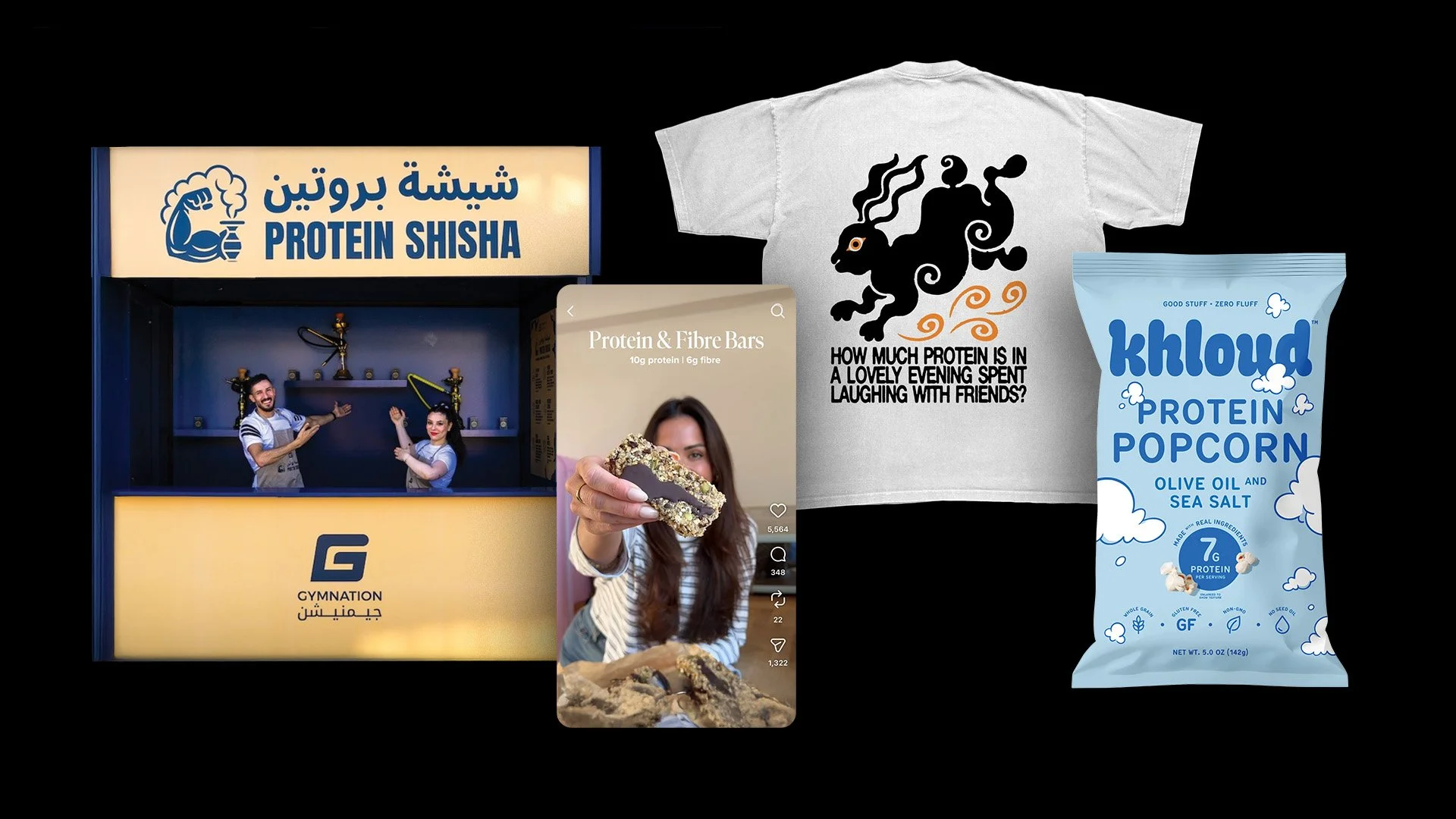
Fig. 3. Examples of protein’s takeover across social media, products and lifestyle branding.
Another current trend is sensory marketing, where luxury brands use everyday ingredients as part of their visual language. In these contexts, food is aestheticised and used as a tool to communicate texture, indulgence, or minimalism. This raised ethical questions around how and why working-class ingredients are recontextualised to market expensive products that those same communities cannot afford.
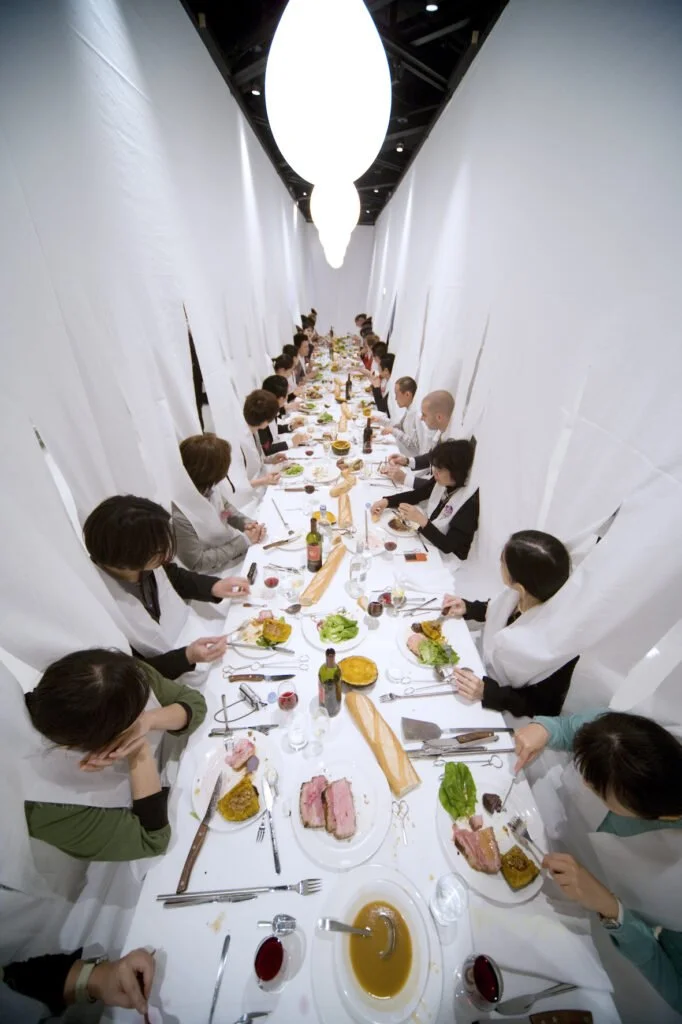
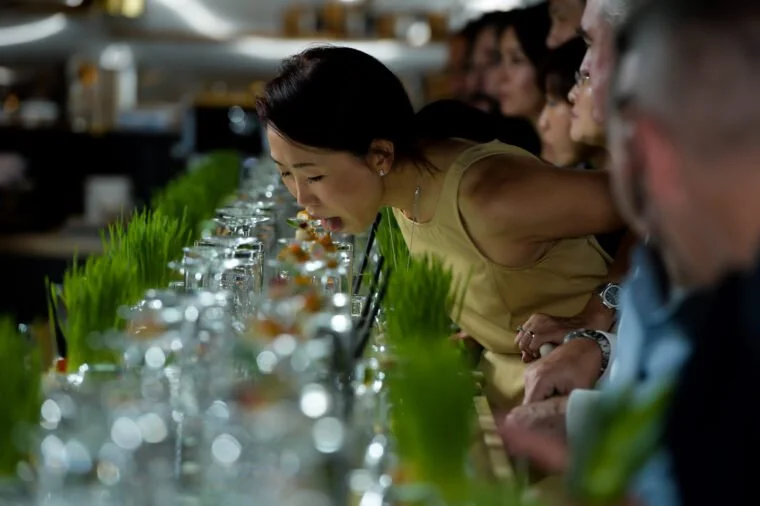
To take a breather from literary research, we explored the work of eating designer Marije Vogelzang to understand how these themes could be translated into tangible experiences.

Reflection
Fig. 5. Examples of Marije Vogelzang’s work exploring food as an educational medium, its rituals and social behaviours.
I really enjoyed this week of research, even though it was extensive and open-ended, and we didn’t land on a clear direction. It made us consider the layers and implications of food, and how it can be communicated as both a currency and an experience.
Across the research, a clear theme emerged: both money and food are not inherently inclusive. Access to both is shaped by systems that determine who is included and who is left out.
References:
Berger, J. (1976) The Eaters and the Eaten, pp. 61–66.
Daniel Molina. (n.d.) Loewe Perfumes. [online]
Available at: https://daniel-molina.com/Loewe-Perfumes
[Accessed 15 April 2026].
DeadHungry. (n.d.) Skims. [online]
Available at: https://deadhungry.co/studio/skims
[Accessed 15 April 2026].
Douglas, M. (1972) Deciphering a Meal, Daedalus, 101(1), pp. 61–81.
GymNation. (2026) GymNation Launches the World’s First Protein Shisha Bar. [online]
Available at: https://gymnation.com/blogs/gymnation-launches-the-world-s-first-protein-shisha-bar/
[Accessed 15 April 2026].
Kbar Design. (2025) Instagram Post. [Instagram]
Available at: https://www.instagram.com/p/DPBz8S_DGli/
[Accessed 15 April 2026].
Khloud. (n.d.) Khloud. [online]
Available at:https://khloudfoods.com/
[Accessed 15 April 2026].
Lewis, N. (2025) Instagram Post. [Instagram]
Available at: https://www.instagram.com/p/DQ6Q3-FjDEh/
[Accessed 15 April 2026].
Vogelzang, M. (n.d.) Feed Love. [online]
Available at: https://www.marijevogelzang.nl/past-projects/feed-love/
[Accessed 31 March 2026].
Vogelzang, M. (n.d.) Grazing City Scapes. [online]
Available at: https://www.marijevogelzang.nl/past-projects/grazing-city-scapes/
[Accessed 31 March 2026].
Vogelzang, M. (n.d.) On Food and Education. [online]
Available at: https://thecommontable.eu/on-food-and-education-marije-vogelzang/
[Accessed 31 March 2026].