Feb 05 - Mar 12 · Week Two · Macro Unit
Macro UX: Eat the Rich
Revati Banerji I MA UX Design I London College of Communication
Brief: Design a currency based on food
Team: Niki Marathia · Keya Bangera · Mary Mehtarizadeh · Ayesha Saleem · Eniola Aminu · Oindrilla Sinha · Mathew Yue · Jaime Santos Guerrero
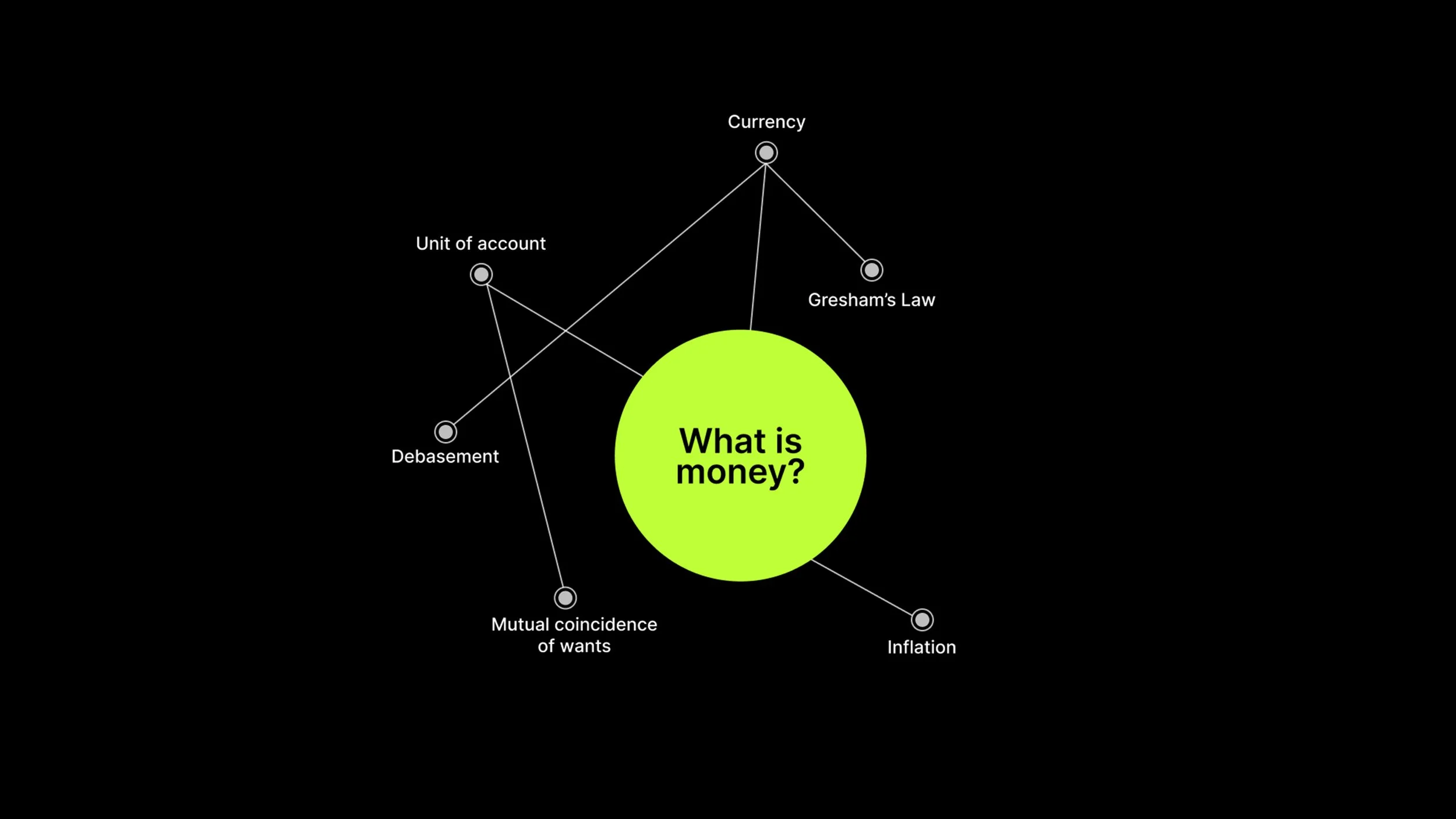
We began this week by mapping out what defines money. Through a diagram, we broke it down into key principles to establish a baseline for what makes conventional currency and its exchange efficient and accepted.
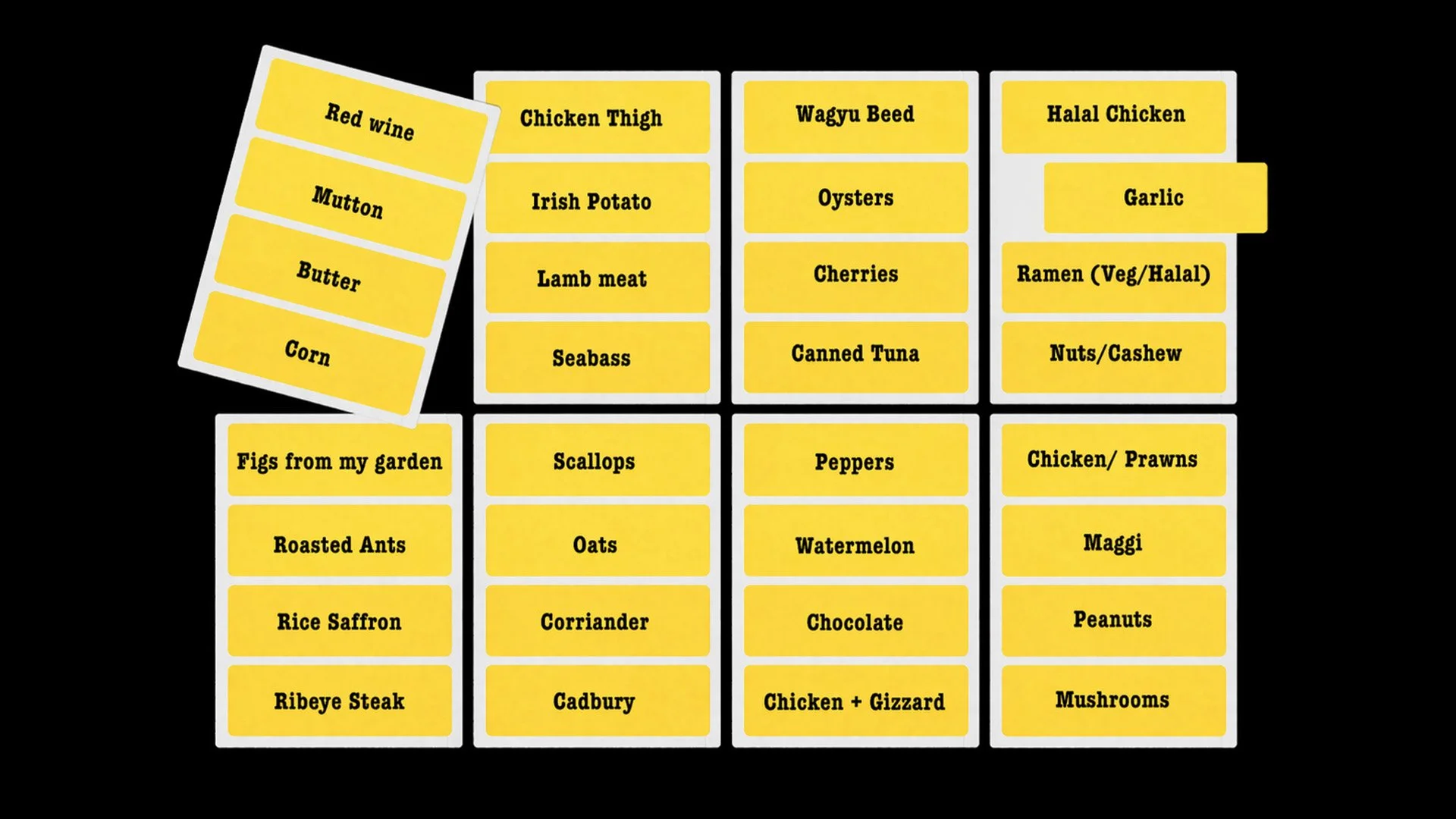
Using this as a reference point, we moved into a food trading exercise to test how food might function as a medium of exchange. The exercise showed that food struggles with the mutual coincidence of wants, where exchanges only worked when both people wanted what the other had. Unlike money, where value is standardised and each unit holds equal value, food does not.
We had all written down our favourite foods, which meant fewer exchanges were made. Even though vegetables were nutritious, items like wine and chocolate were desirable and easier to exchange. Dietary preferences like non-vegetarian and halal restrictions influenced decisions. This showed that food is not a neutral currency, but is shaped by taste, cultural preference and perception. It created friction, showing us that the system needed to be more inclusive. We decided to make our food currency vegetarian, limit it to a small set of food types, and embrace perishability, as this would encourage exchange and reduce hoarding.
Fig. 1. Diagram mapping key principles of conventional currency. Designed by Niki Marathia.
Fig. 2. Food items exchanged during the exercise, revealing subjective and uneven value. Digitised by the author.
Fig. 3. Comparing monetary systems with a food-based currency to identify factors that influence exchange. Consolidated by Jaime Santos Guerrero.
To examine this more closely, we looked at Donella Meadows’ concept of leverage points, focusing on how small changes in rules, goals and values could shift behaviour. This helped us think beyond food as an item of exchange and instead consider the wider system around it.
From there, we began exploring how food might operate as a decentralised currency. Here, decentralised means that value is shaped through local exchange, participation and shared understanding, rather than being fixed by a central authority. Value becomes tied to freshness, durability and desirability, rather than the standardised values conventional money depends on.
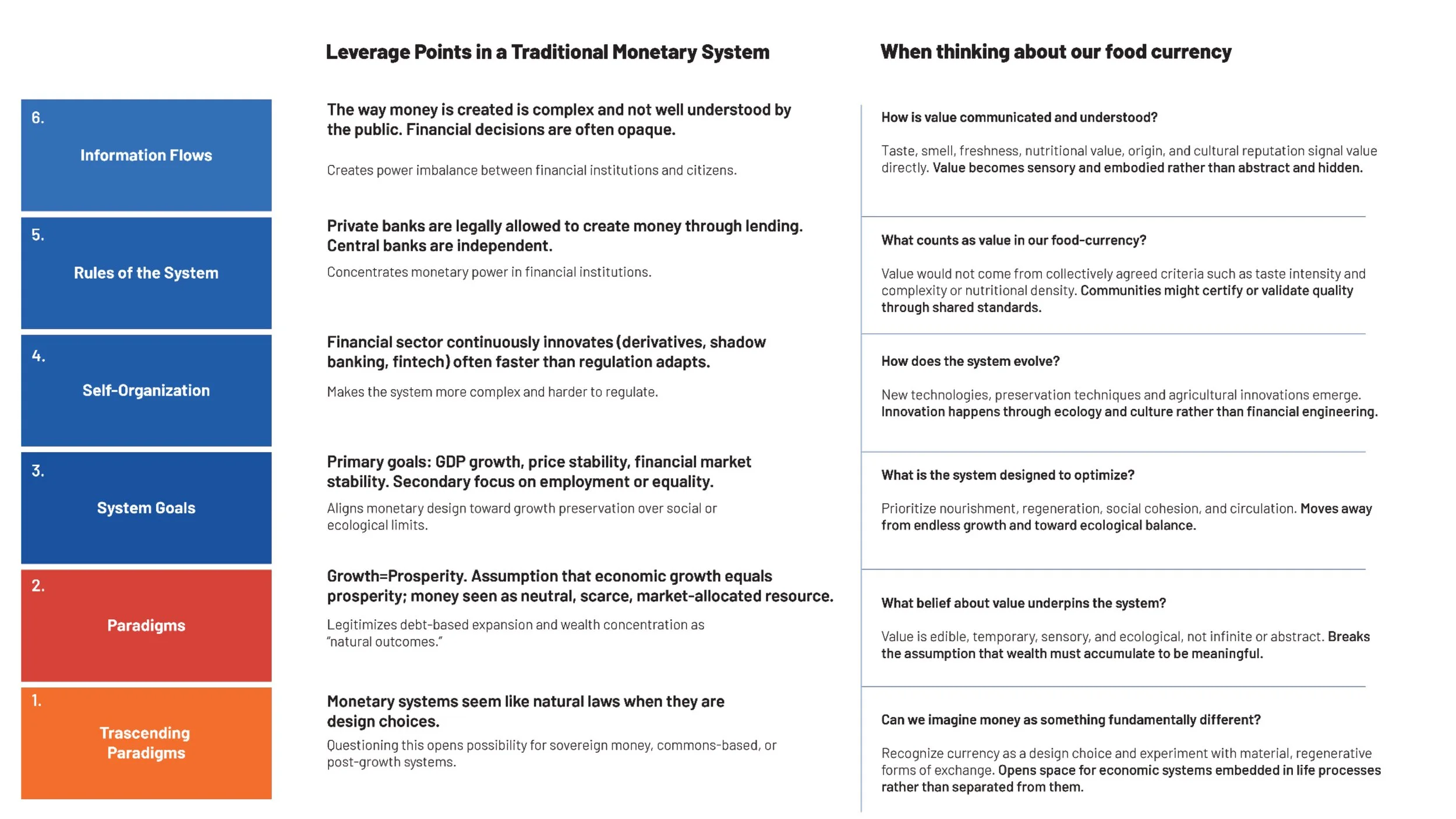
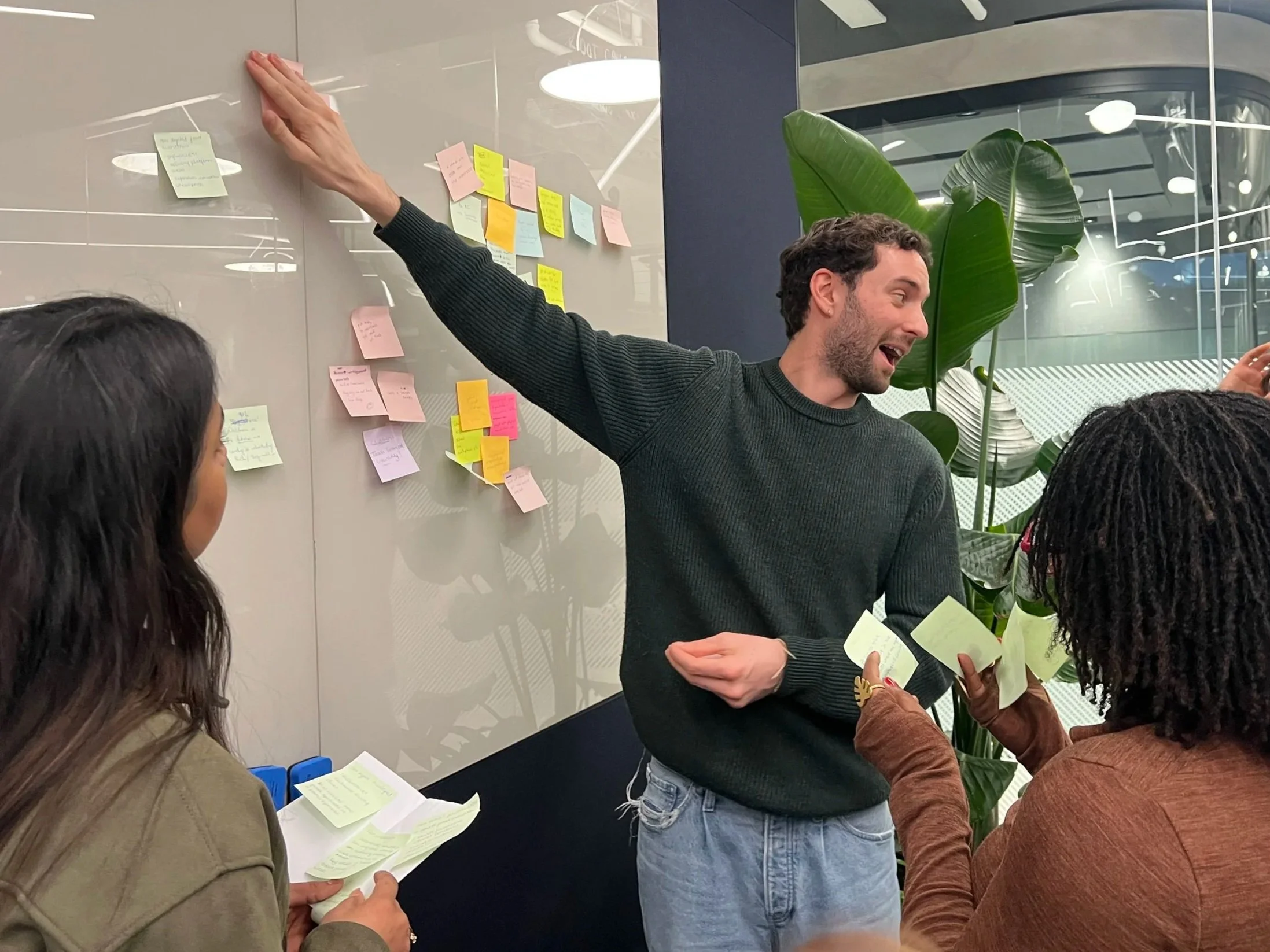
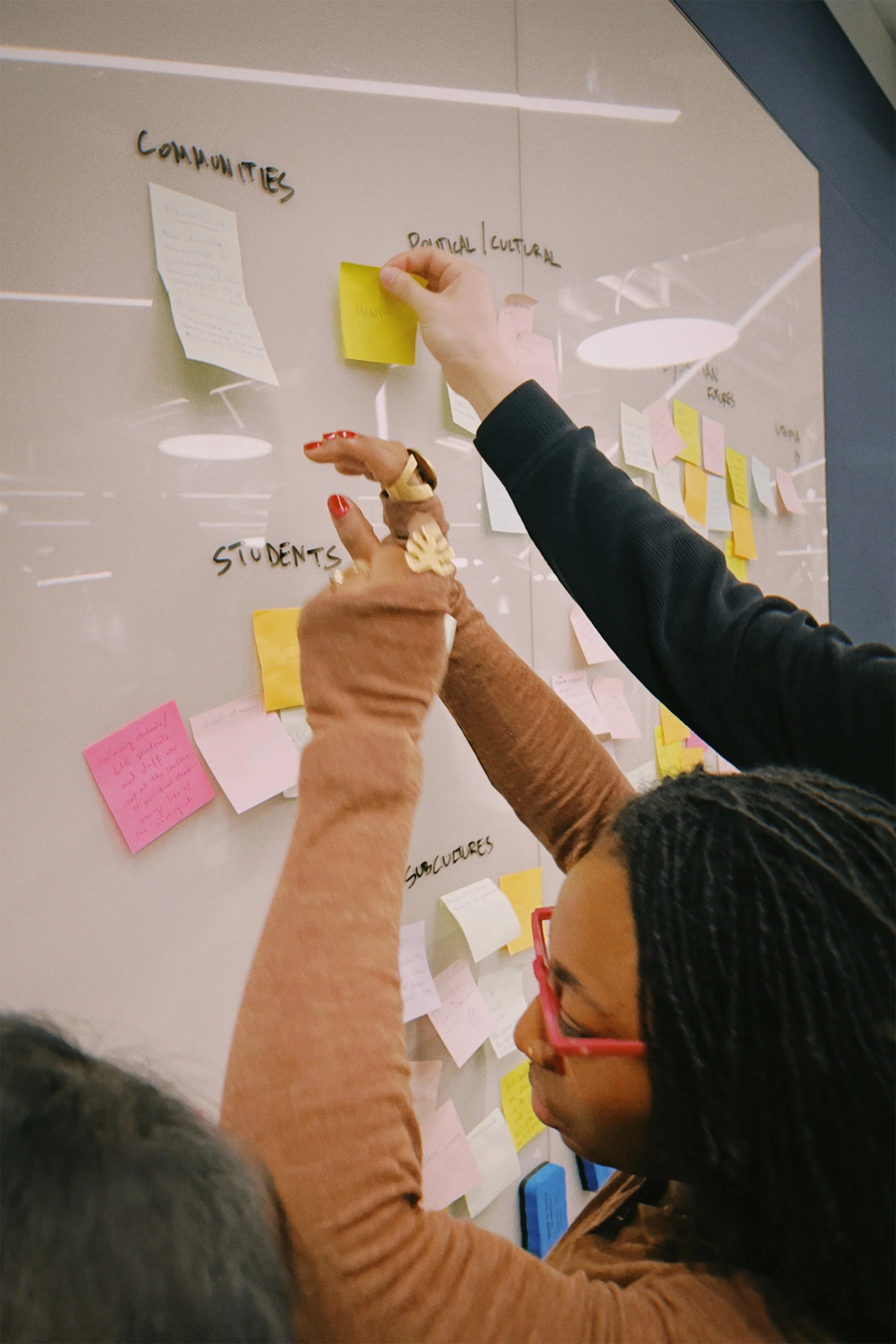
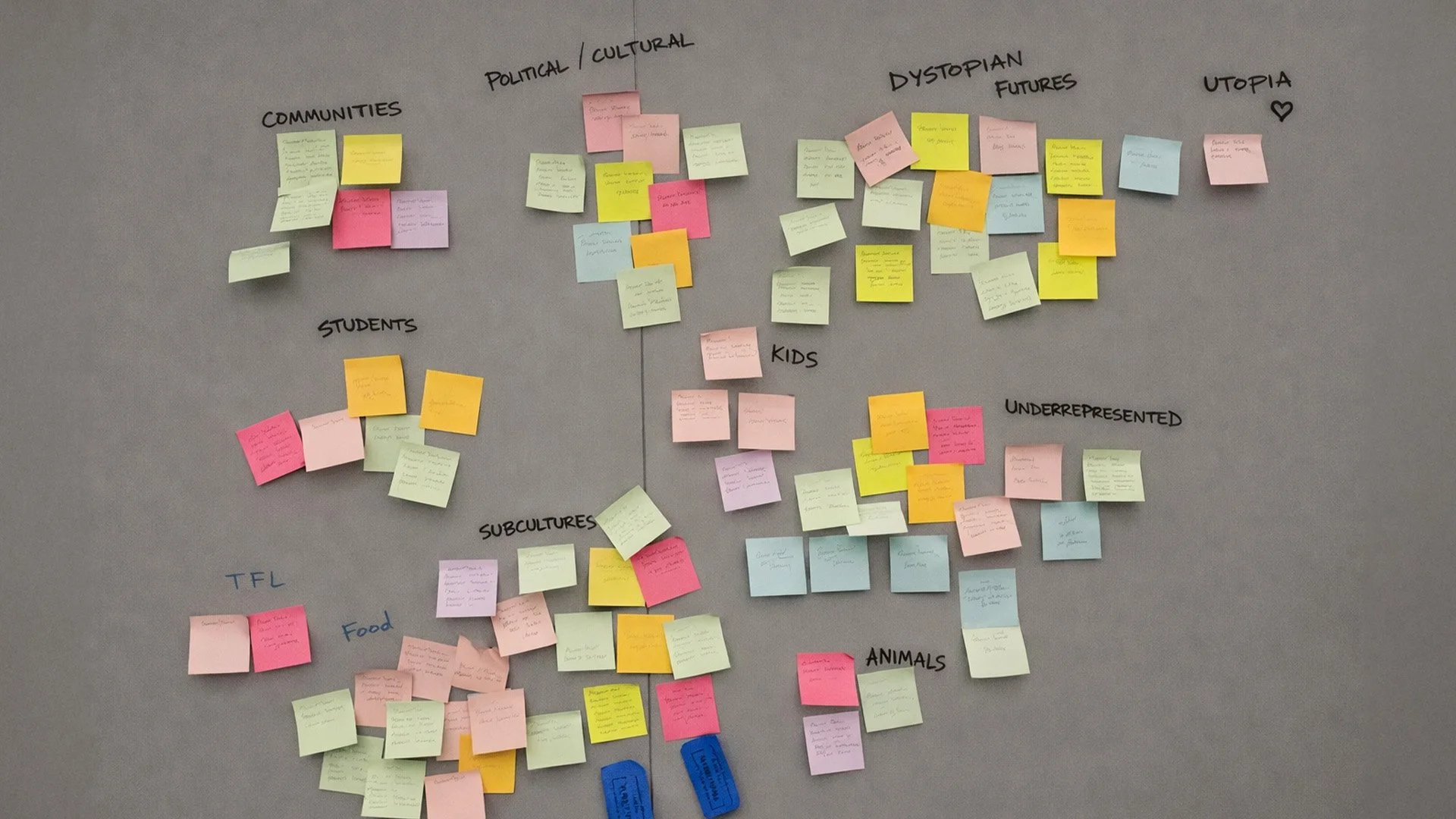
Fig. 4. Rapid ideation and affinity mapping to identify the user for our food-based currency. Photographed by the author; final image regenerated using ChatGPT for clarity.
Partner Feedback
Later, we presented our ideas at the Revolut office, proposing themes around transparency and decentralised food exchange. The presentation felt dense and overwhelming, as we shared too much without narrowing down a direction.
We were encouraged to identify who we are designing for and focus our research. We took part in a Crazy 8s exercise, each generating eight ideas in eight minutes. It helped us produce directions and, after affinity mapping the results, we leaned towards a speculative dystopian currency.
Reflection
During tutorials, our lecturers advised us not to add a speculative angle, as the space of money and food is already complex. Instead, we were encouraged to refine what exists and ground our ideas in a user and outcome. This reminded us that the brief is about Eat the Rich, pushing us to question who holds power, who benefits, and how value is redistributed. Moving forward, the focus is to simplify and test, rather than add more layers.
References:
Meadows, D.H. (1999) Leverage Points: Places to Intervene in a System. Hartland, VT: The Sustainability Institute.