Nov 27 - Dec 11 · Week Twelve · Studio Practices
The UX of Text
Revati Banerji I MA UX Design I London College of Communication
Brief: Design an experience that reveals the materiality of text
Team: Sakshi Pansares · Merrin O’Connor · Xiaoqin Qin · Vibhooti Sharma · Jaime Santos Guerrero
The group met in Soho over the weekend for some toilet research!
Surprisingly, many of the toilets were clean and some even had flower arrangements. However, the toilets at the Toucan were full of graffiti, so not all was lost. One thing to note is that Jaime, the only male in our group, had more luck finding graffiti in toilets than the women did. This made us think about what role gender plays in this particular behaviour of self-expression.
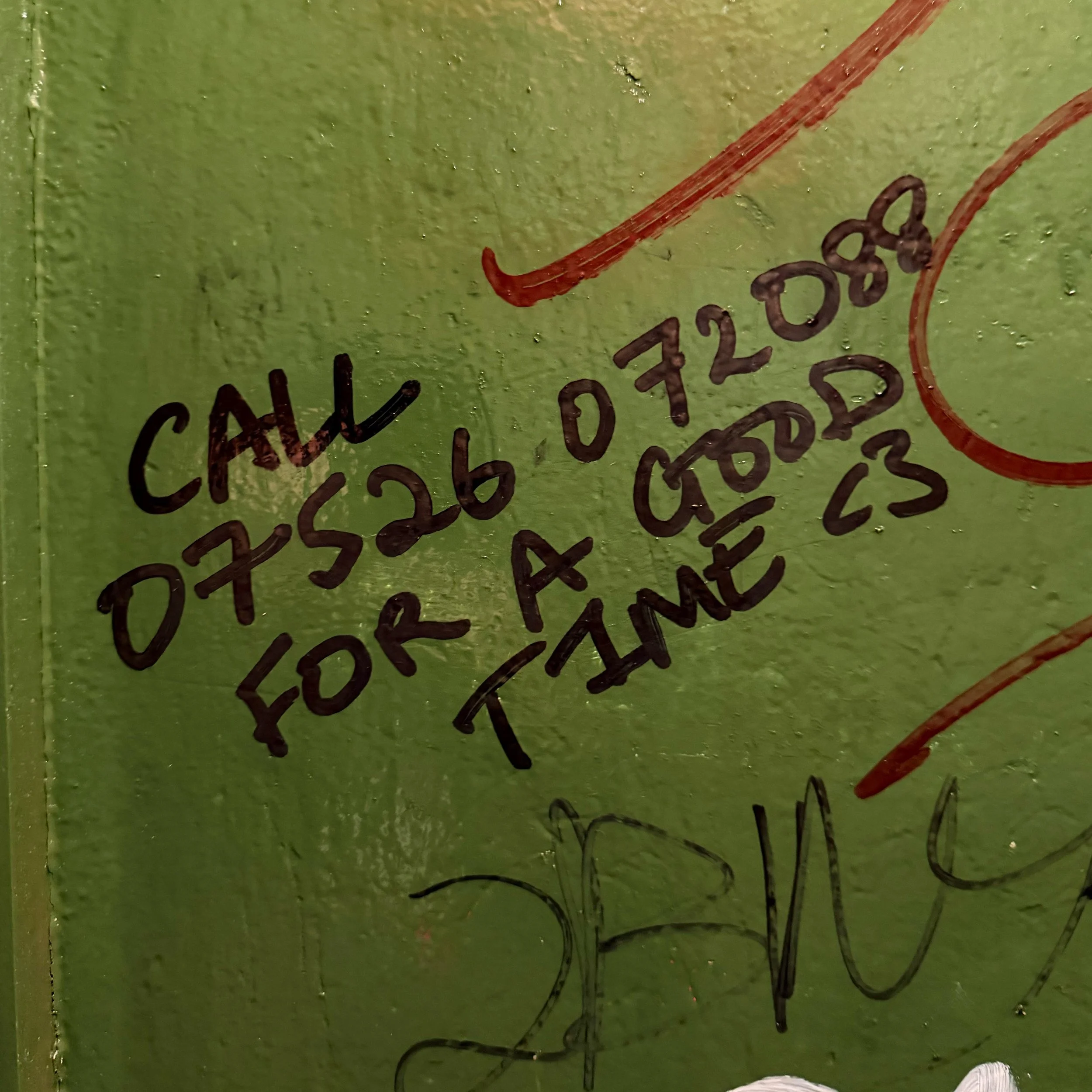
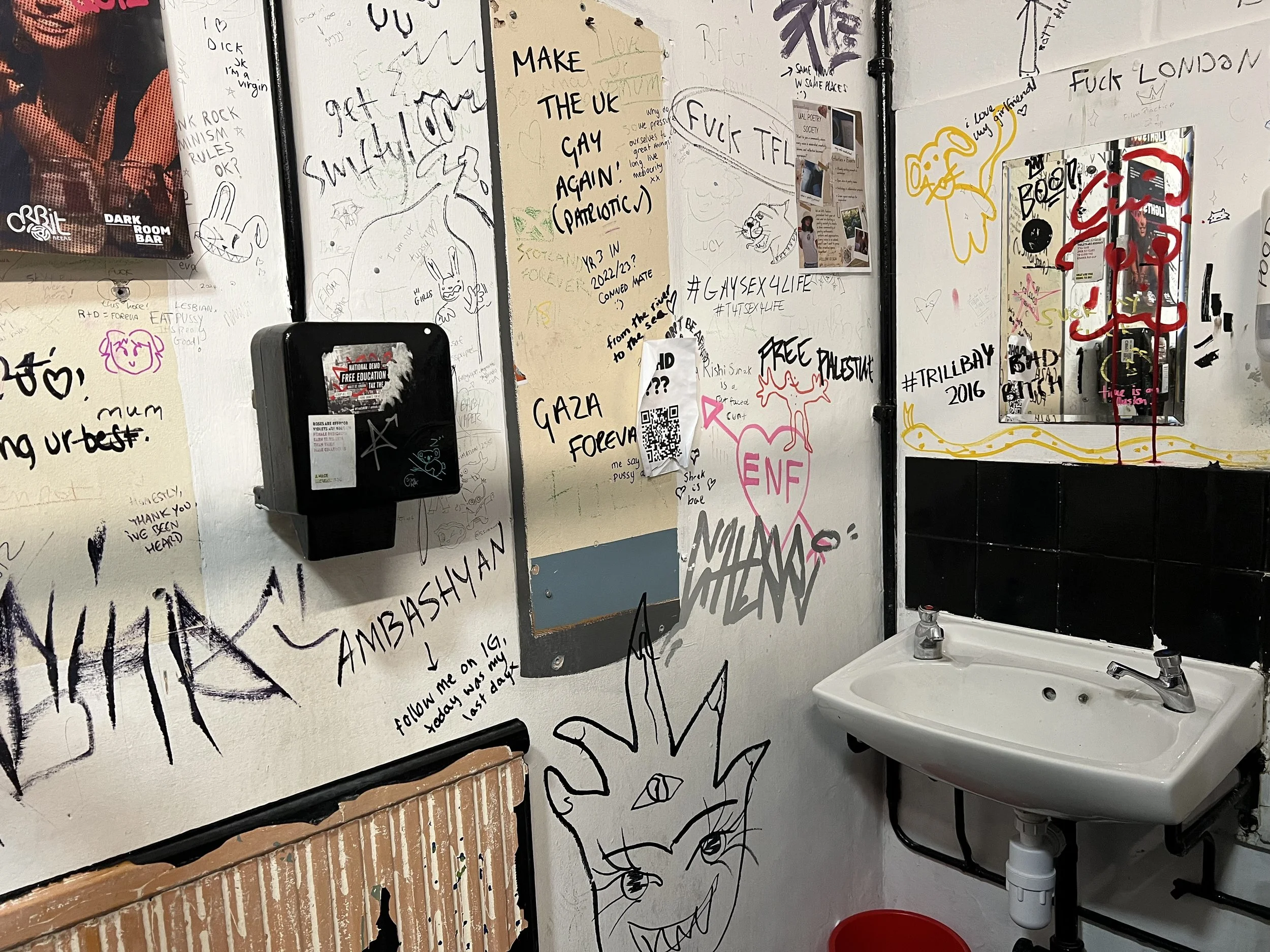
Fig. 1. Selected images from our toilet research documenting latrinalia. Photography by group.
Sound design by Jaime Santos Guerrero, using a combination of borrowed sound effects from online sources.
Our feedback was that we created an engaging experience and successfully explored the materiality of text, although our concept did not offer a particularly fresh perspective.
Separately, John Fass quoted Mary Douglas’s idea that “dirt is matter out of place”, which became a starting point for my essay. I really enjoyed this project, the research was interesting, everyone was on the ball and excited to be creating. I’ve definitely starting noticing toilets more than i did before.
References:
Douglas, M. (1966) Purity and danger: An analysis of concepts of pollution and taboo. London: Routledge.
Data
Physicalisation
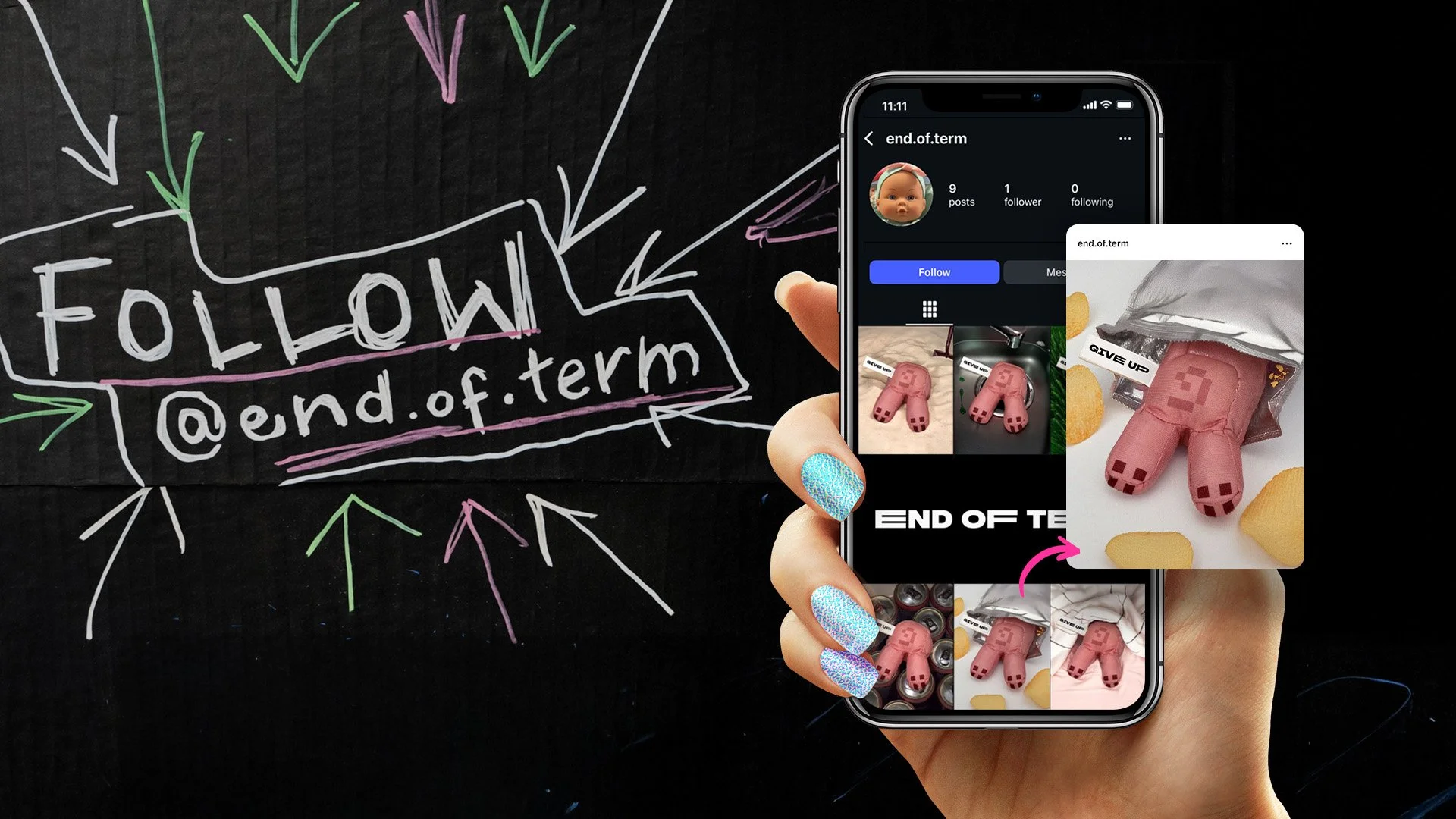
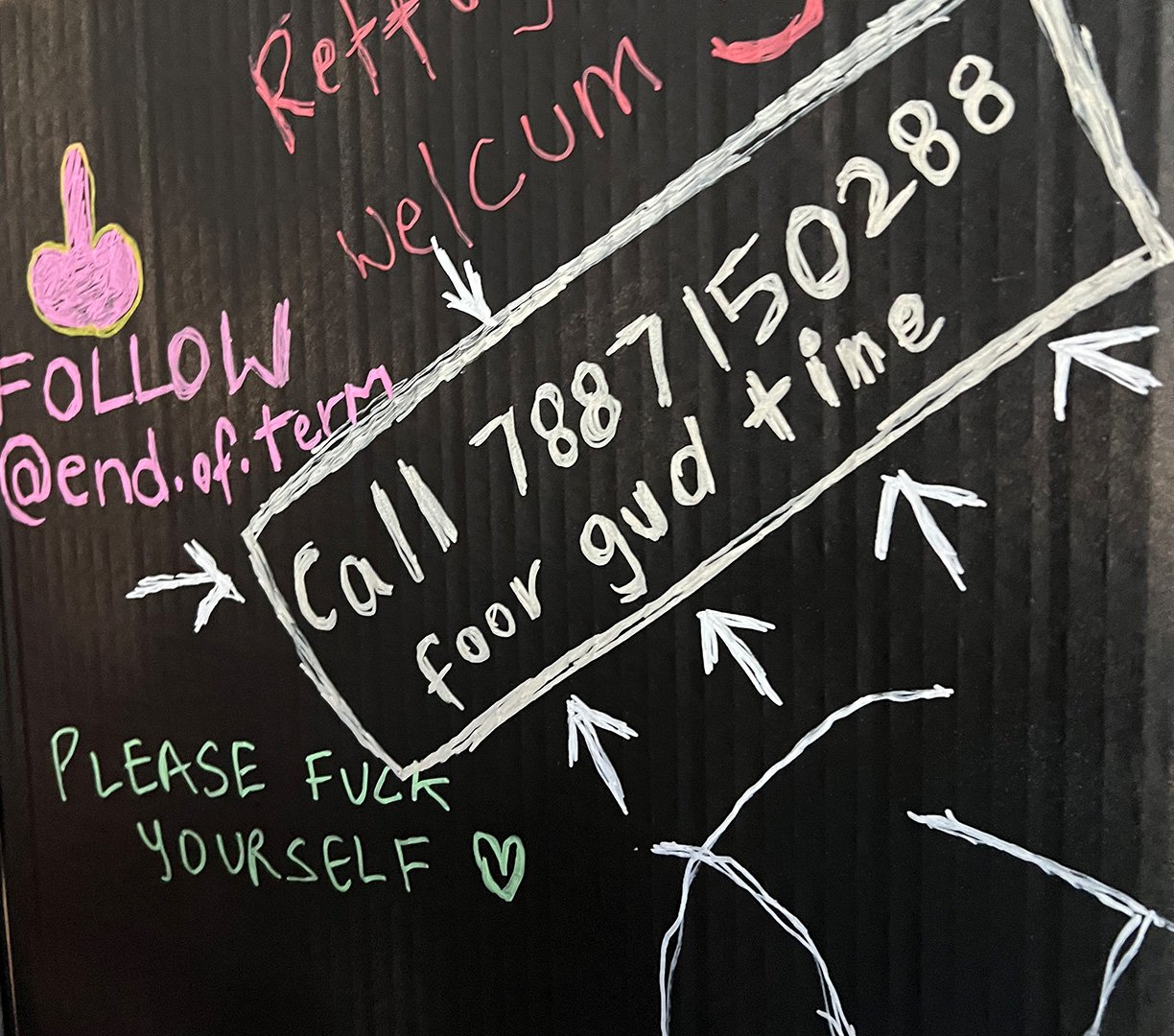
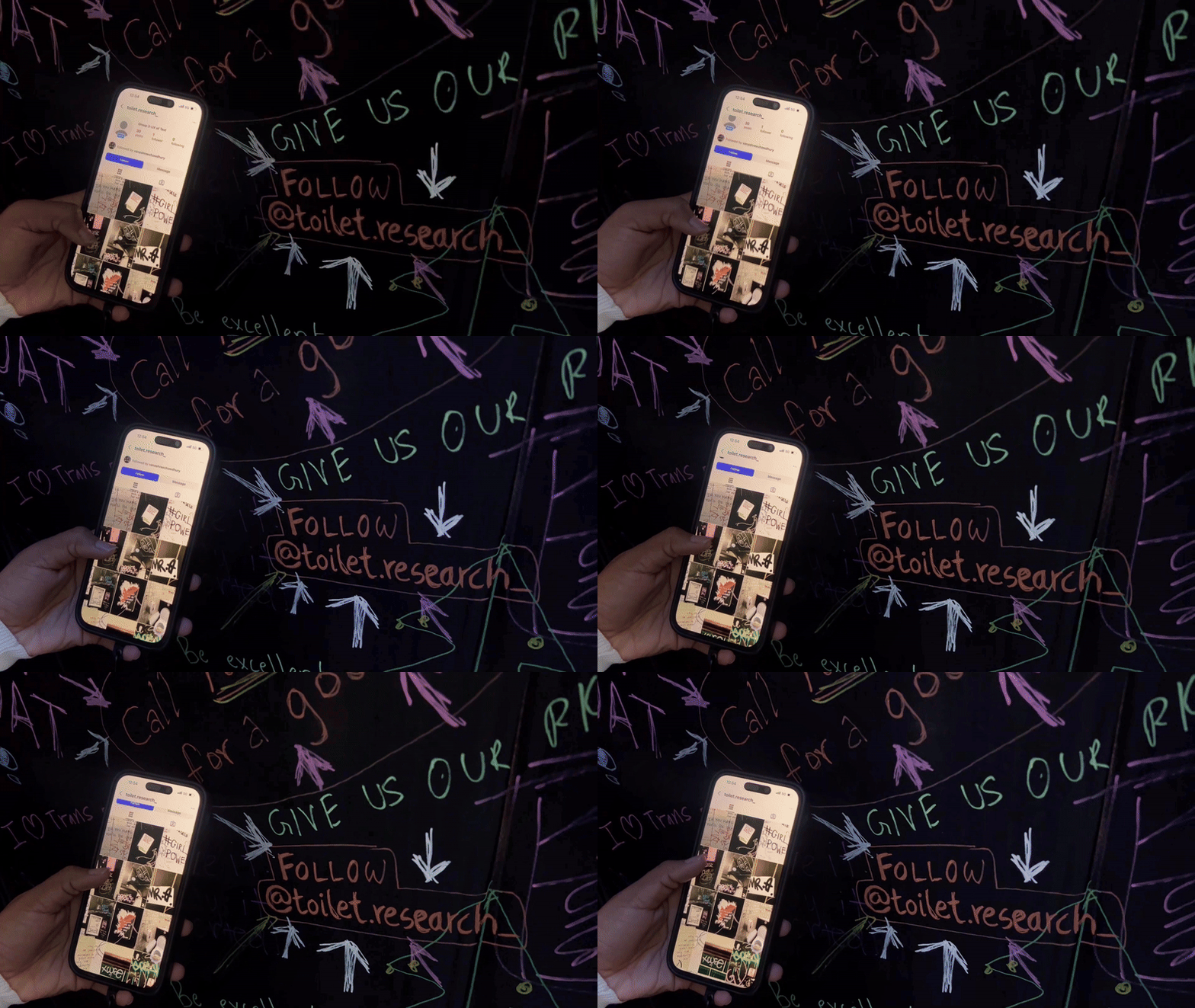
Borrowing from the toilets we observed, we added surprise interactive elements within the toilet stall. These included an Instagram handle (@toilet.research) linked to our latrinalia research, another directing users to an account celebrating the end of term (@end.of.term) and a phone number that could be called for a “good time”, with our teammate Vibhooti on standby.
Unfortunately, no one engaged with them. However, we were also conscious of not wanting to instruct people on how to experience the stall. In hindsight, these interactions may have benefited from clearer design.
Overall, we collected data from 10 different bar and pub toilets in London. We then sat down to analyse all the data collected and separate it into different themes.
As this was qualitative data, it was tricky to categorise the messages with absolute certainty, but it was genuinely interesting to see what people shared in the privacy of a toilet space.
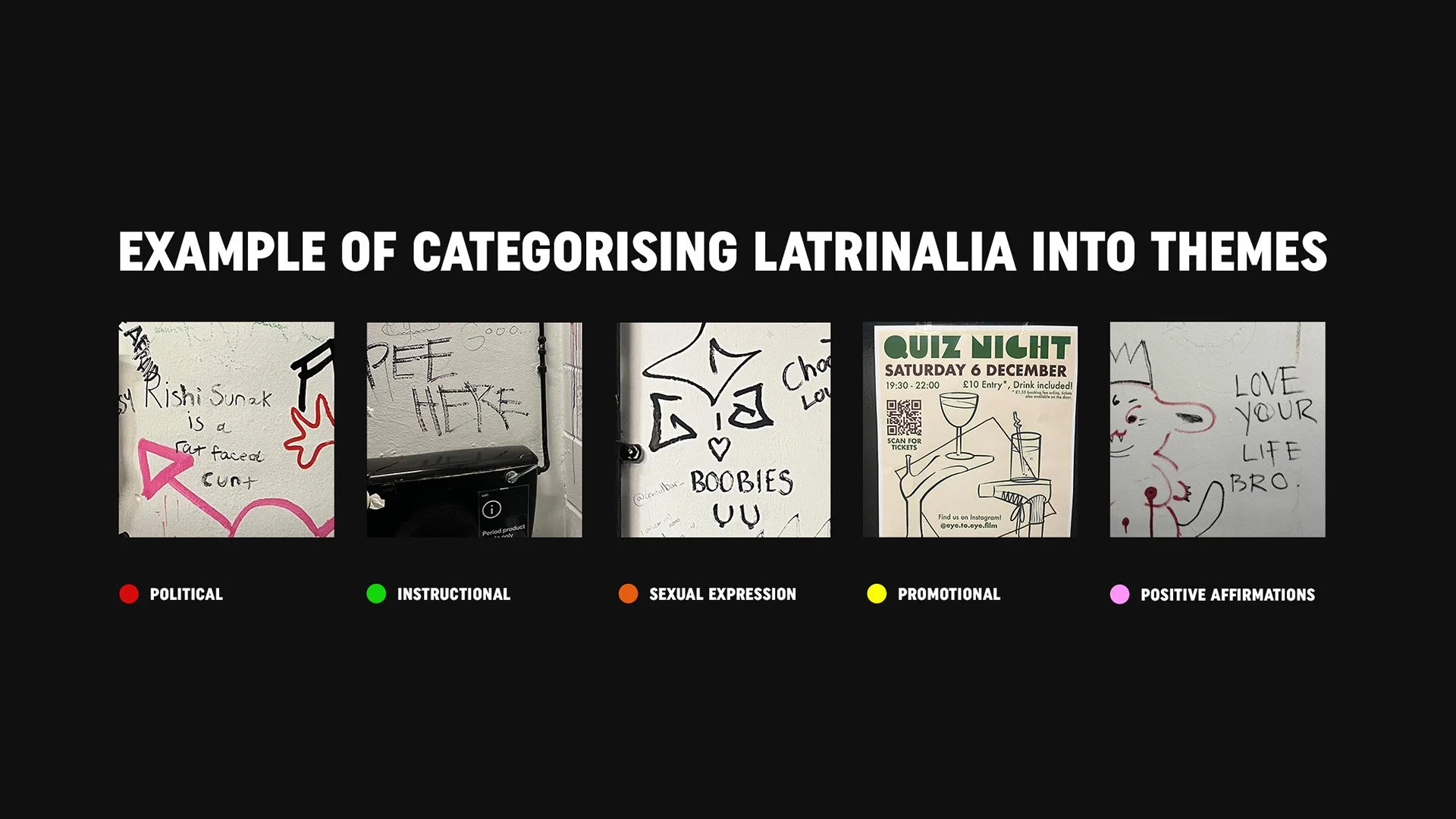
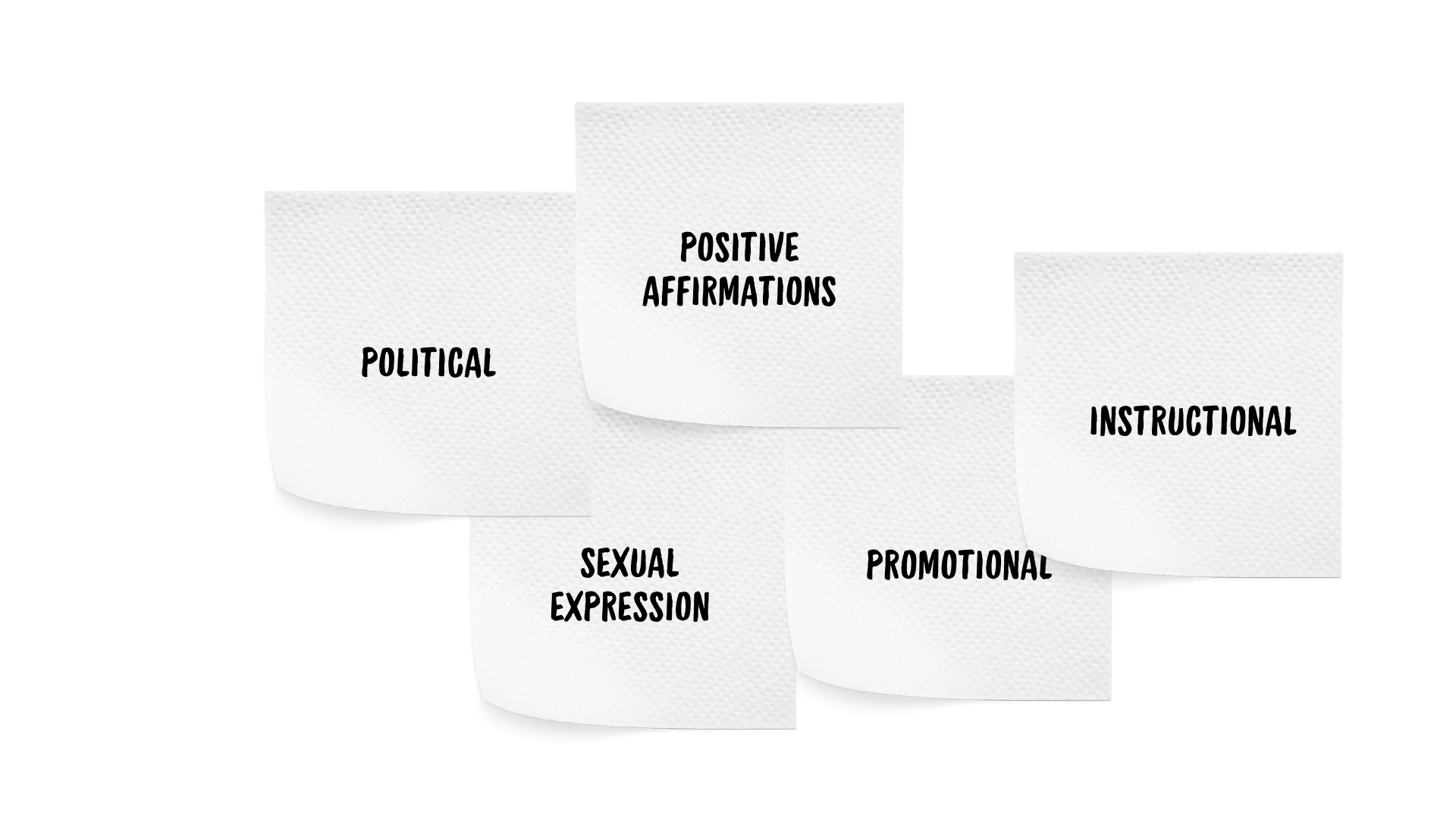
Fig. 2. Coding the data helped us identify five key themes.
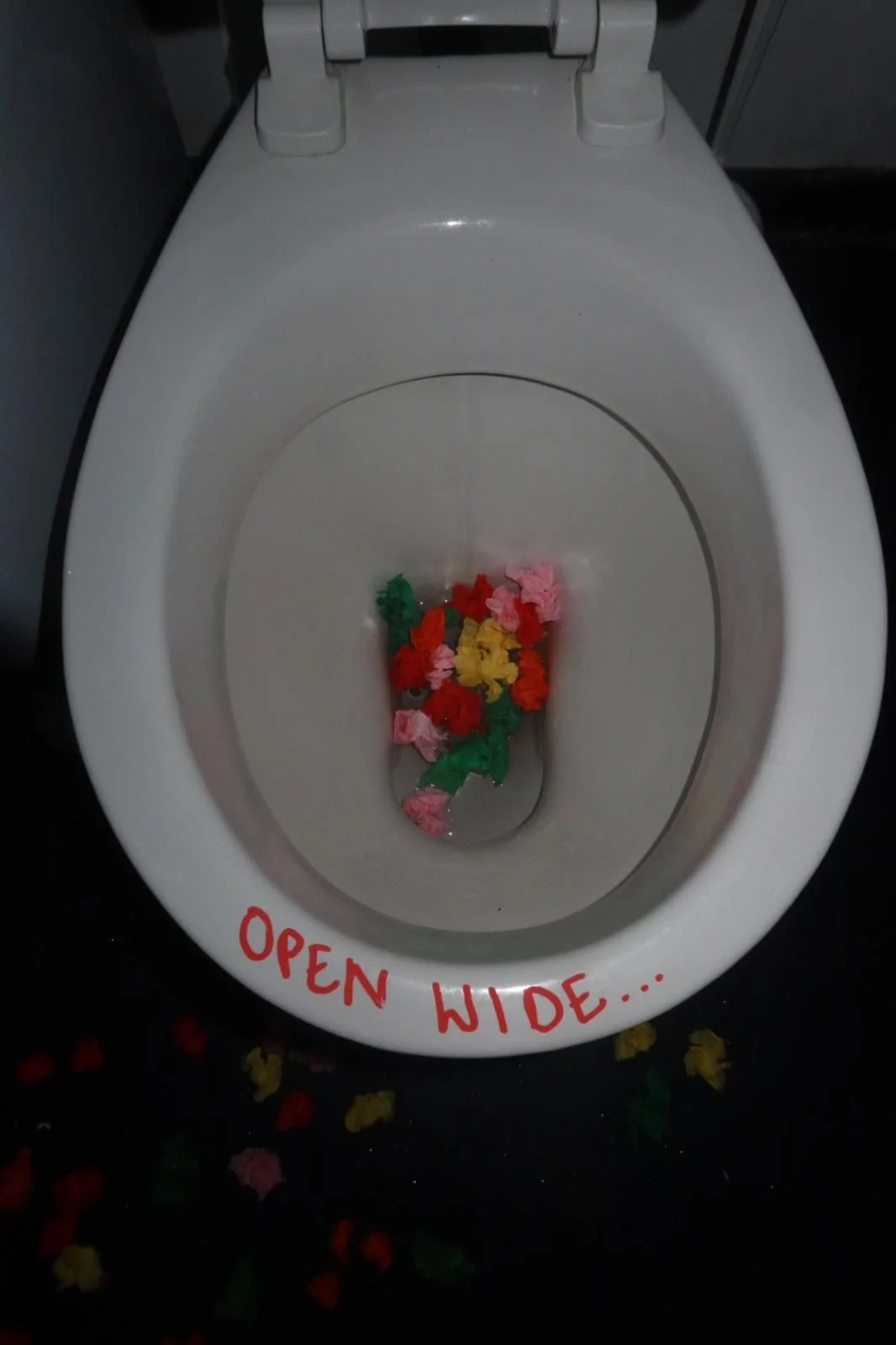
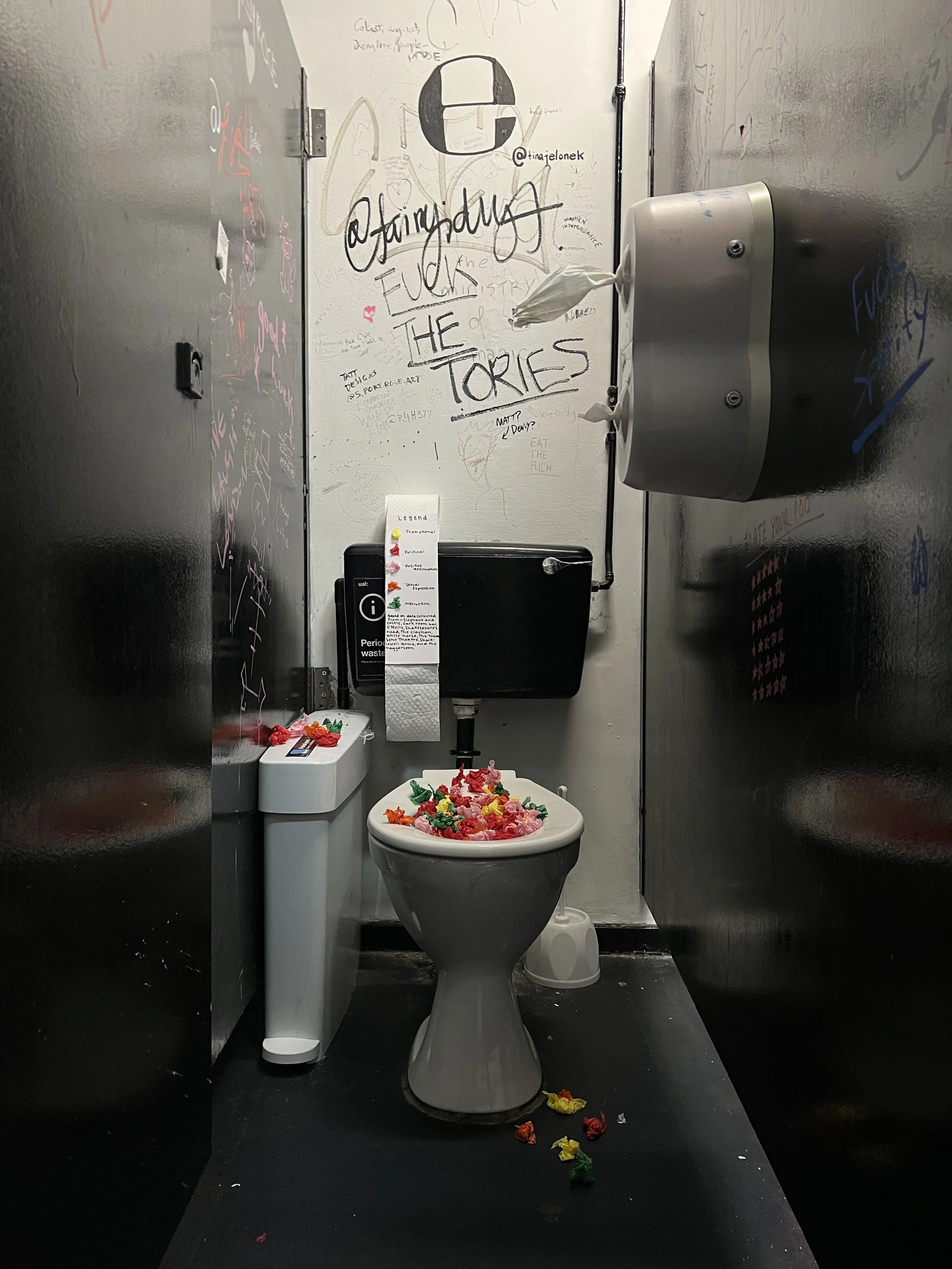
We coded these five themes: political, sexual expression, positive affirmations, promotional and instructional, using different colours of tissue-like paper and headed to the toilets to photograph our data physicalisation. Our legend was written on a toilet roll and we cellophaned the toilet seat to hold the tissues.
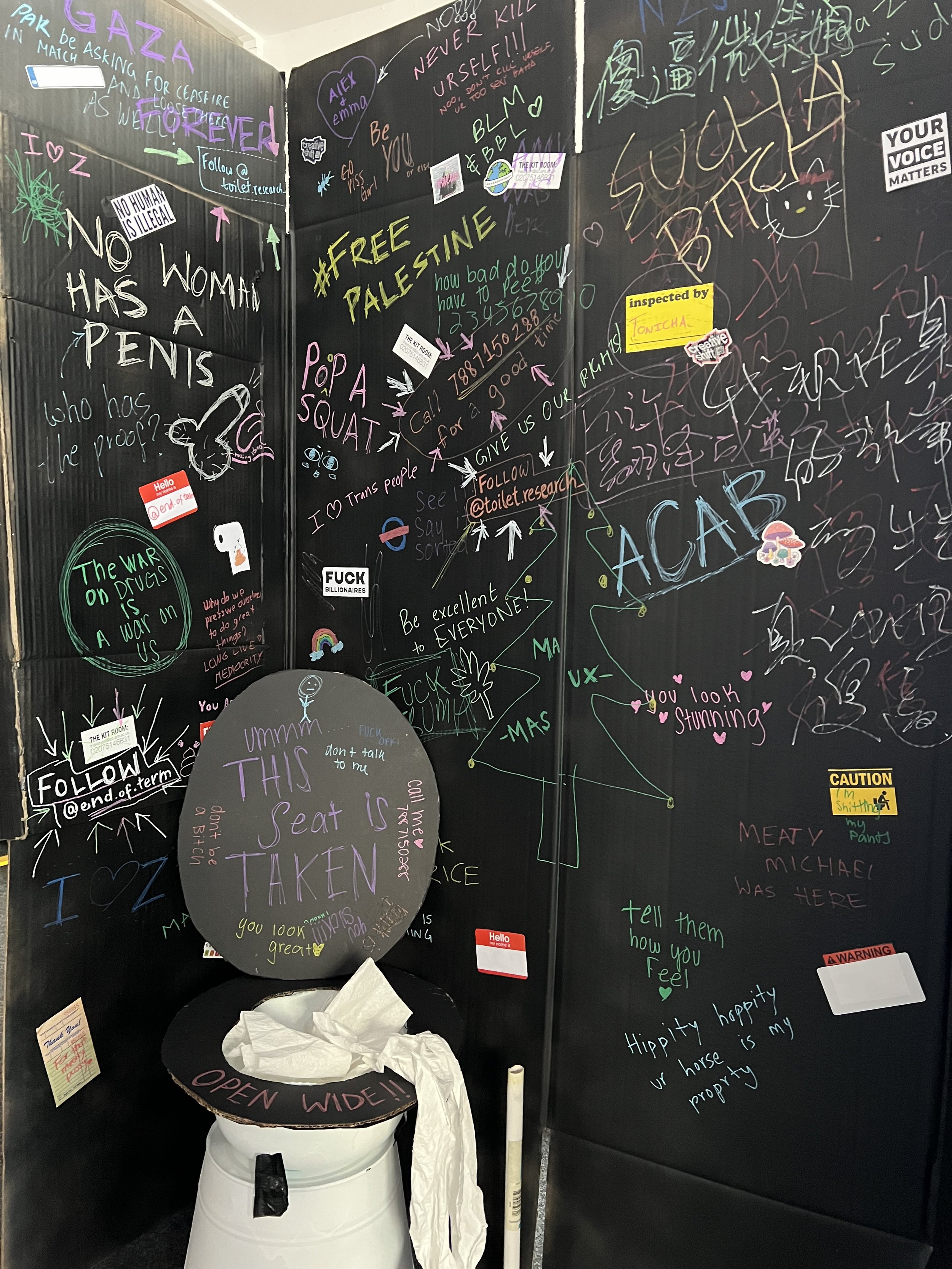
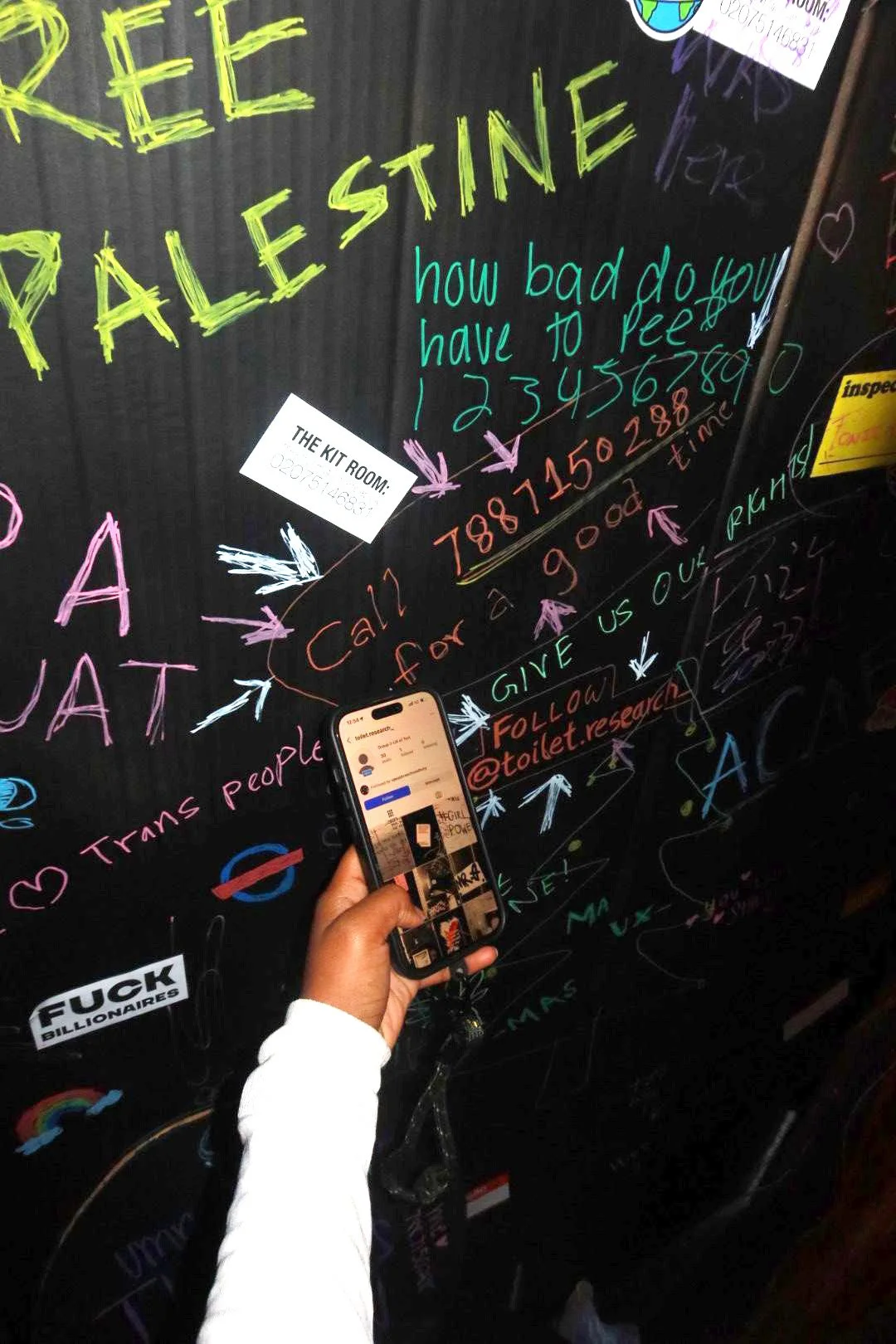

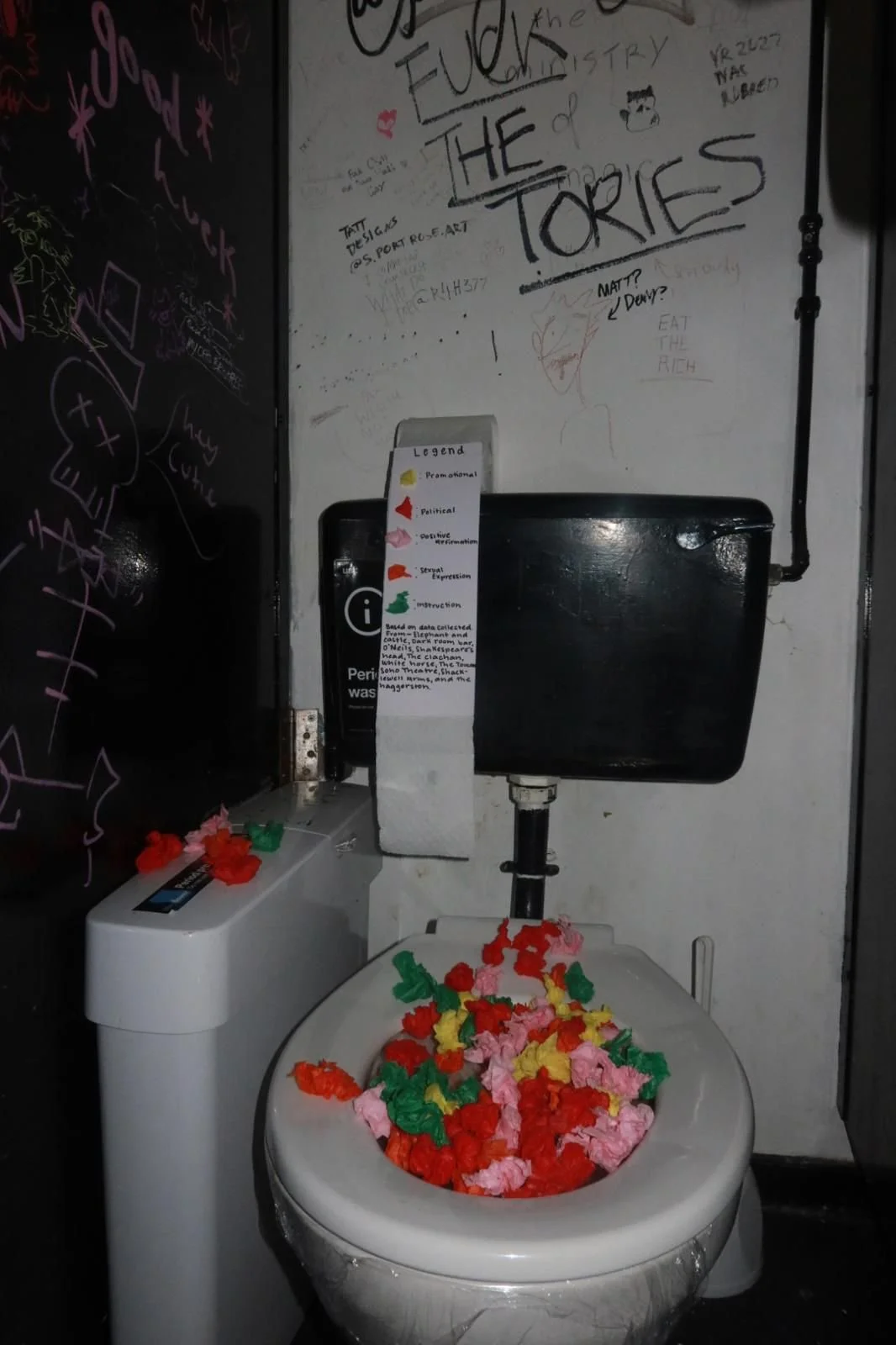
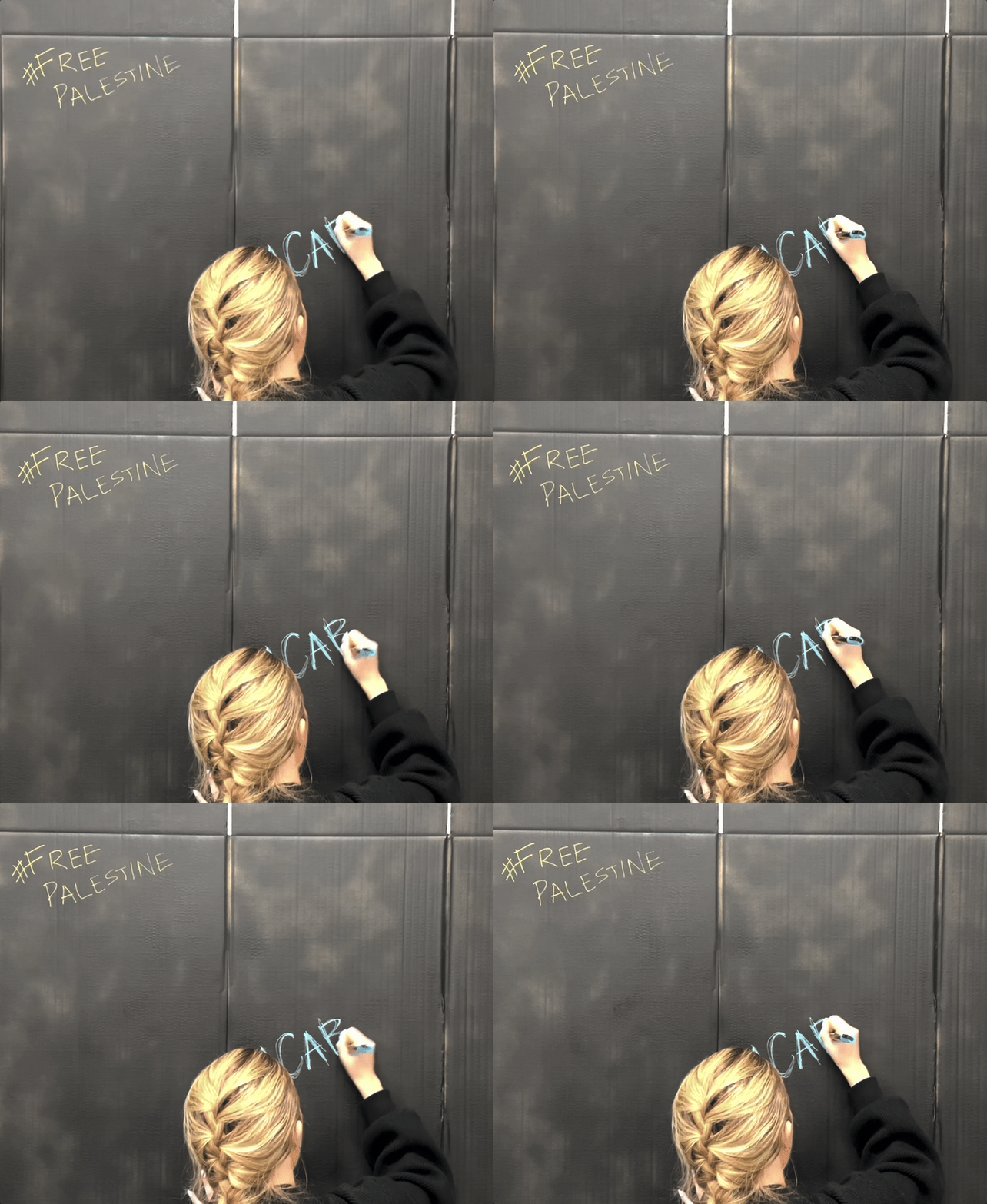
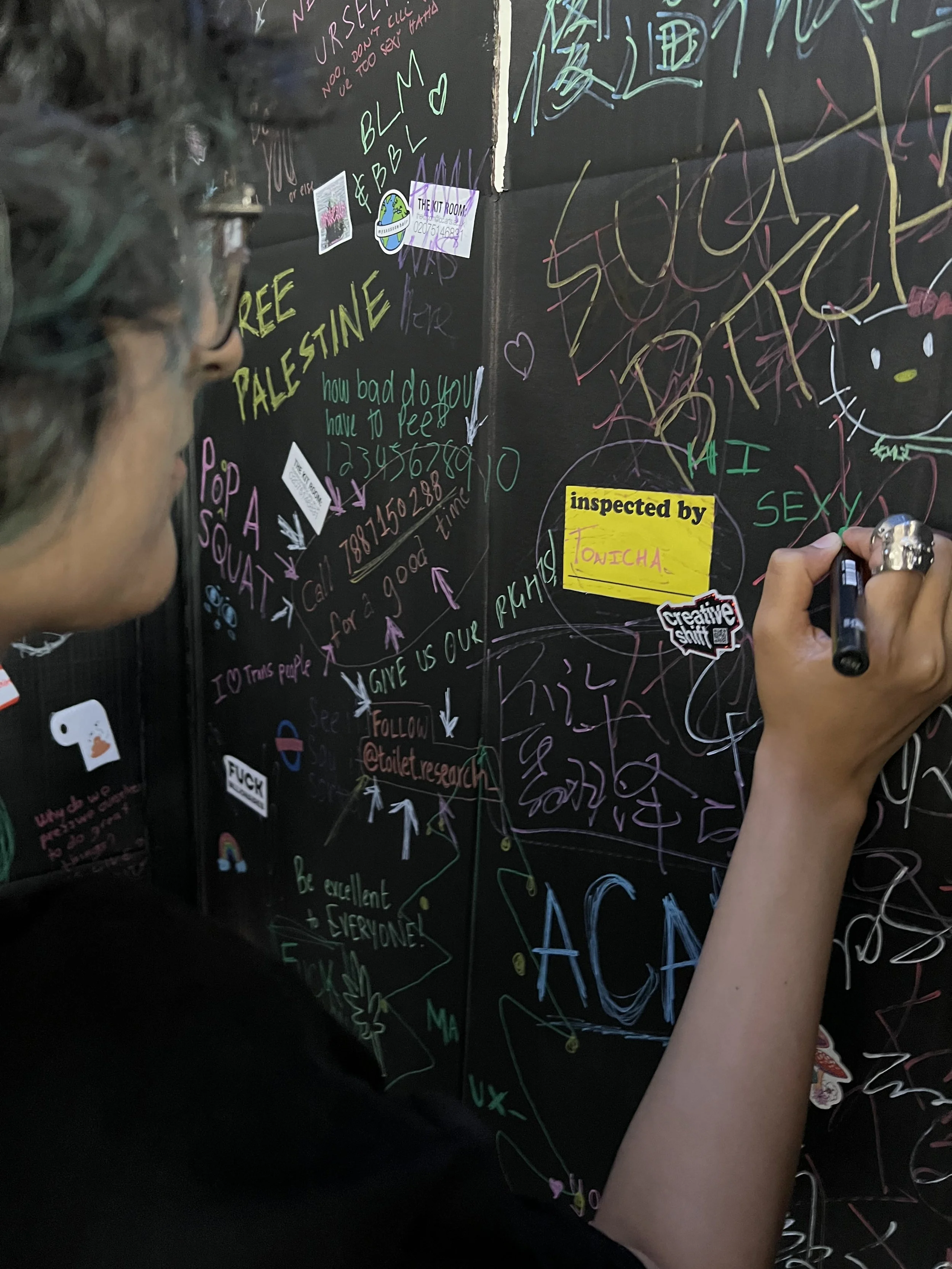
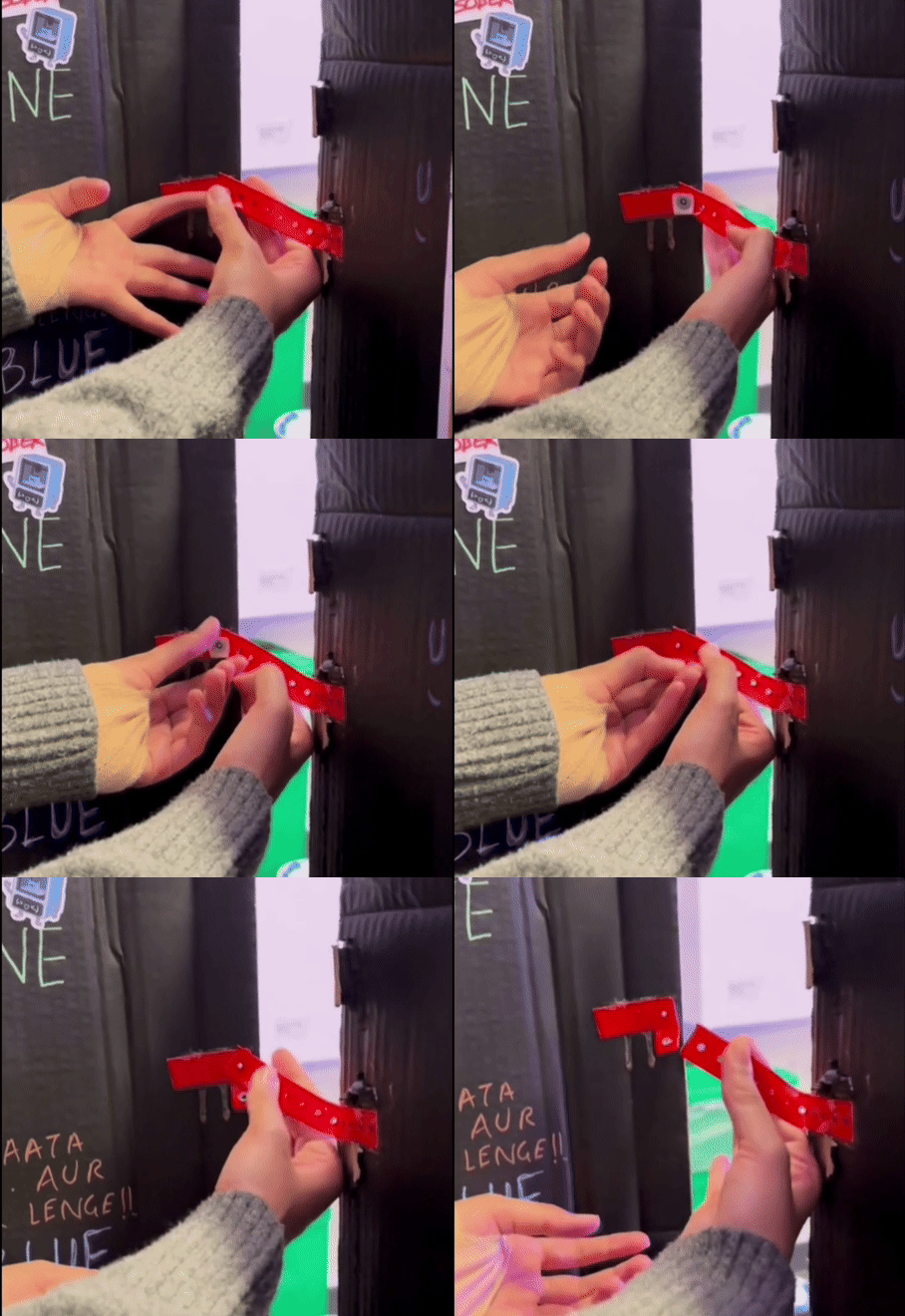
Fig. 4. A latrinalia experience exploring the materiality of text. Photography by Merrin O’Connor and author.
Outcome
We made a toilet stall! It was an interactive space with a door for privacy, inviting people to step inside and contribute to the dialogue within. Rather than starting with a blank space, we added a few markings of our own to initiate participation. The stall also featured interactive elements to engage with, alongside ambient sounds, music and recorded party conversations, adding to the overall experience.
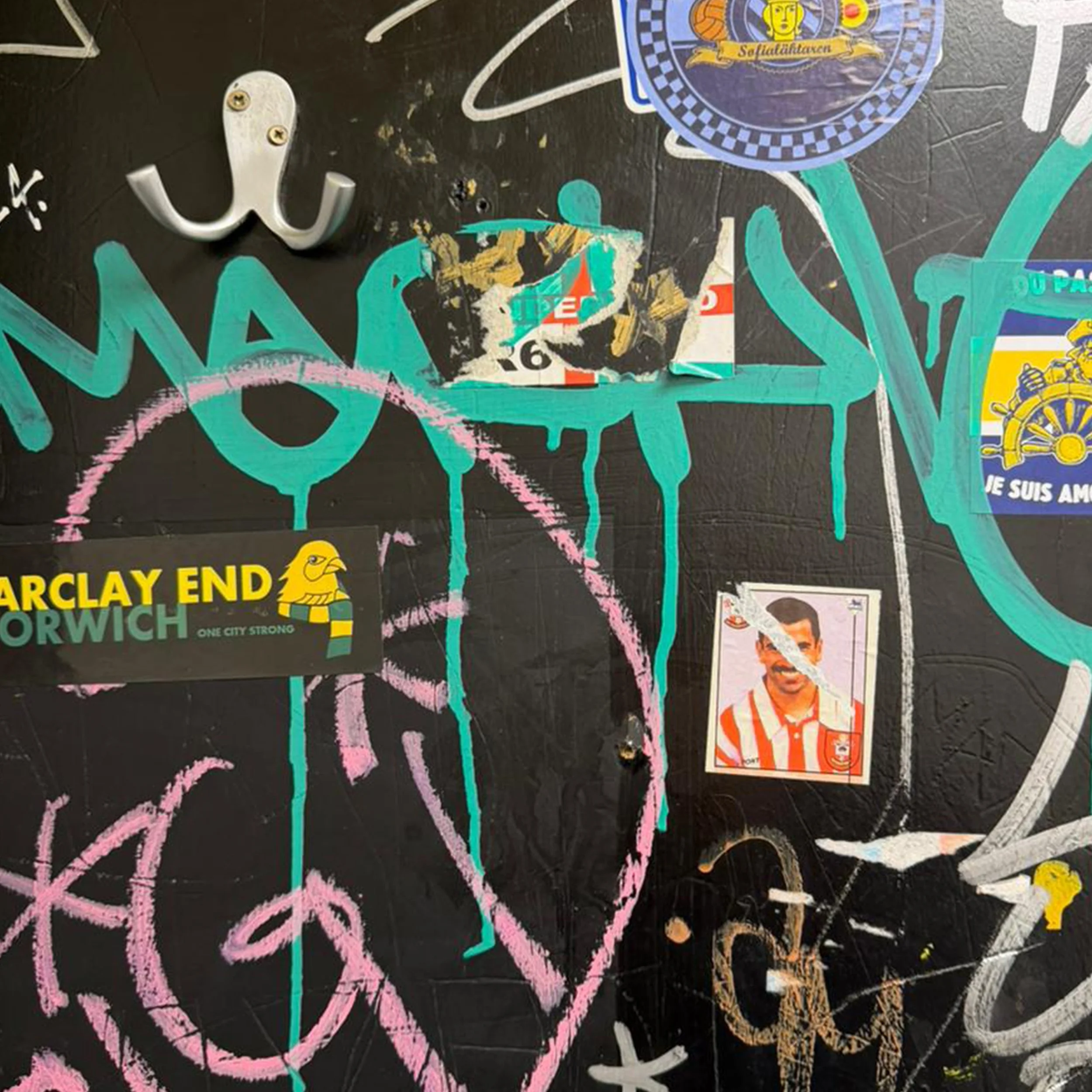
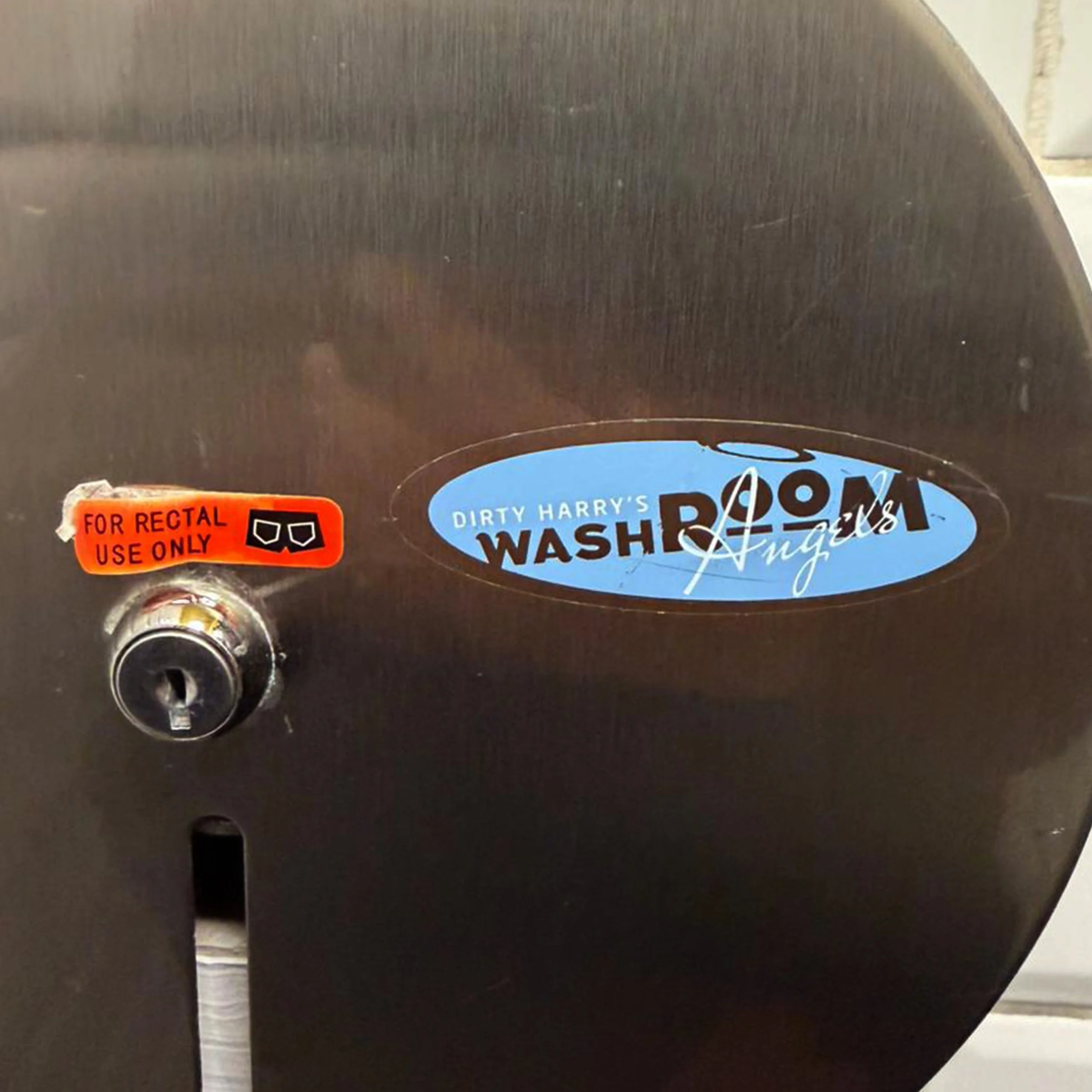
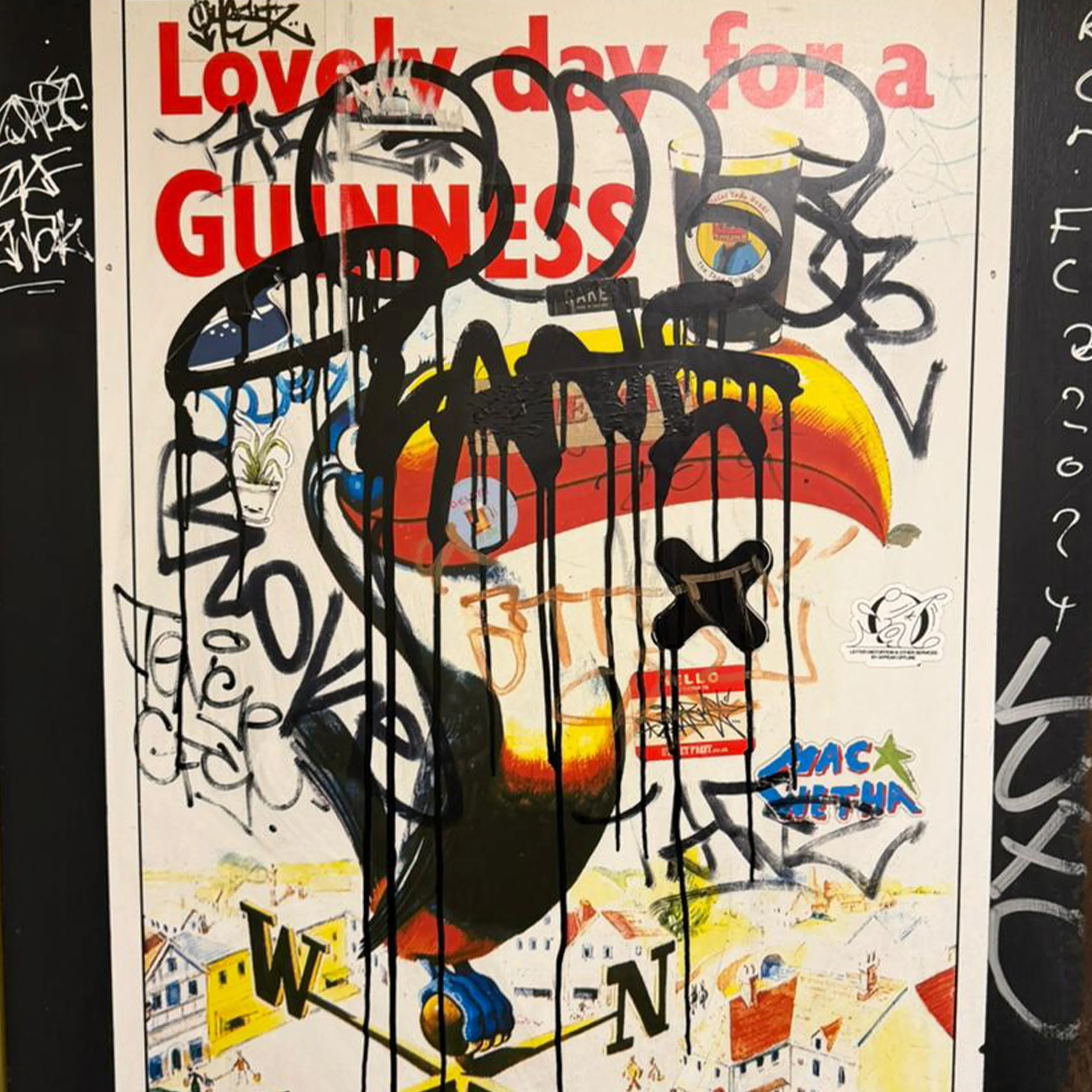
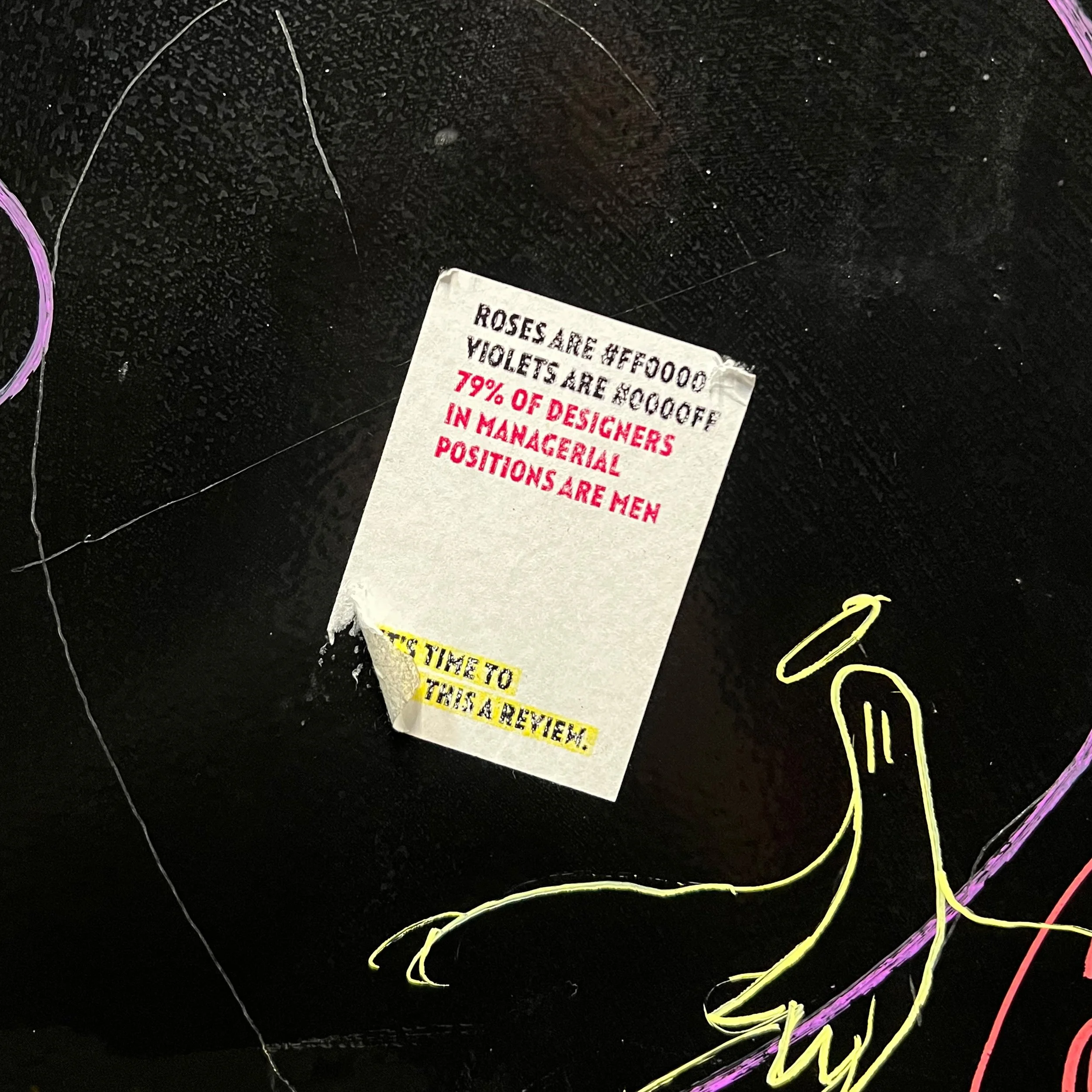
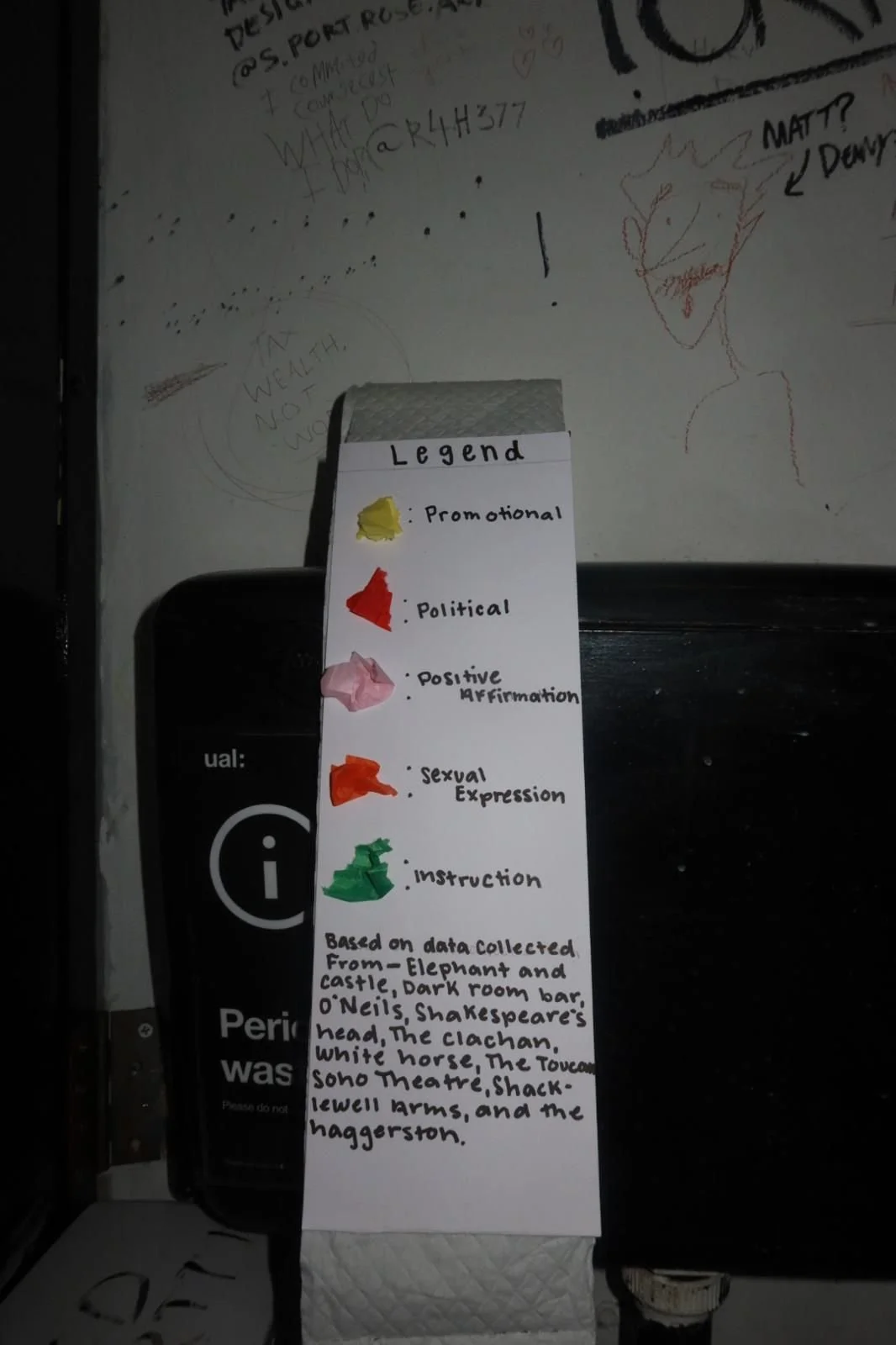
Fig. 3. Data physicalisation in situ. Photography by Merrin O’Connor and author.
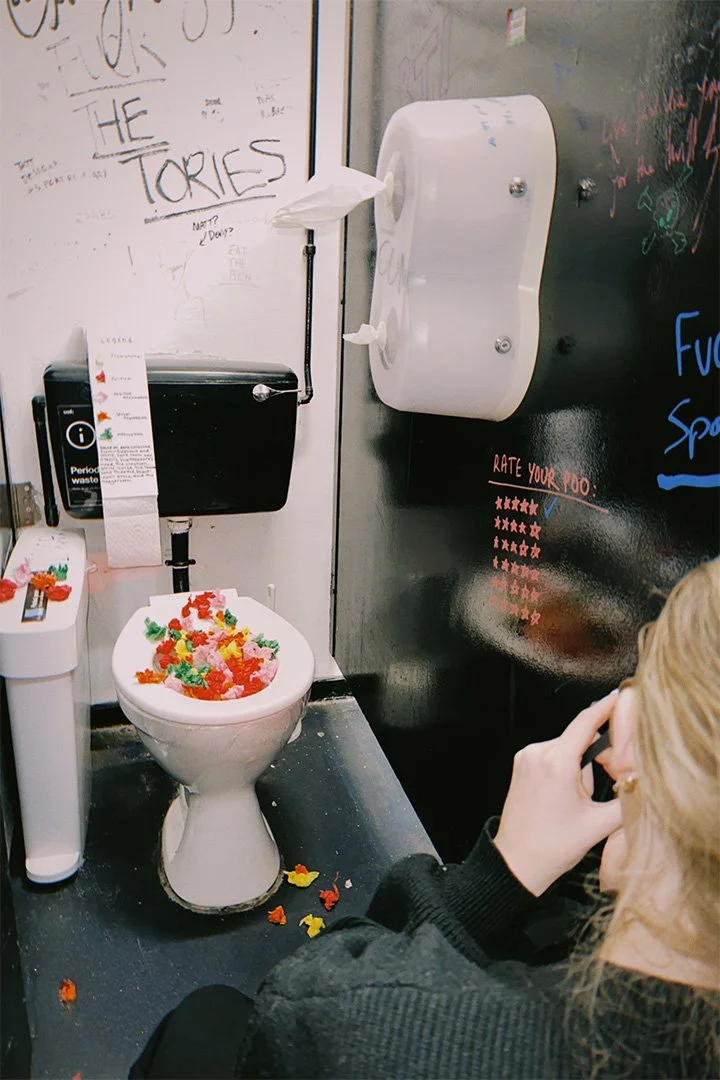
Fig. 5. Arrows point to the interactive elements.