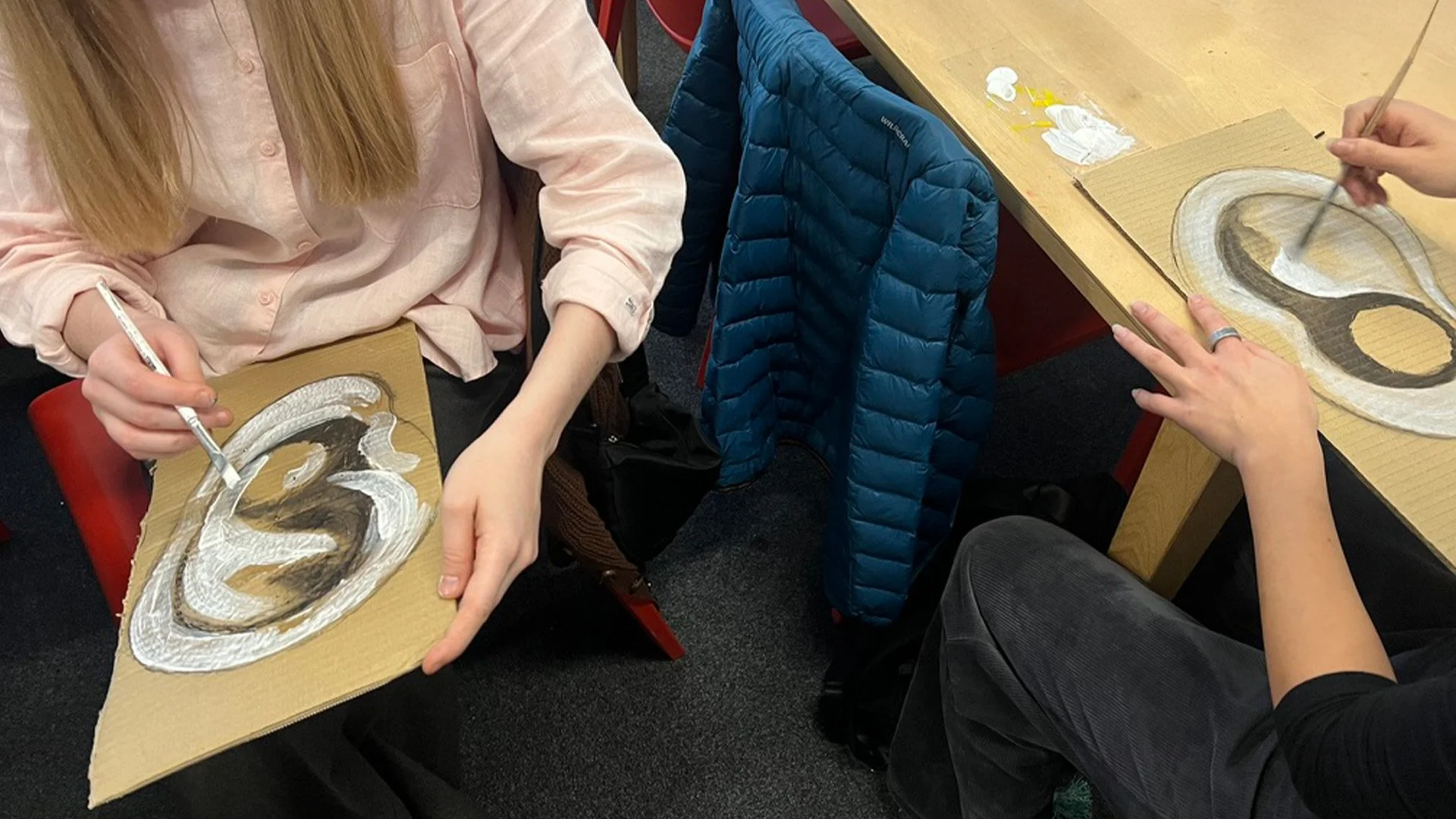
Oct 16 - Oct 30 · Week Six · Studio Practices
The UX of Whispering
Revati Banerji I MA UX Design I London College of Communication
Brief: Design an experience that amplifies the qualities/customs of whispering
Team: Mary Mehtarizadeh · Andre Oliveira Dinis · Yin Hong Clara Chow · Eniola Aminu · Veronika Rovniahina
Guest lecturer Steph Singer, Creative Director at Bittersuite, asked us to imagine two clouds: one spiky with sharp edges and the other soft and rounded. She then asked which would be called Kiki and which Bouba. The response was unanimous, with everyone associating Kiki with the spiky cloud and Bouba with the softer one. This simple exercise demonstrated how something as abstract as a name can carry texture and feeling and introduced us to the idea of cross-modality.
Direct
Storytelling
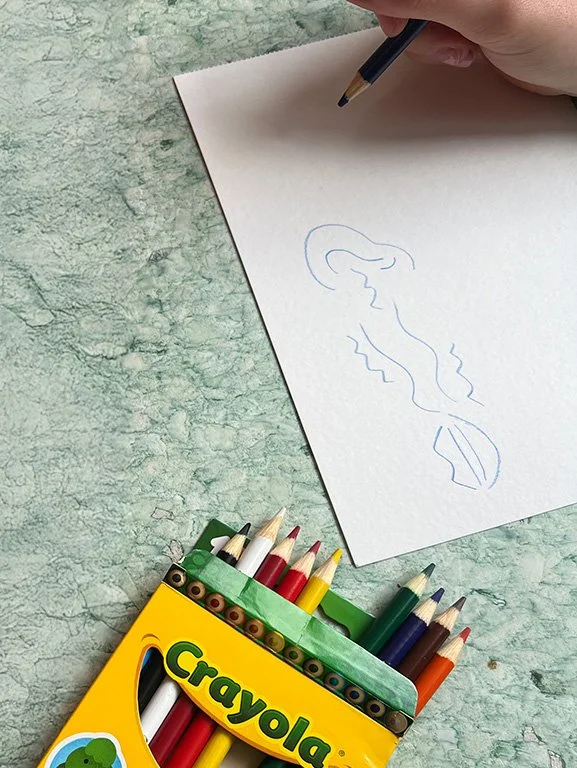
Instead of direct storytelling prompts, we began with questions you might find in a creative toolkit. Now, we asked participants to draw a whisper. What colour would it be? What material might it have? This led to more playful responses, opening up exciting directions for our research.
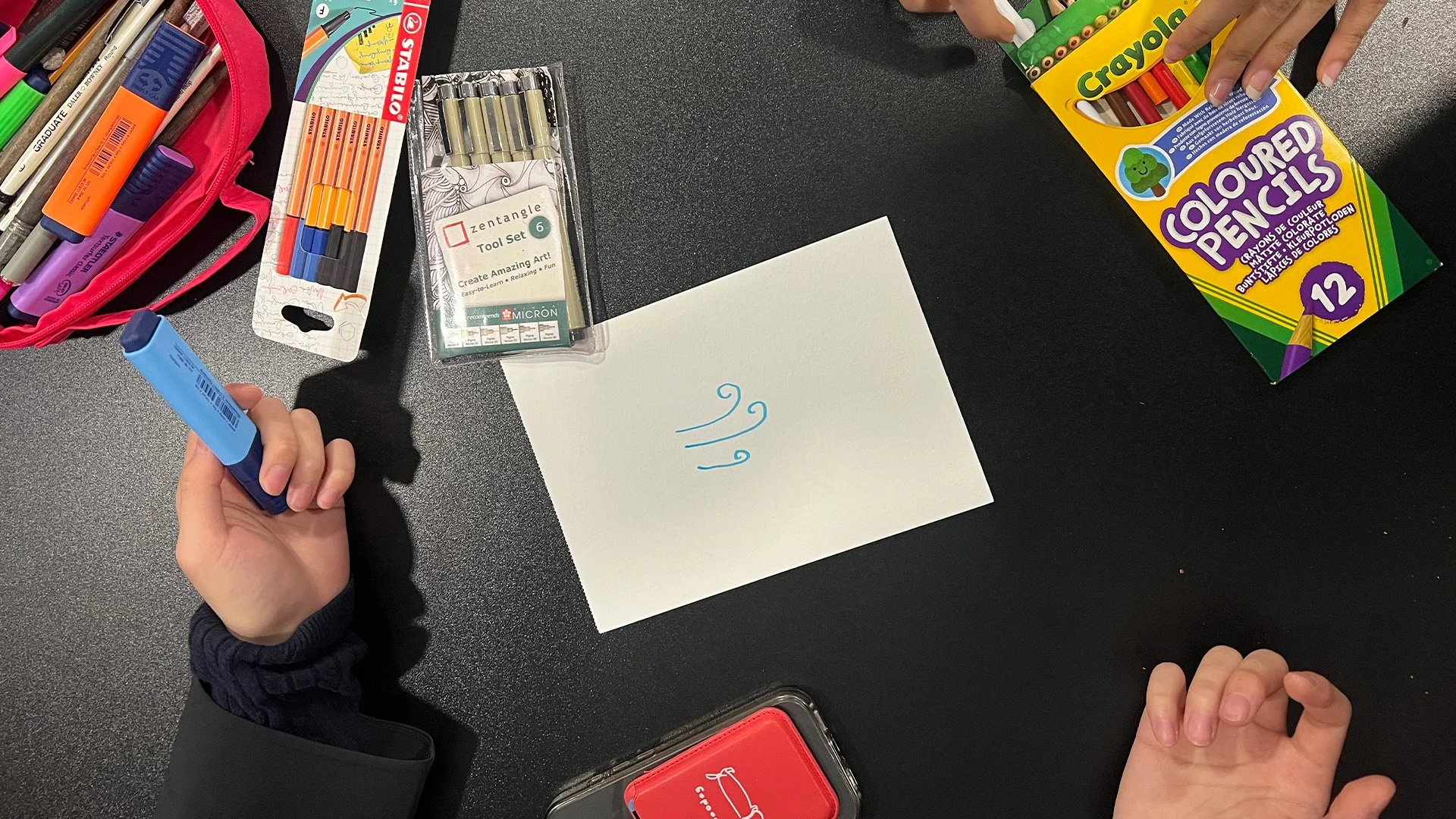
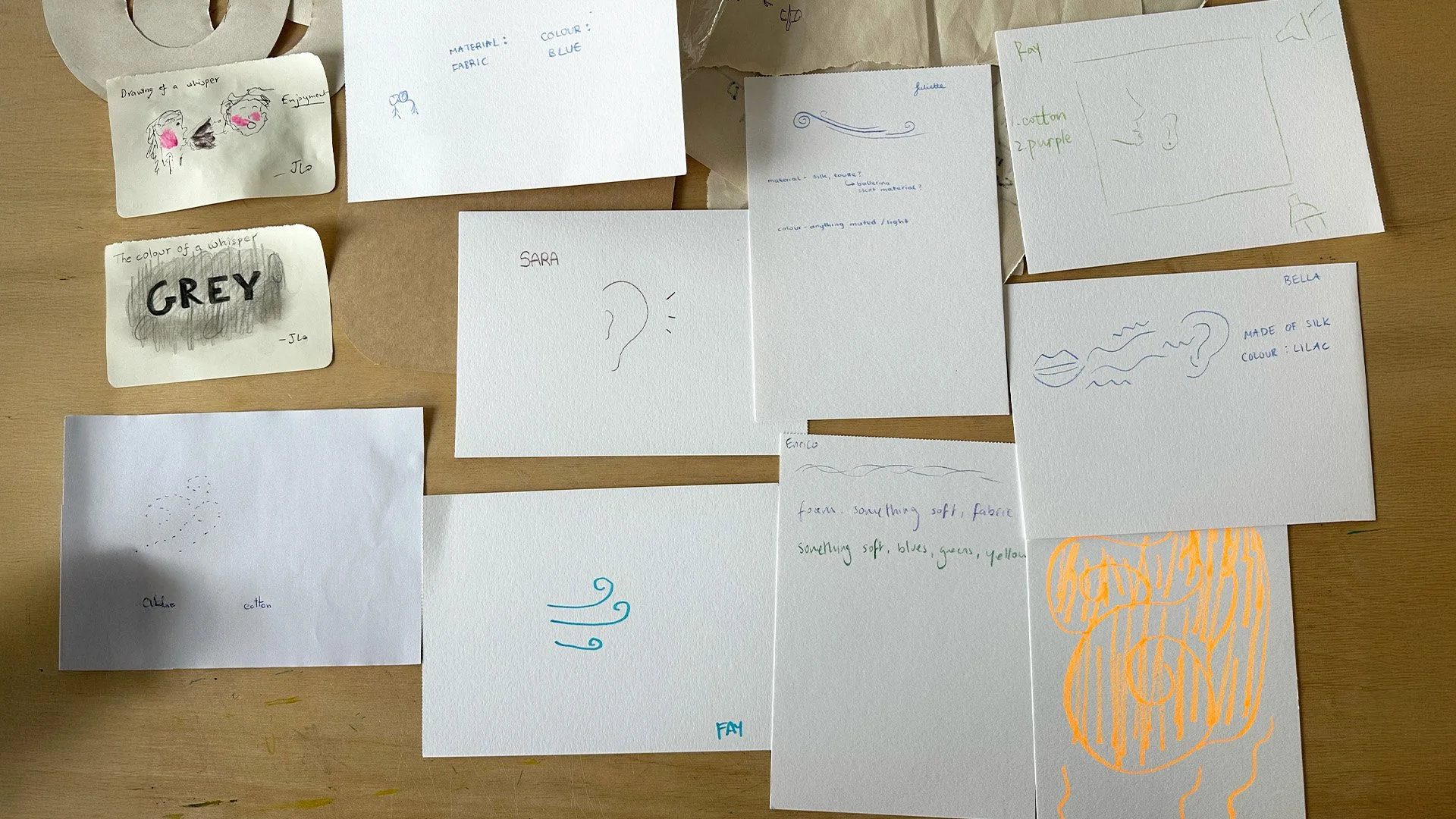
Fig. 2. Responses to our direct storytelling/creative toolkit. Photography by Veronika Rovniahina and author.
During this week’s seminar, we analysed our dataset and coded it by noting recurring words and patterns, allowing themes to emerge naturally. Through this process, three key themes appeared: softness, movement and blue. This helped us articulate our research question at this stage: What are the boundaries of a whisper? We wanted to explore when a whisper stops being a whisper and where the line between whispering and talking exists. Tutorial feedback reassured us that our experience did not need a clear resolution and could remain open-ended.
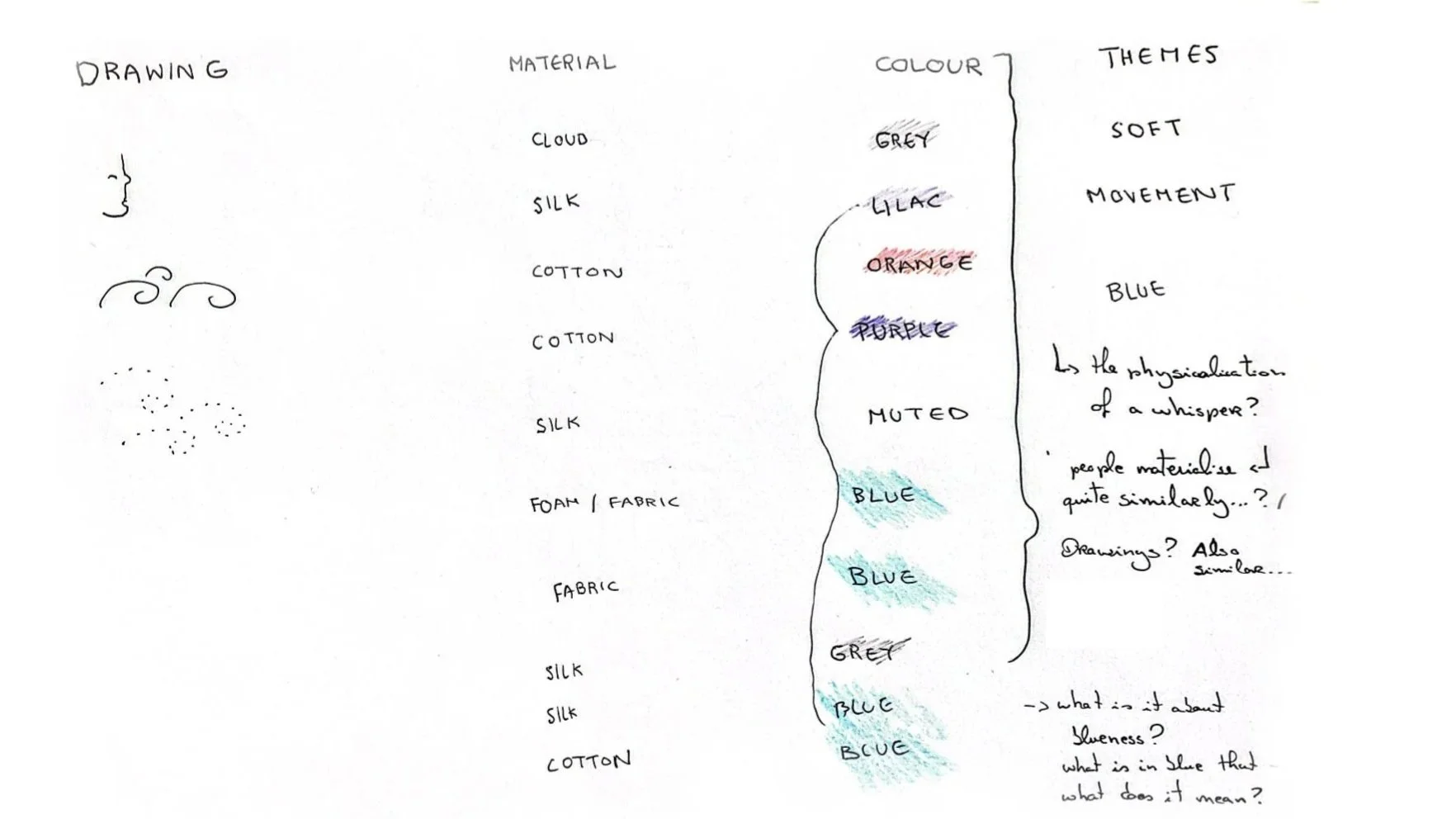
Fig. 3. Analysis of our direct storytelling responses conducted during the seminar session.
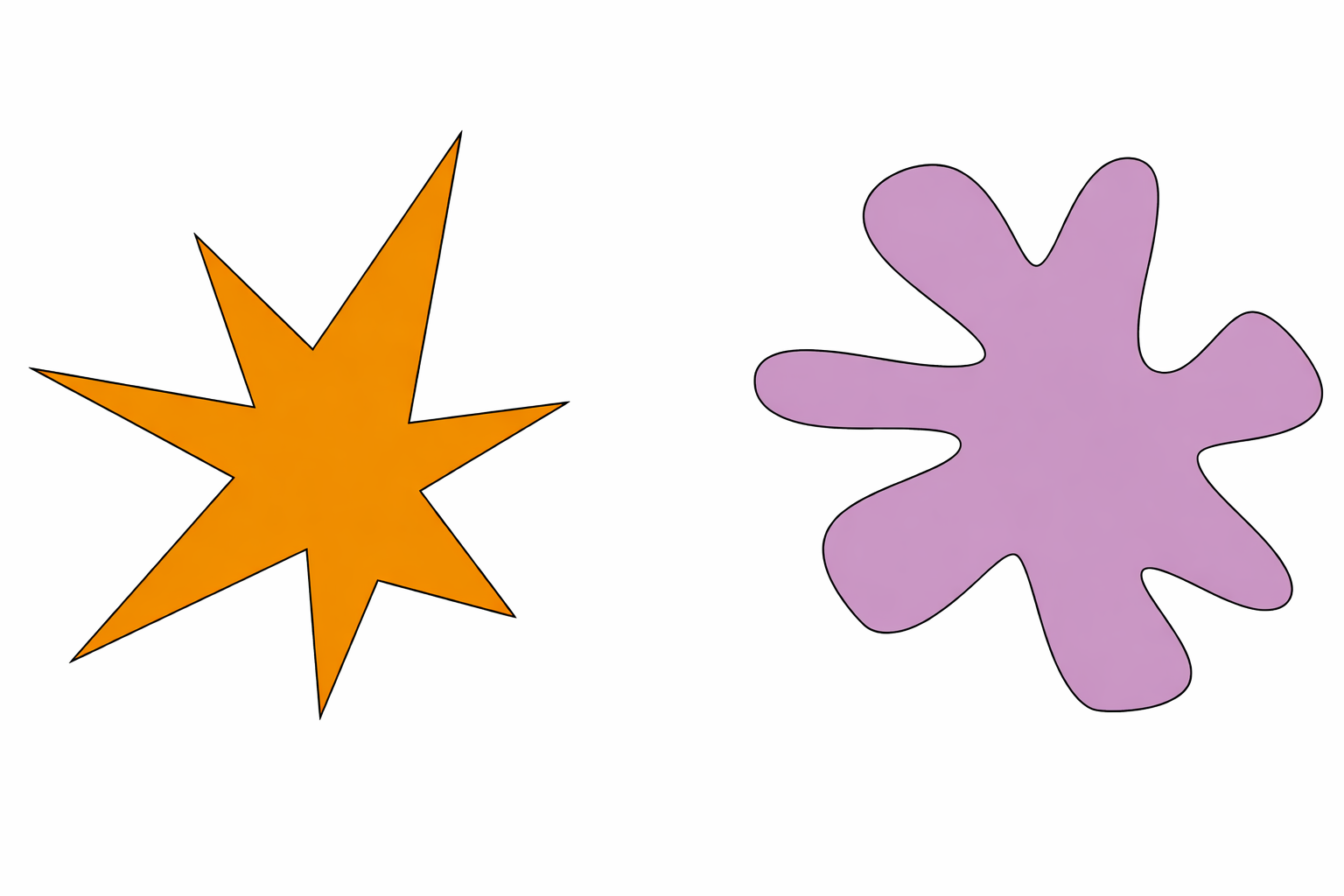
Fig. 1. Kiki and Bouba shapes. Image courtesy of Wikimedia Commons.
Whisper Gallery
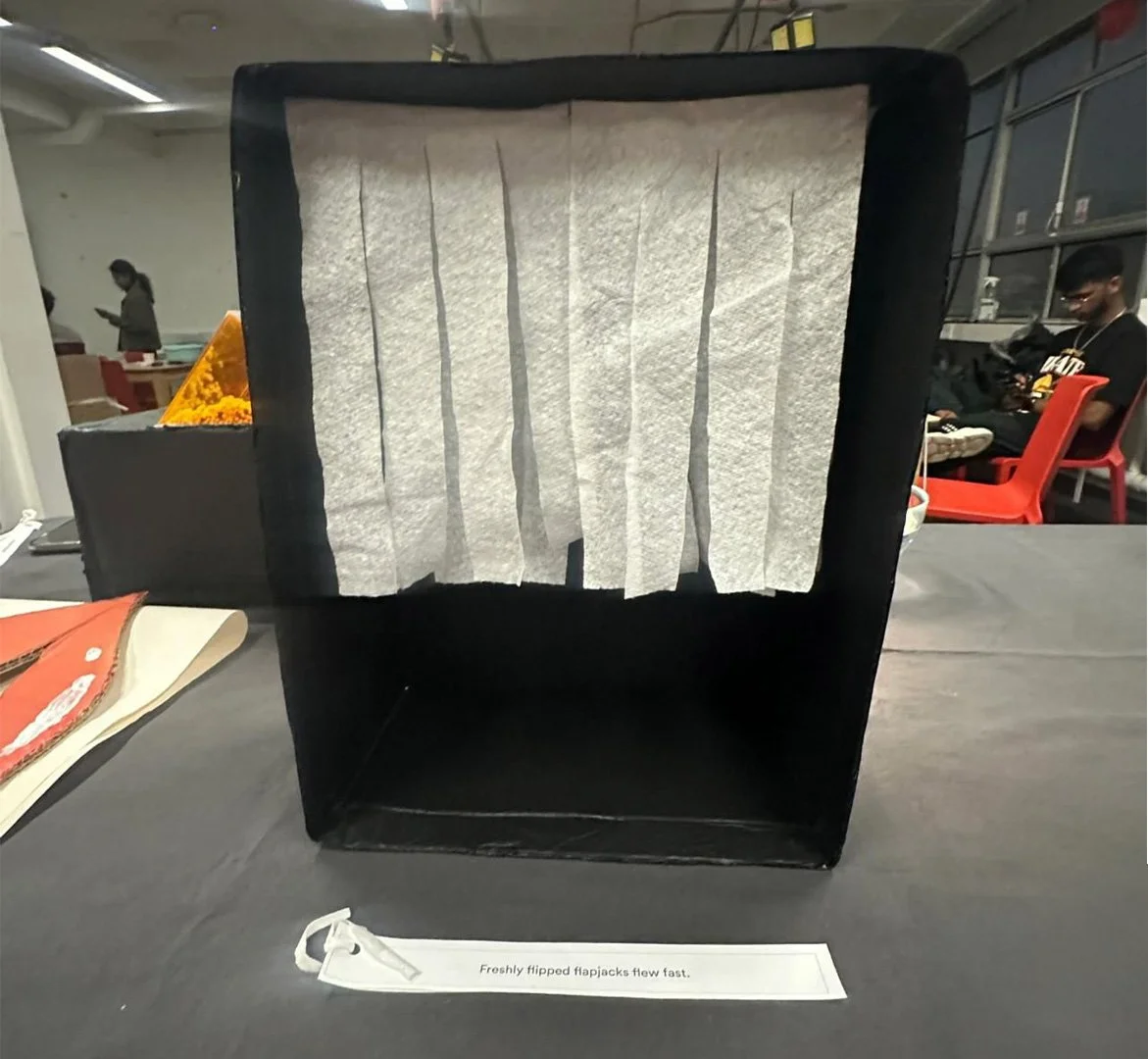
Our final response took the form of a whisper gallery. We designed a series of small experiments that encouraged participants to whisper.

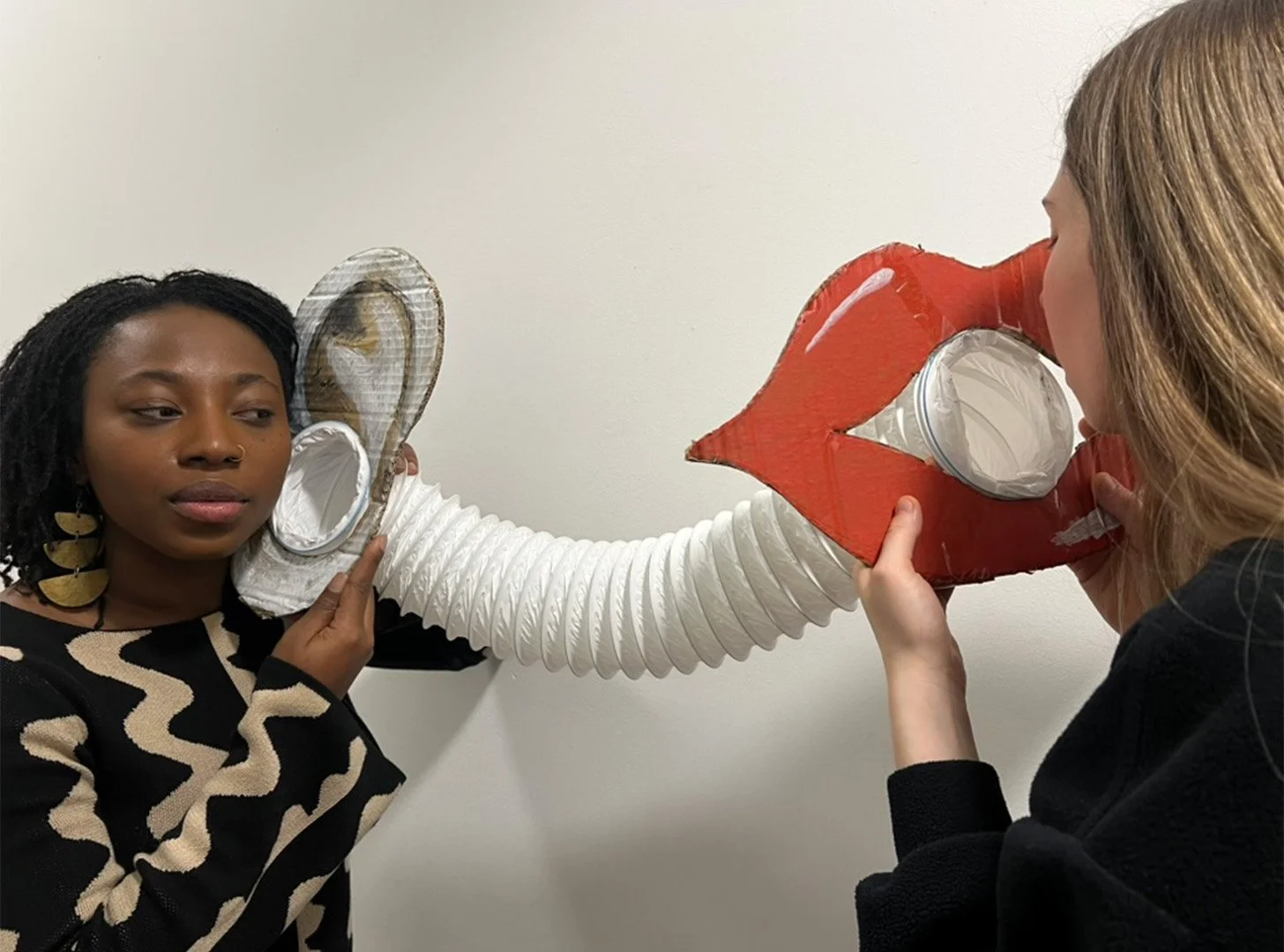
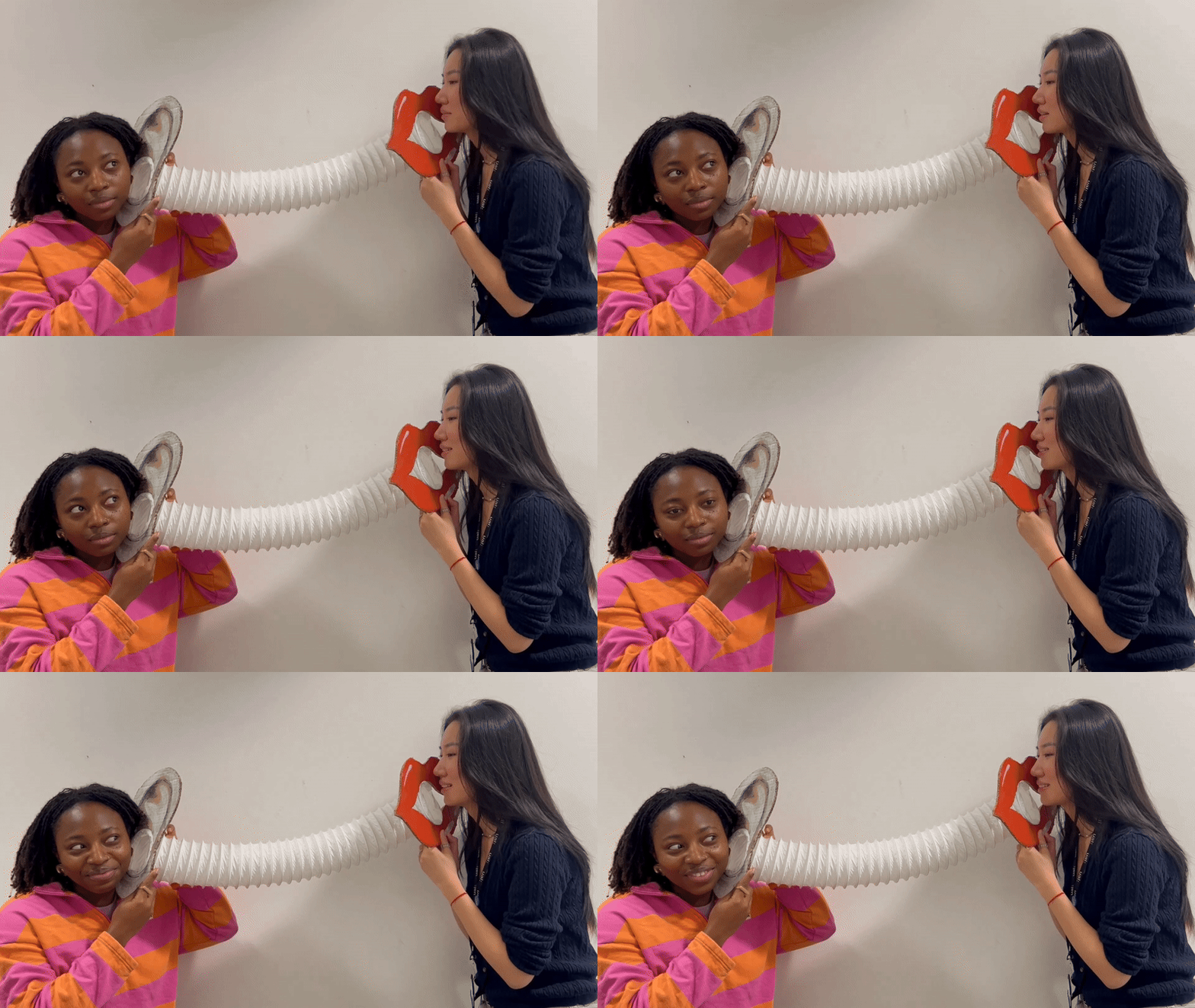
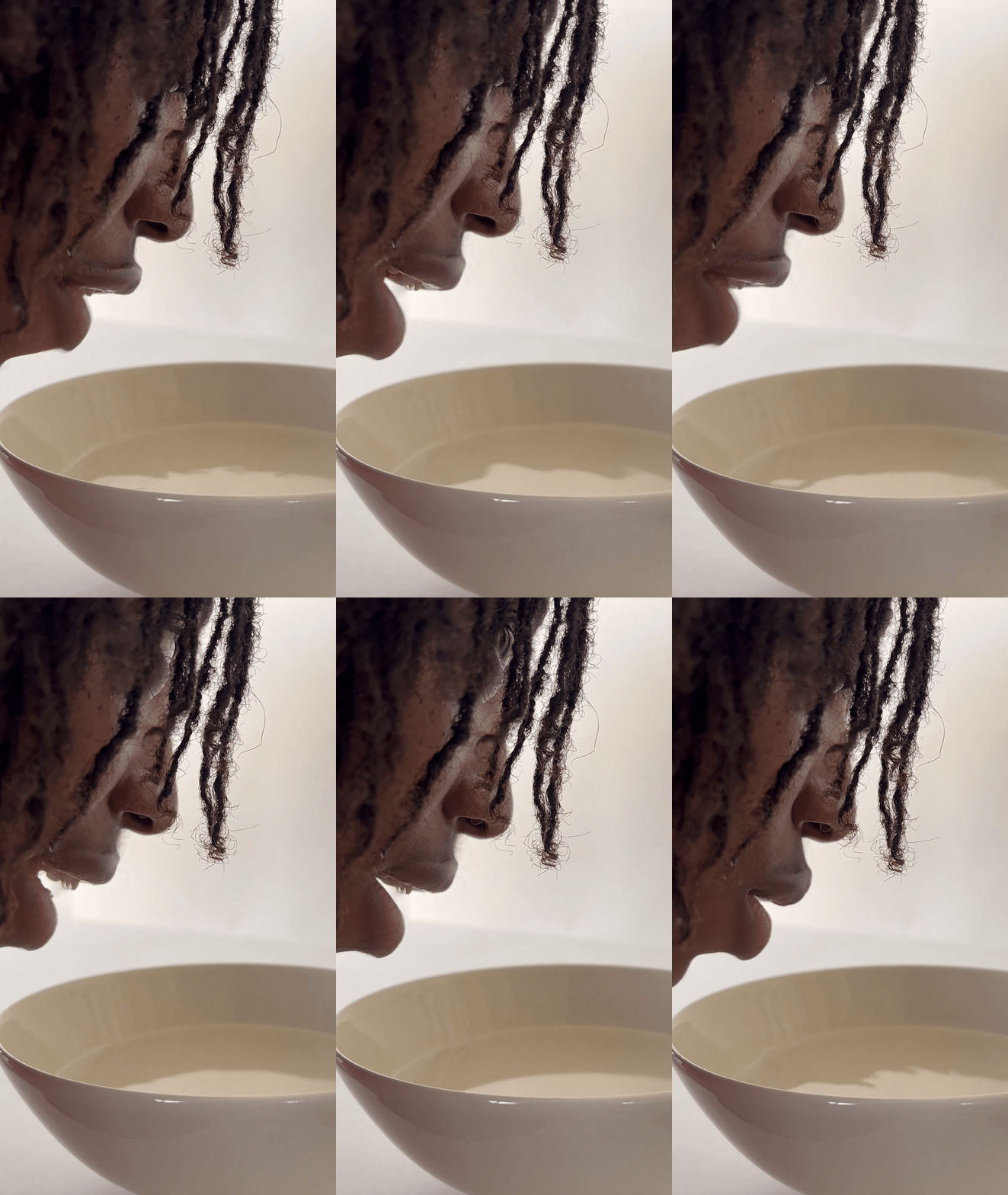
Fig. 4. Items from our whisper gallery. Photography by Veronika Rovniahina and author.
Participants were invited to explore whispering with the collection of items we created. Afterwards, they were asked to reflect on: What does a whisper look like? What material does a whisper feel like? What colour is a whisper? The aim was to explore whether this group also visualised whispering as soft, muted and in motion, as our earlier research suggested.
The gallery functioned as research through design, making the experience a method of inquiry. If responses aligned, it pointed to a shared sensory understanding of whispering. If not, then it questioned why people imagine whispering differently?
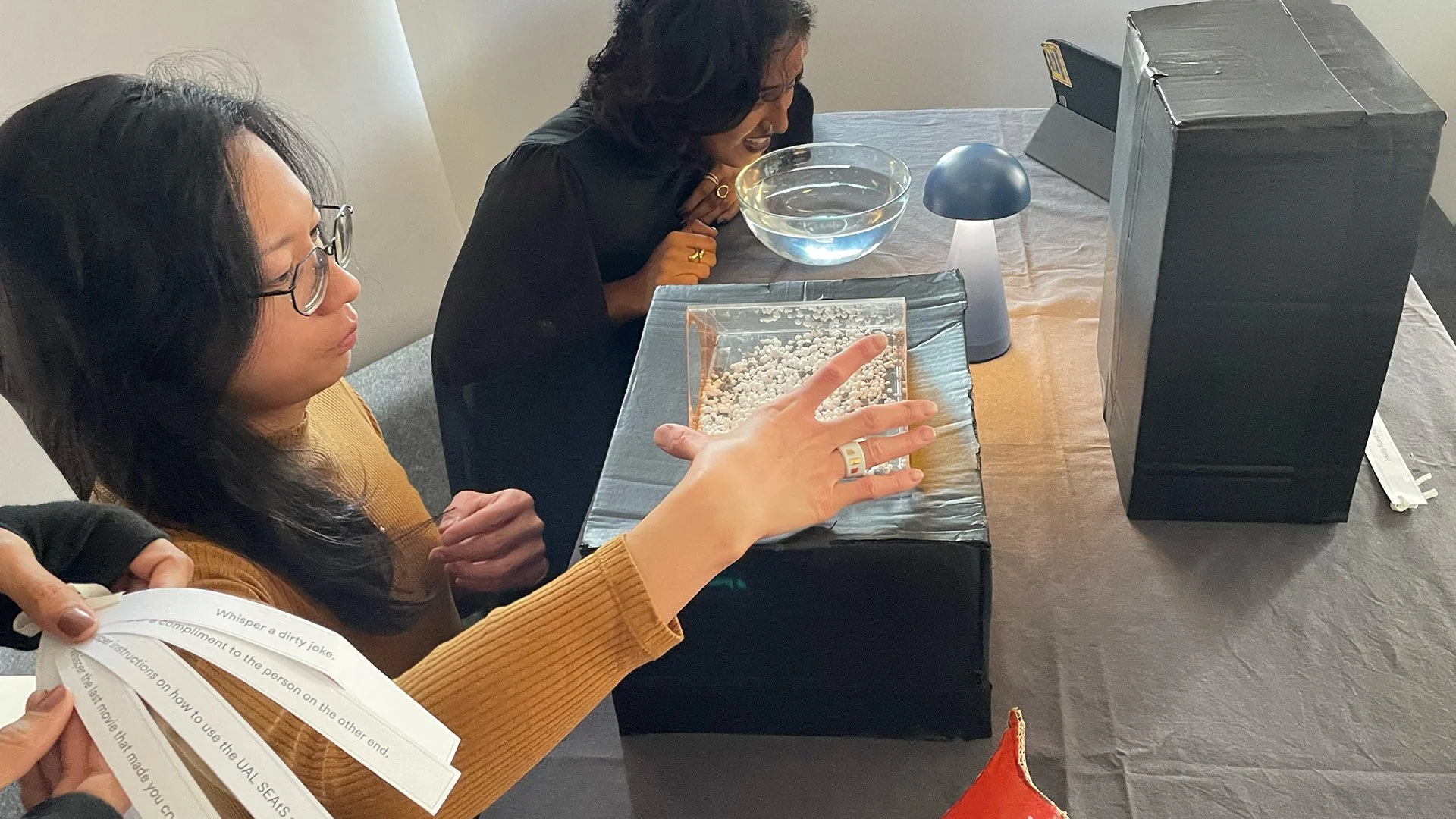
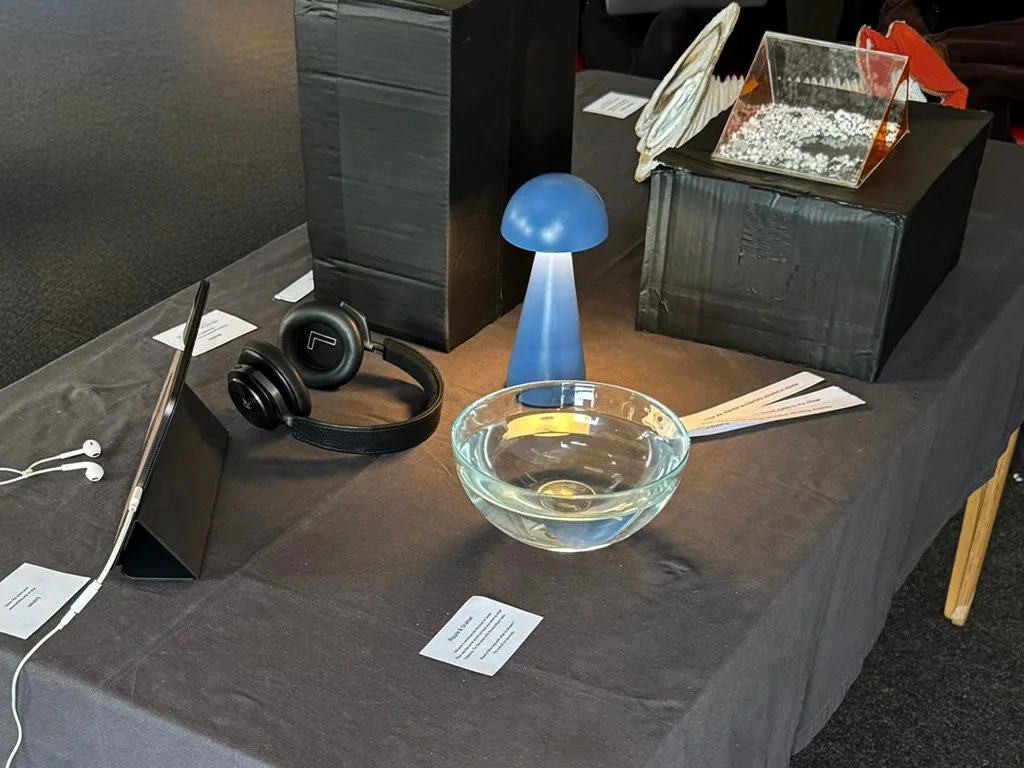
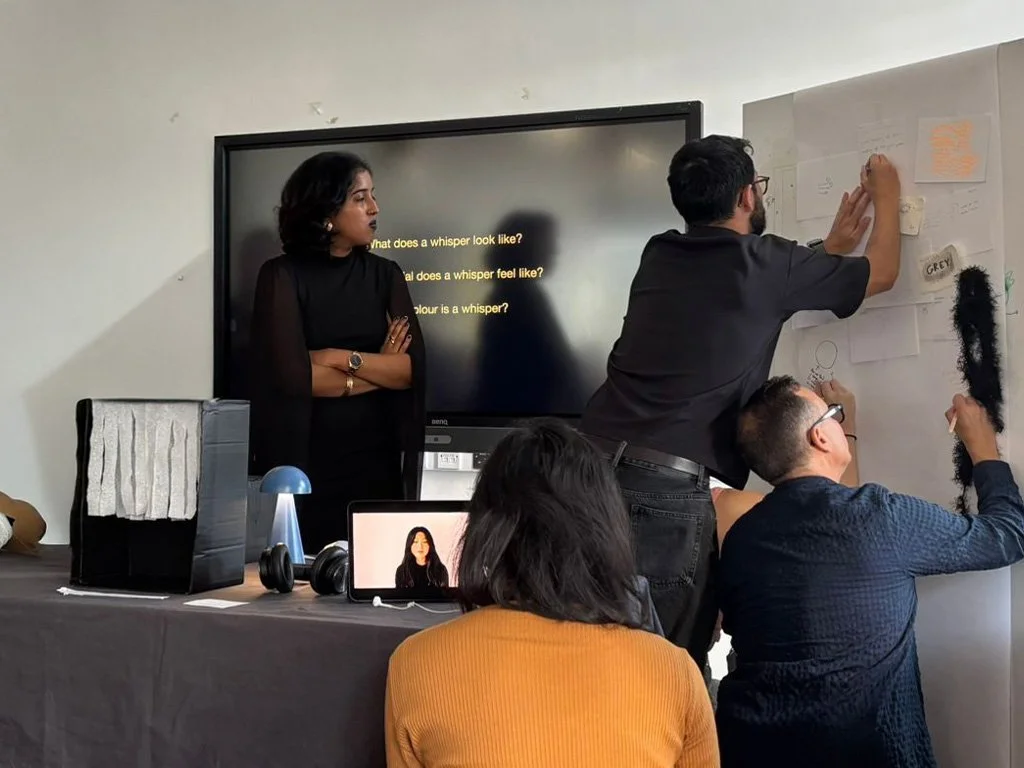
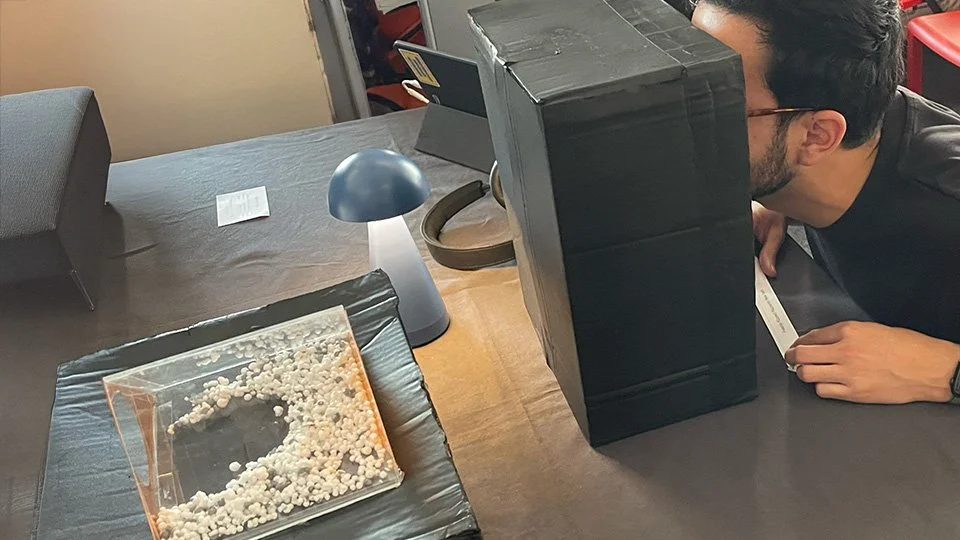
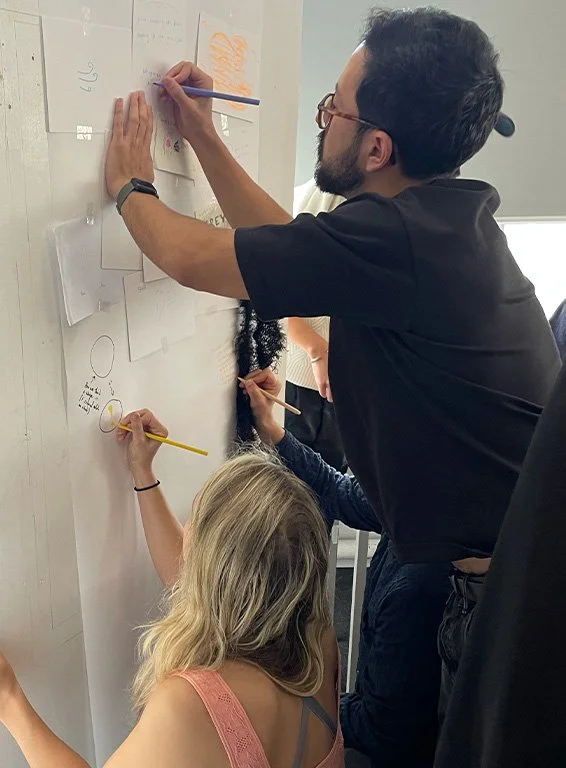
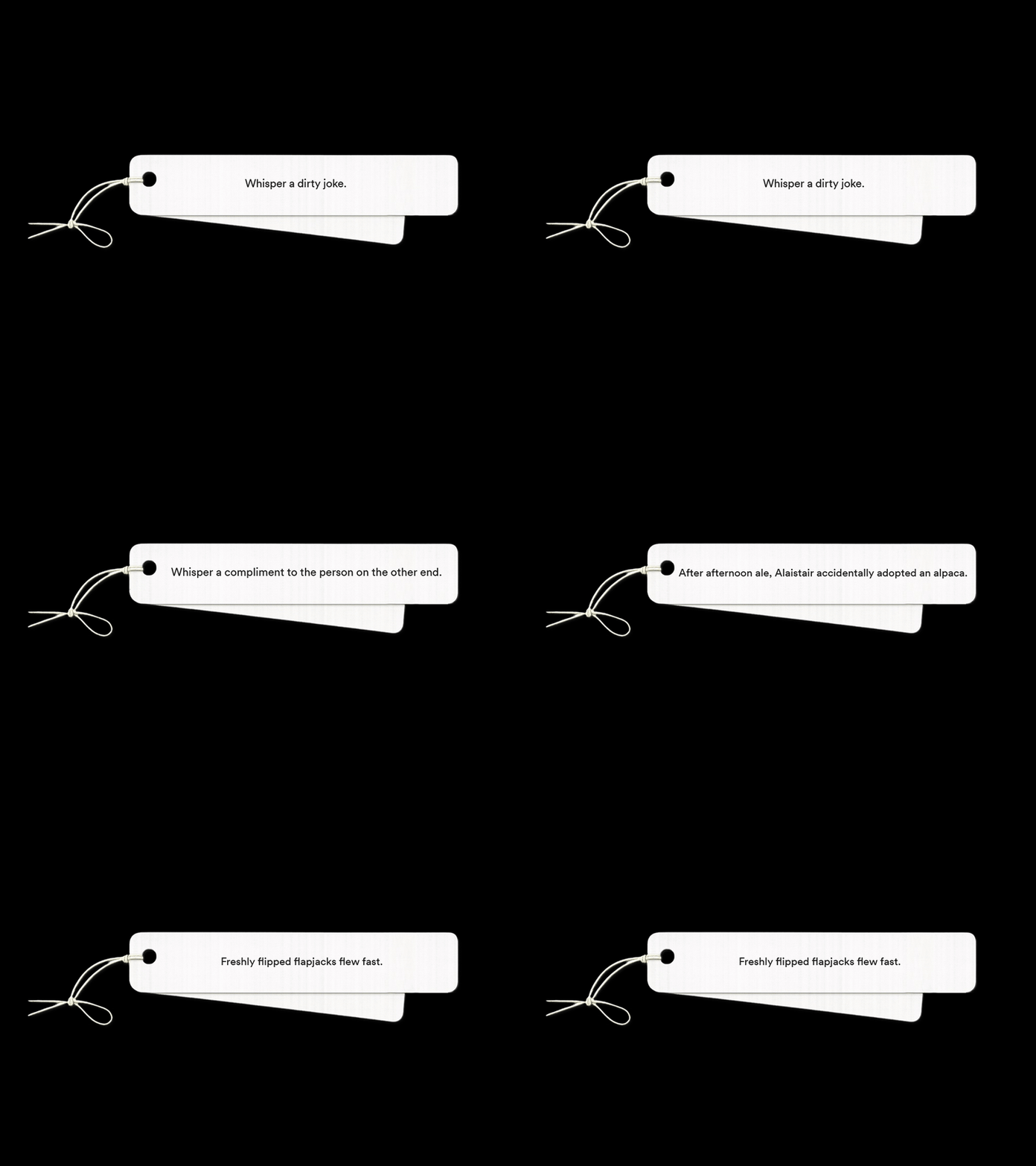
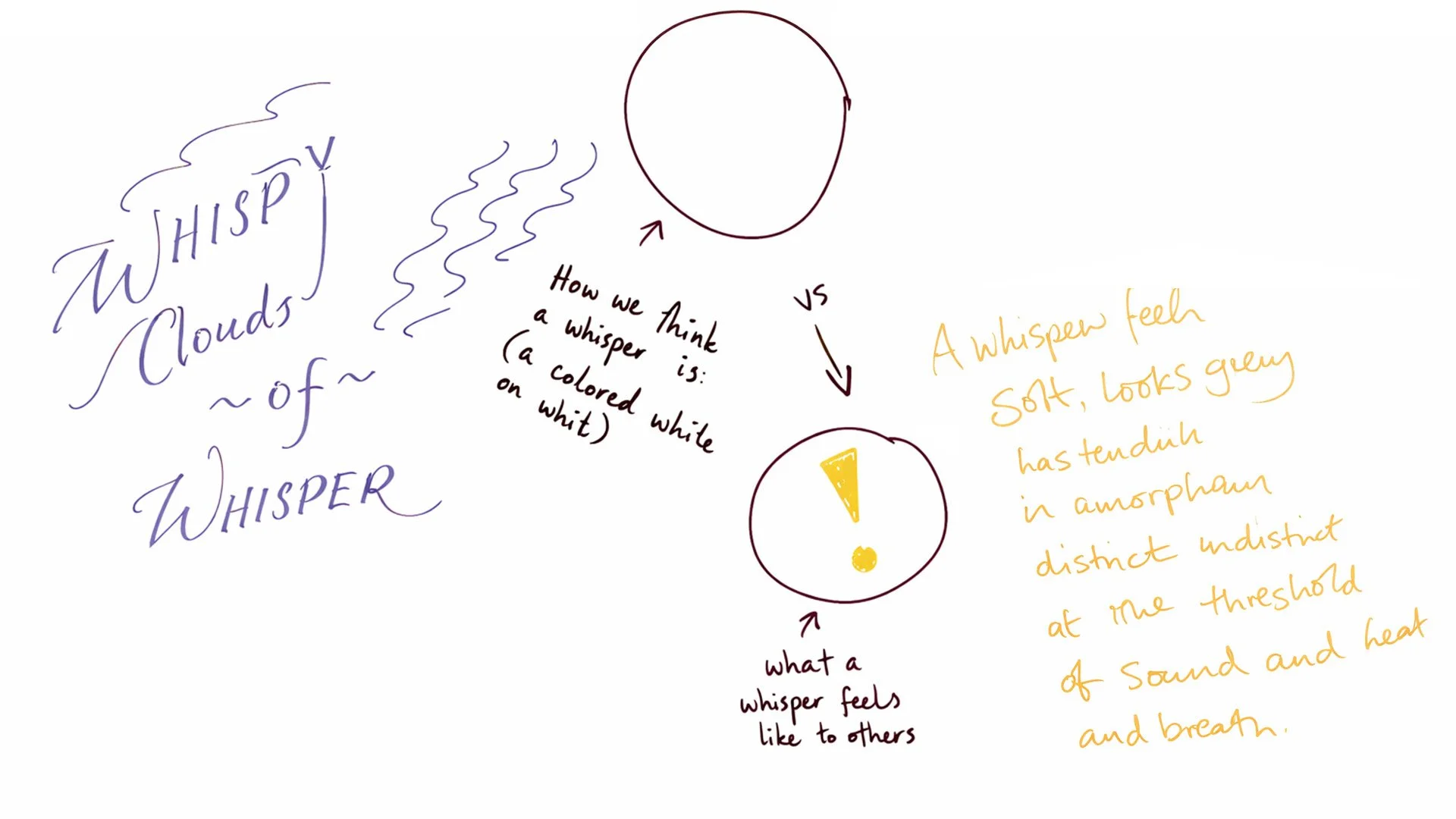
Fig. 5. Participants exploring our whisper gallery. Photography by Mary Mehtarizadeh.
Fig. 6. Participants definitions of a whisper after exploration, showing some consistency with earlier research.
Overall, the feedback noted that the room naturally quietened during the experience, making it a success. Experimenting with whispering and then being asked to describe it felt slightly convoluted, raising the question of what could have been done to tighten the experience. They appreciated the whisper prompts for each experiment, as it allowed participants to experience the gallery rather than deciding what to whisper.
If I revisited this brief, I would refine the spatial design, distributing the items across individual pedestals and opening it up to the room to enhance the gallery experience.