Nov 13 - Nov 27 · Week Nine · Studio Practices
The UX of Slowness
Revati Banerji I MA UX Design I London College of Communication
Brief: Design an encounter that values patience, presence, or pause
Team: Shivangee Mishra · Muskan Gupta · Diya Agrawal · Diya Naik · Veronika Rovniahina
A timely and much needed brief on slowness.
We began our exploration with a quick mind map, before moving into real-time observation.
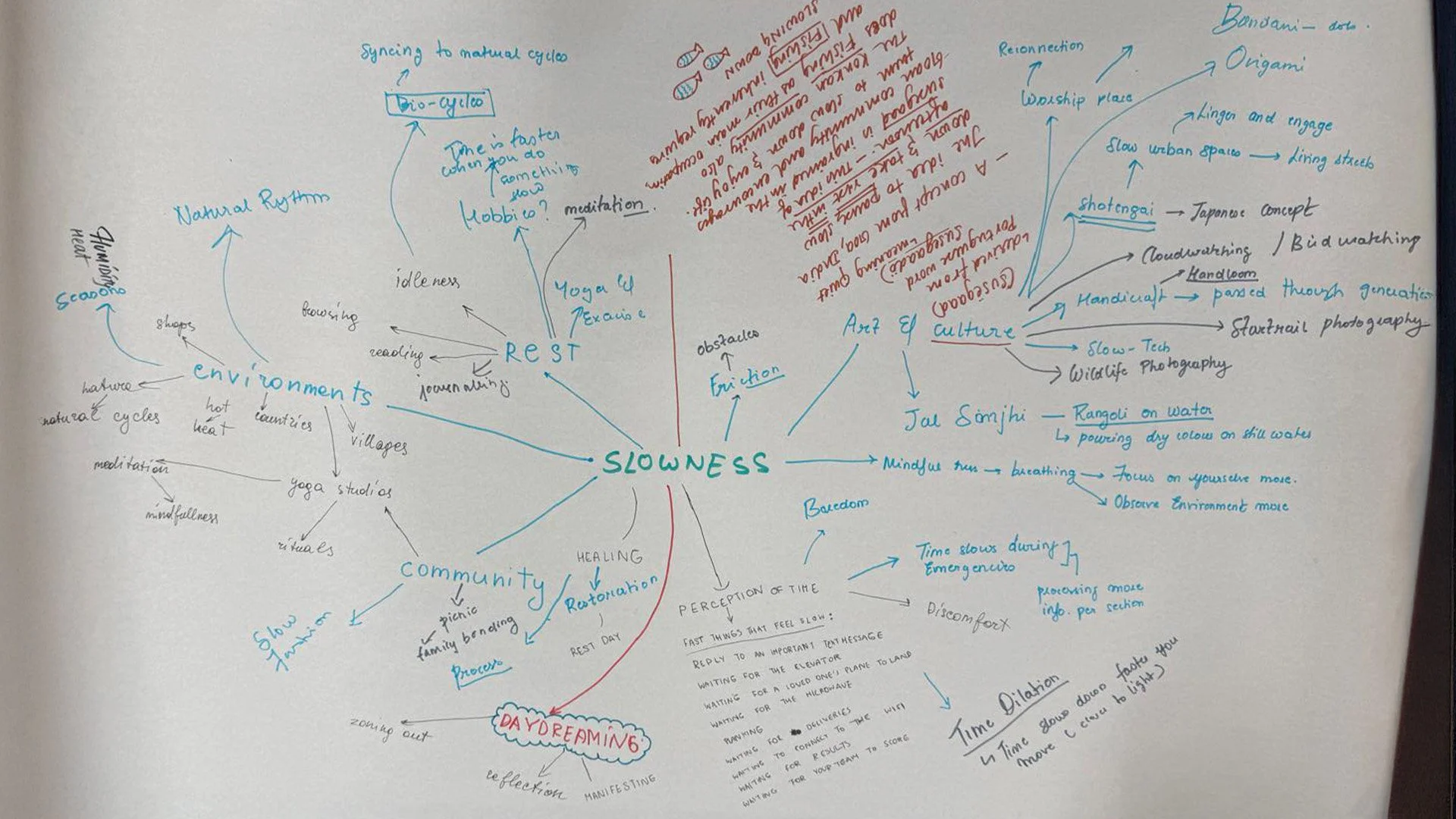
Fig. 1. Mind map by group to identify different ways in to the brief.
Behavioural
Mapping
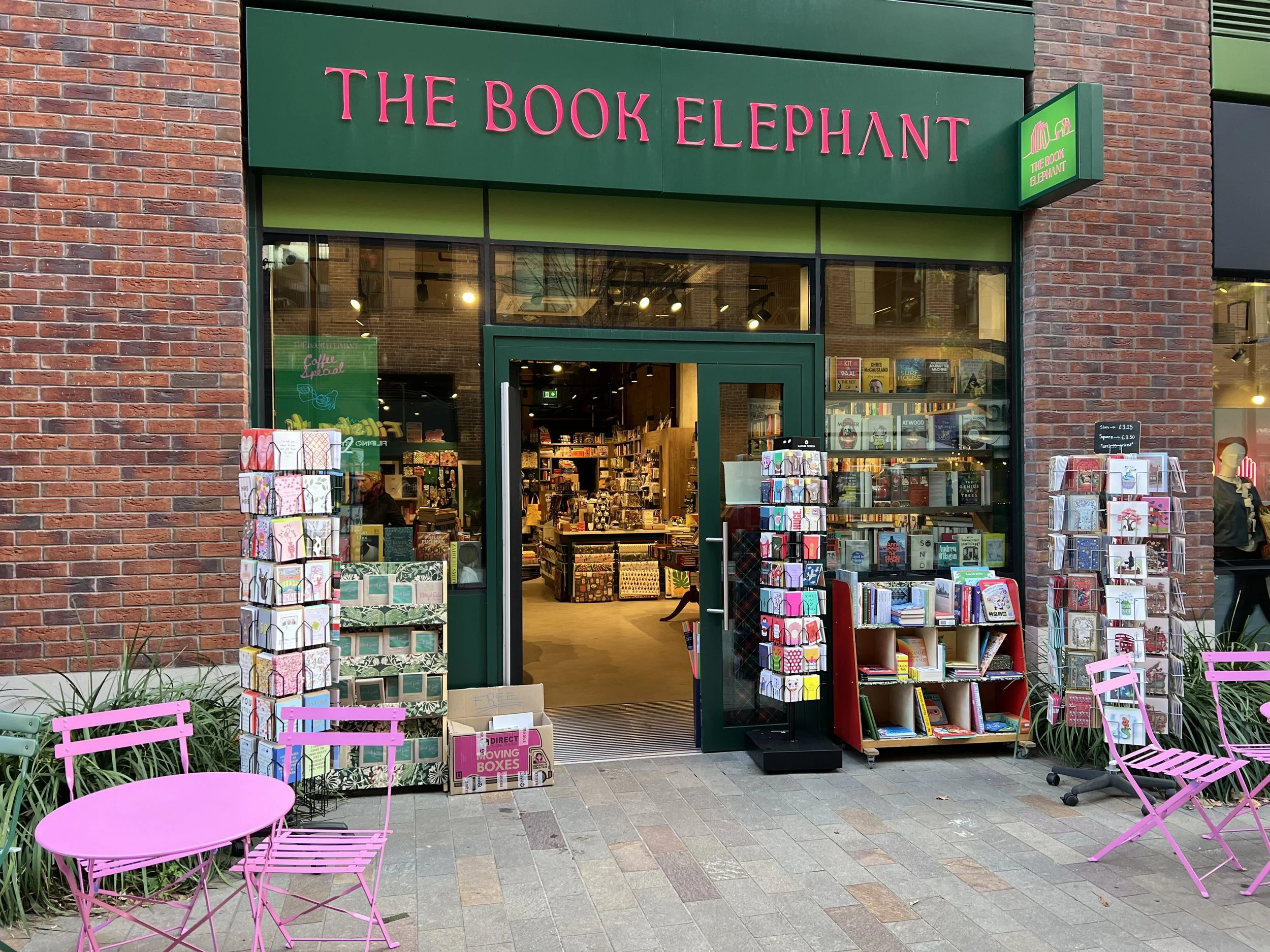
We assumed that a bookstore would naturally operate at a slower pace, so we headed to The Book & Elephant to test this theory. Using behavioural mapping, we observed that most people who entered during this time arrived with no clear agenda, browsing different sections before dipping out, with many spending more time in the gift section.
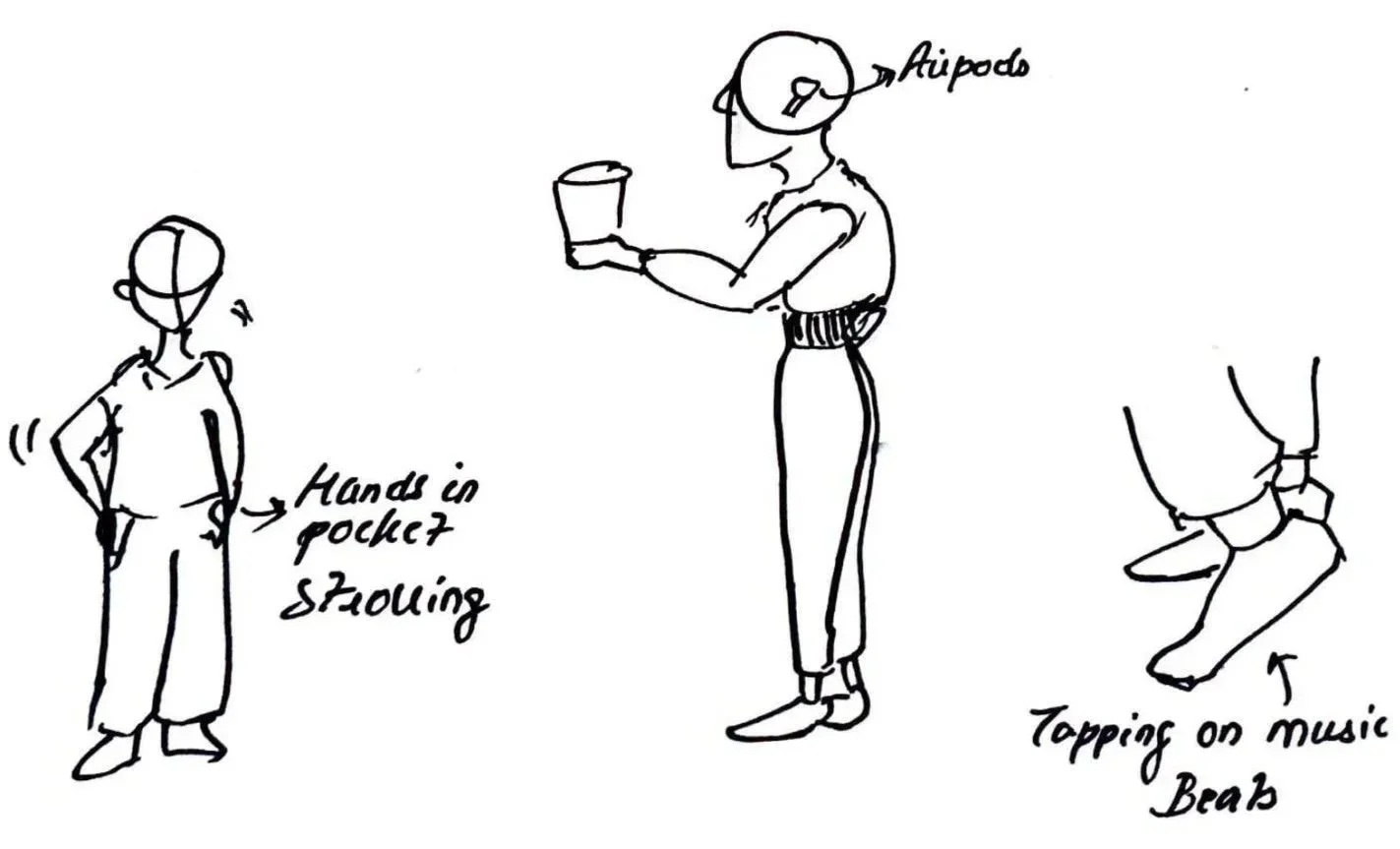
One moment stood out. A woman who bought nothing spent nearly an hour in the bookstore. Airpods plugged in, coffee in hand, she drifted slowly through the store. Browsing cookbooks like Simmer and One Pot: 100 Simple Recipes to Cook Together, to wine guides such as Little Book of Wine, and eventually to The Book of Practical Witchcraft. There was no clear urgency or logic to the books she picked up and then she left without buying anything.
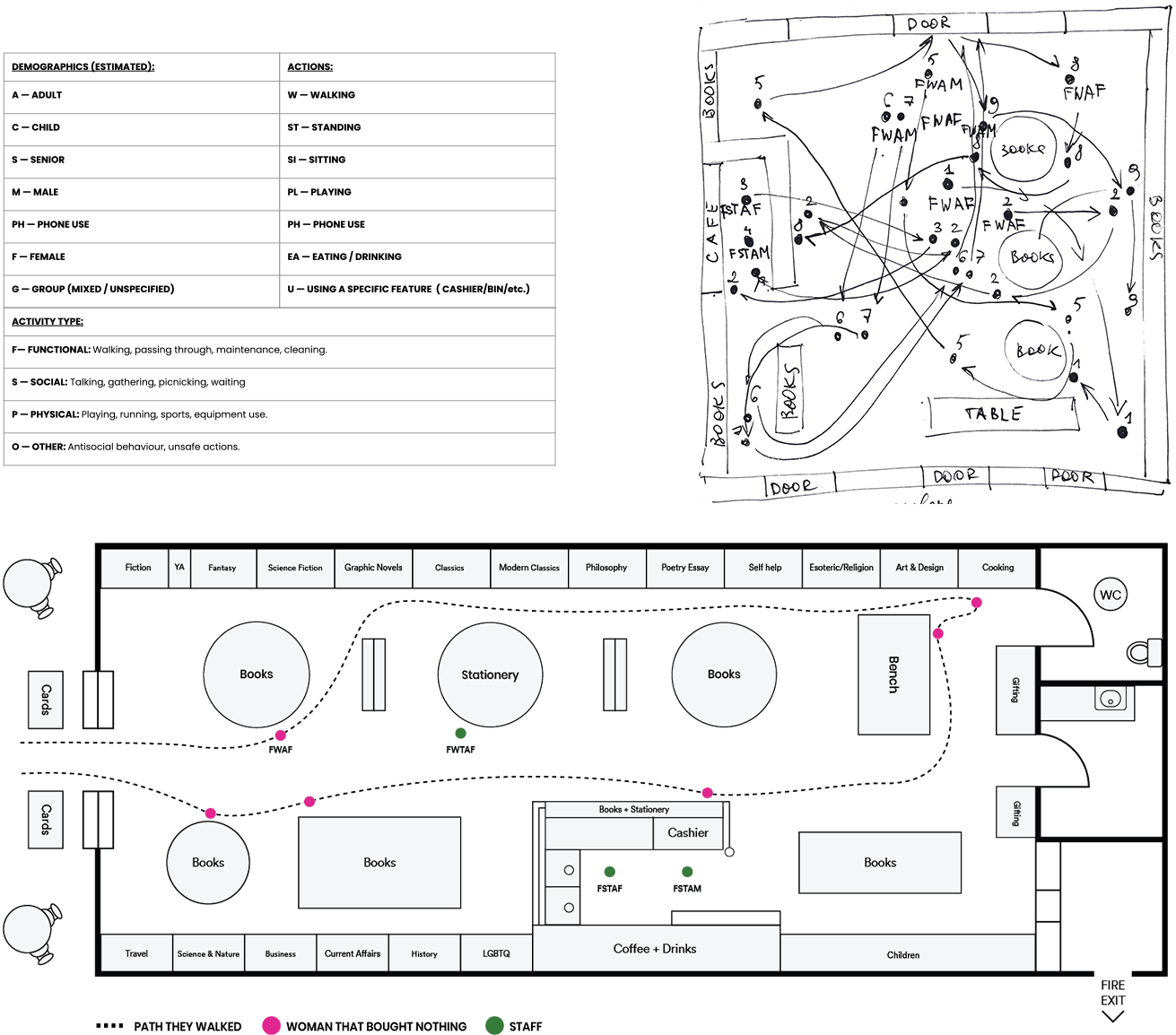
Fig. 3. Behavioural map of customers by Veronika Rovniahina; customer-focused sketch by Muskaan Gupta; digital illustration by author.
The team split up and continued research at Hyde Park and Peckham Library. Hyde Park itself was cold and windy and the pace did not feel slow. The birds were full of energy, particularly around one section of the Round Pond that we observed. It felt chaotic rather than calming.
Despite this, people lingered. Some sat aimlessly, others walked and chatted and groups gathered to watch the birds. We also noticed a pair seated beside us on a bench, engaged in conversation, unbothered by the birds.
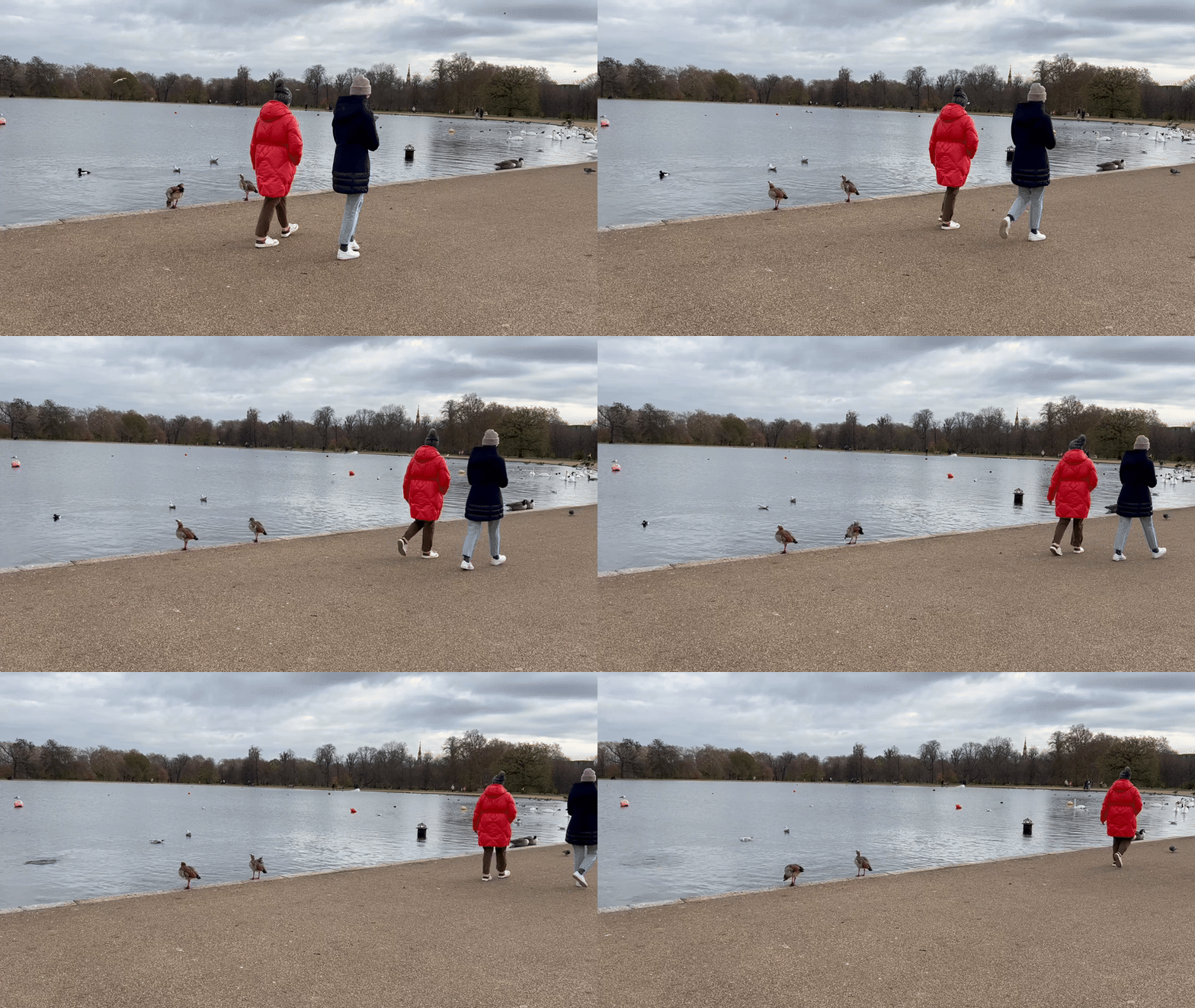
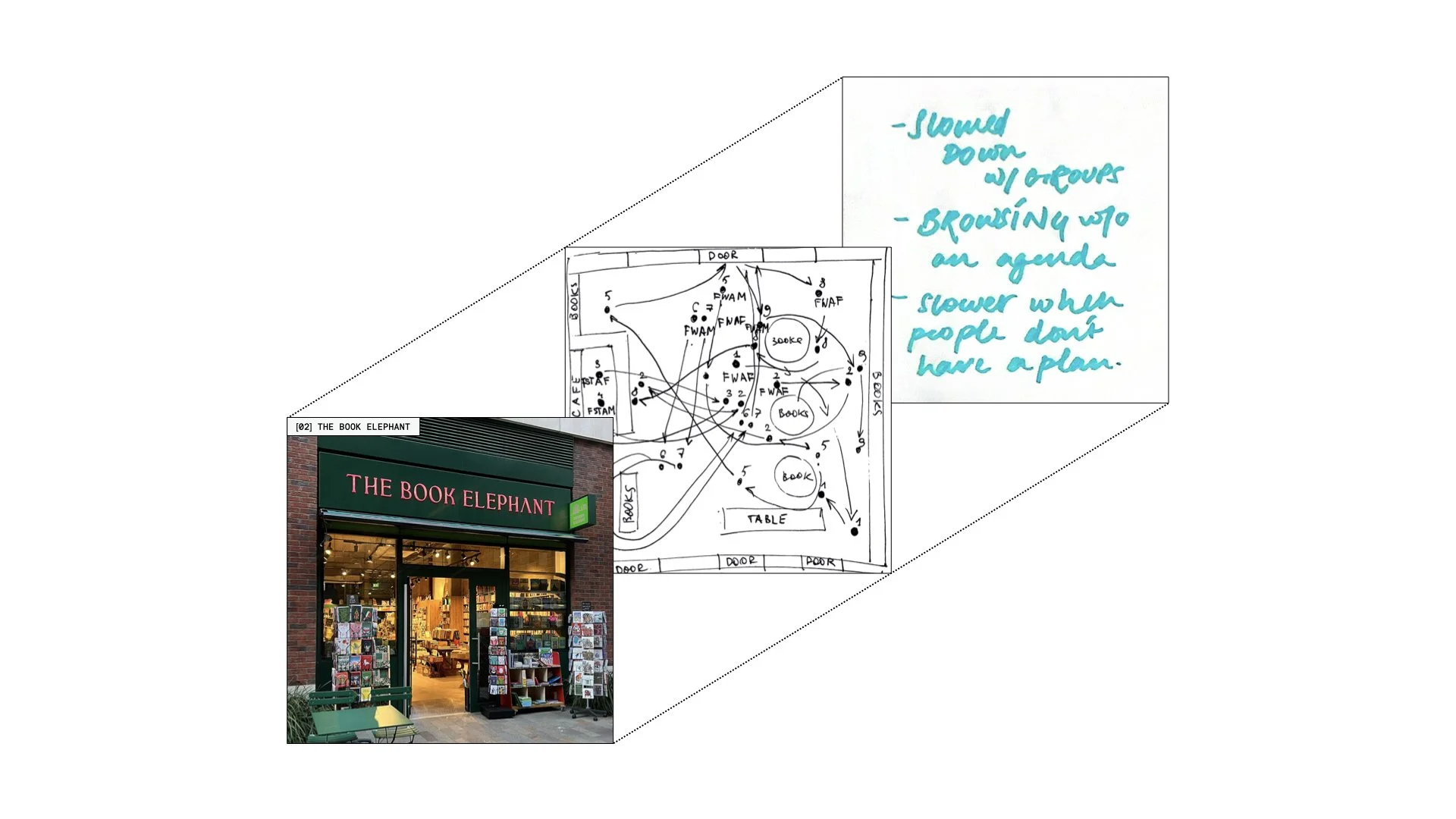
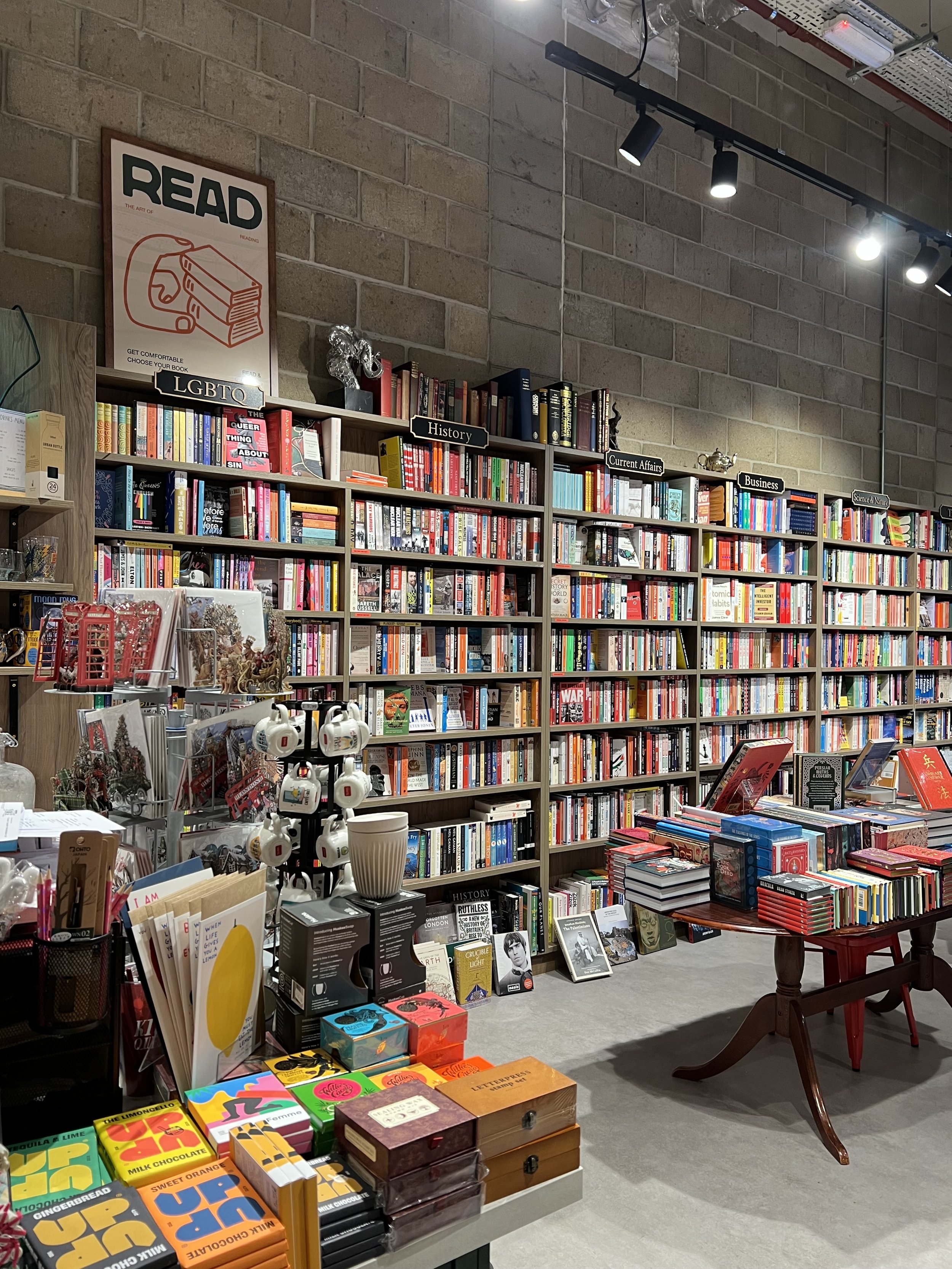
Fig. 2. Visited the Book & Elephant for behavioural mapping. Photography by author.
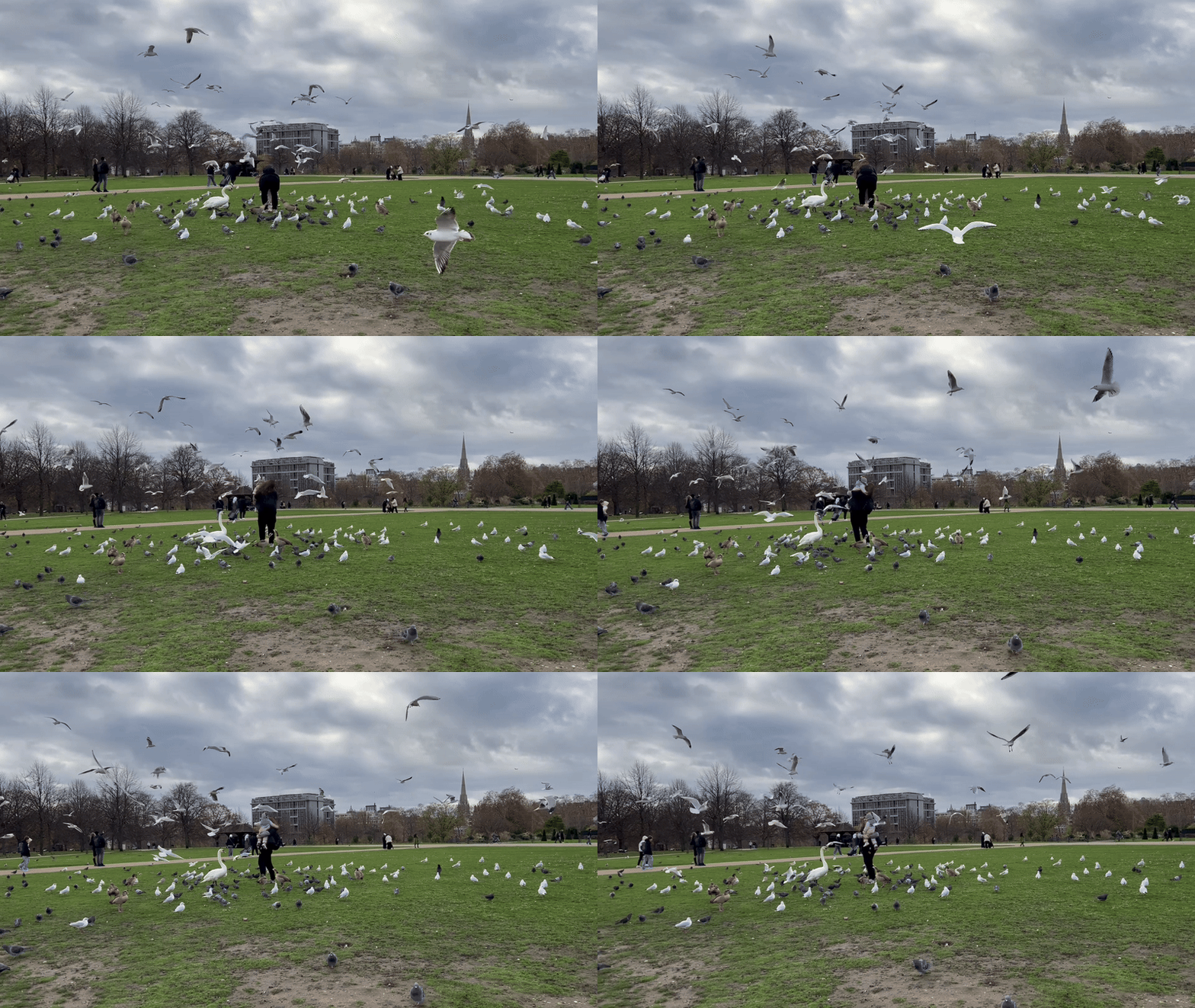
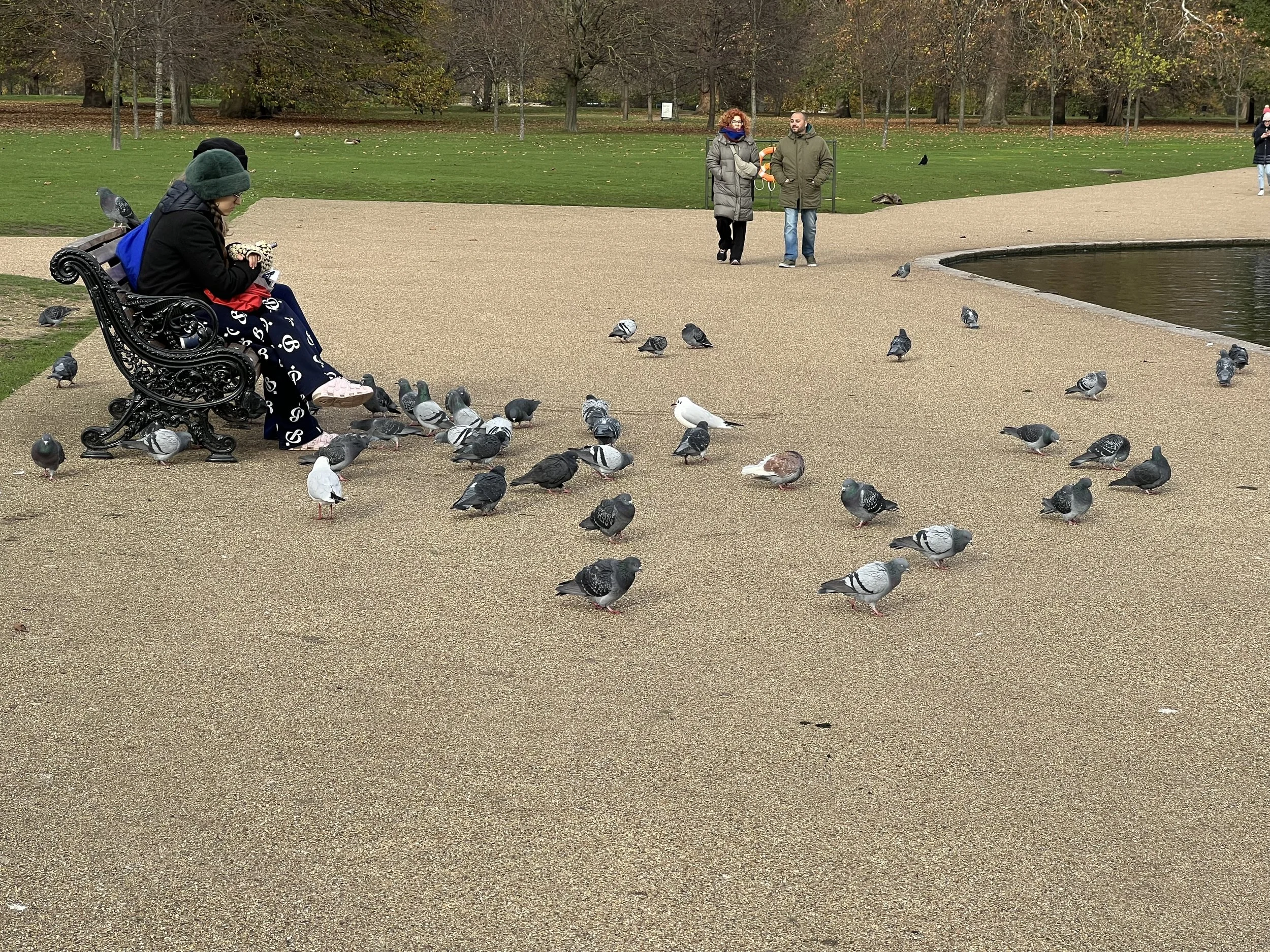
Fig. 4. Hyde park photography by author.
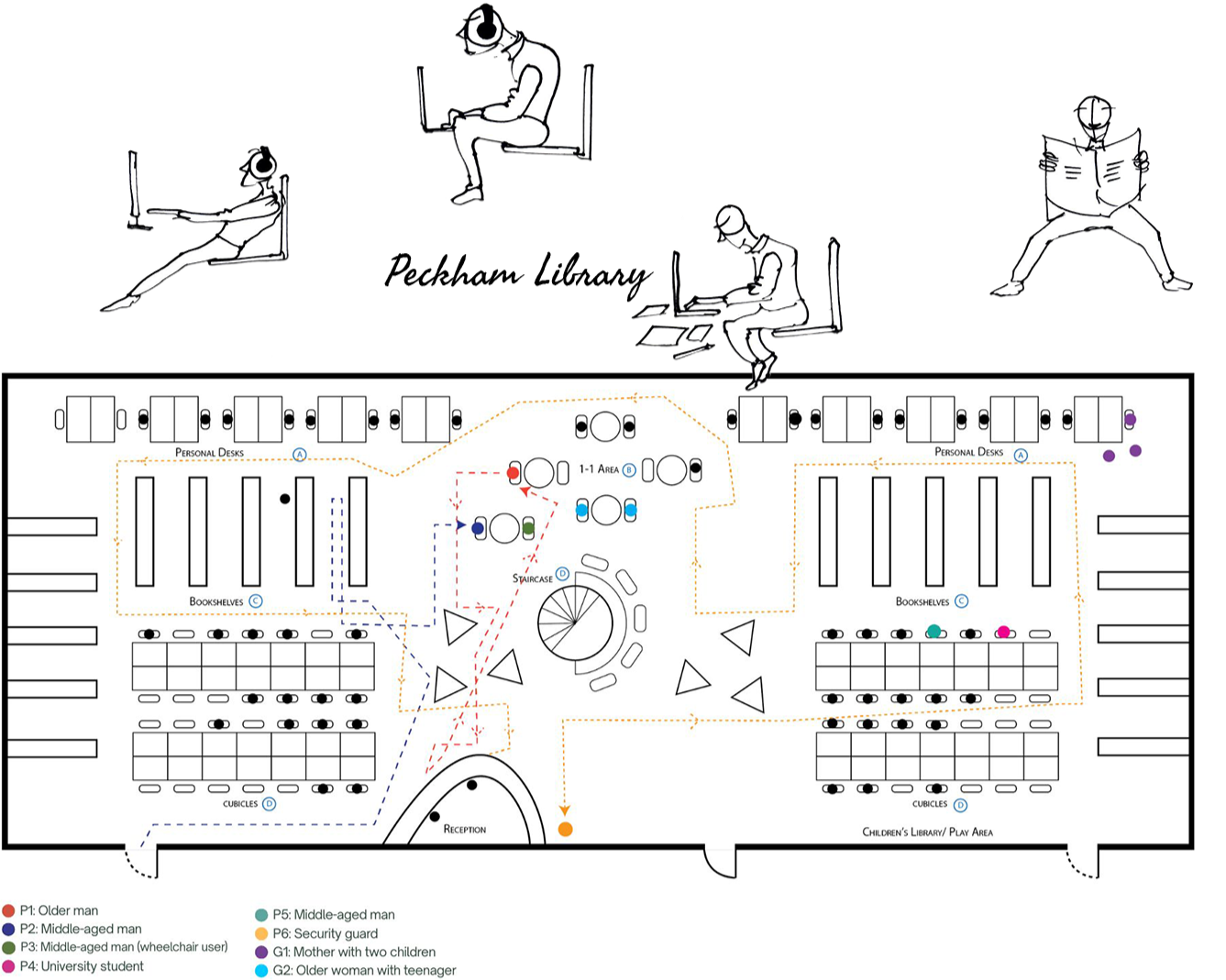
Fig. 5. Peckham library behavioural map by Muskaan Gupta.
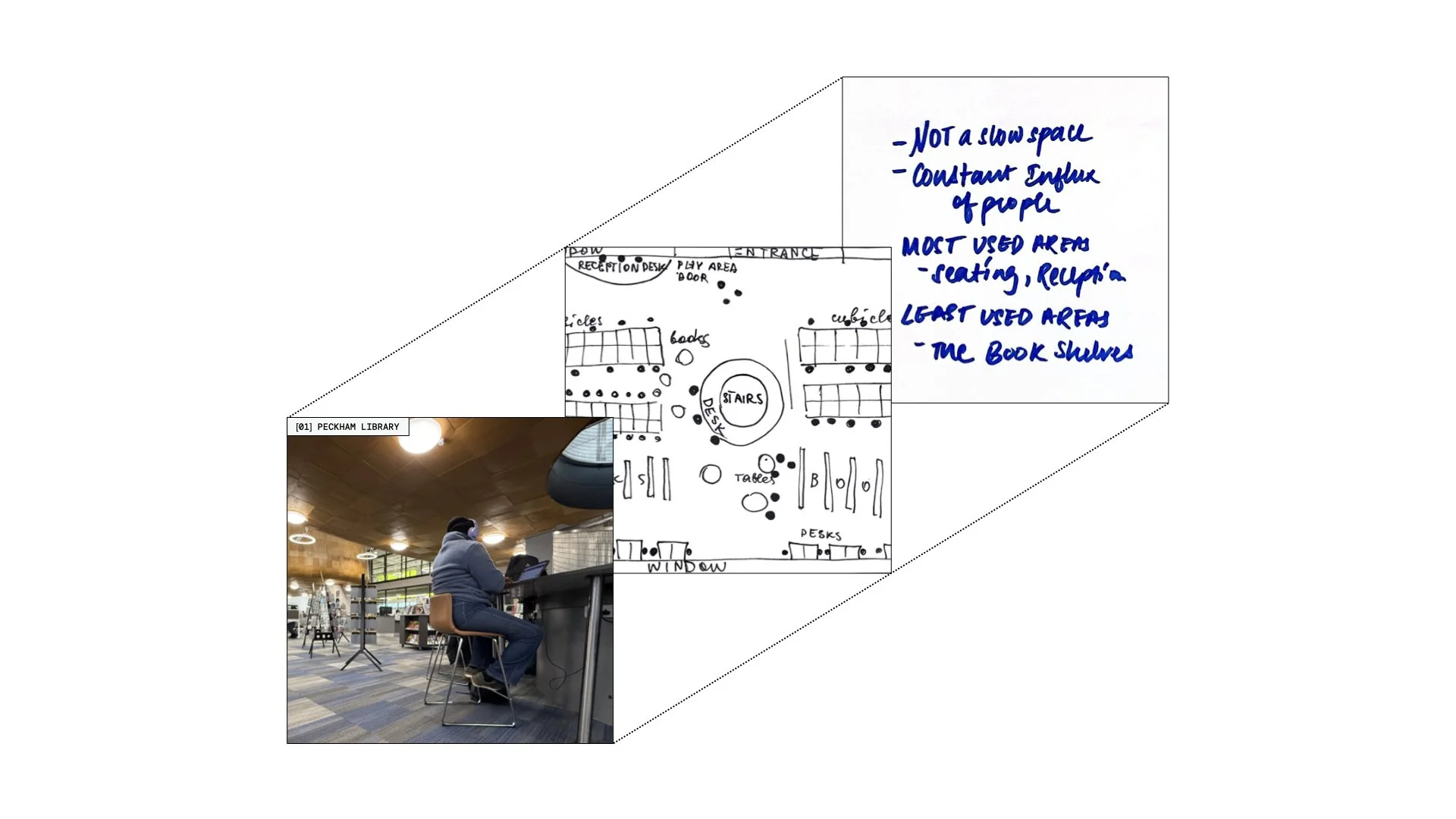
Fig. 6. The Peckham library carried a energetic atmosphere, humming with collective concentration compared to the Book & Elephant bookstore.
Teammate Shivangee introduced some of us to Goa’s concept of susegad, a way of life centred on peaceful contentment.
Our discussions turned to cultural ideas of slow living and research into how ways of living are shaped by climate and other factors.
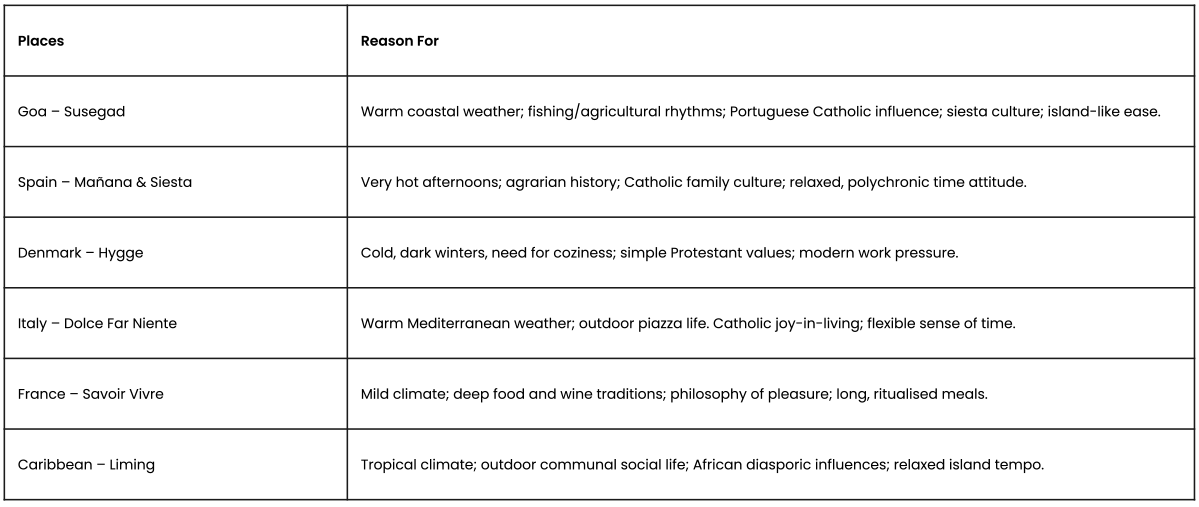
Fig. 7. Cultural concepts related to slowing down.
However, Bell hooks’ Eating the Other prompted an important shift. Feedback encouraged us to be mindful when designing cultural experiences outside our own, especially given the limited time we had for research, as they can easily be flattened or stereotyped.
So, as we are living in London and surrounded by enough people to interview, we decided to instead explore what slows down a fast-paced city like London and what creates moments of pause.
References:
hooks, b. (1992) ‘Eating the other: Desire and resistance’. In: hooks, b. Black looks: Race and representation.
Boston, MA: South End Press, pp. 21–39.