Nov 13 - Nov 27 · Week Ten · Studio Practices
The UX of Slowness
Revati Banerji I MA UX Design I London College of Communication
Brief: Design an encounter that values patience, presence, or pause
Team: Shivangee Mishra · Muskan Gupta · Diya Agrawal · Diya Naik · Veronika Rovniahina
What slows down London?
That was the question we left off with last week. Alaistair’s immediate response was simple: Sundays, summer and pints. It felt like a charming place to start and we were excited to take the question out of the classroom and into the city. We spoke to Londoners directly, using a short directed storytelling exercise to understand what slowness actually feels like here and what triggers it.
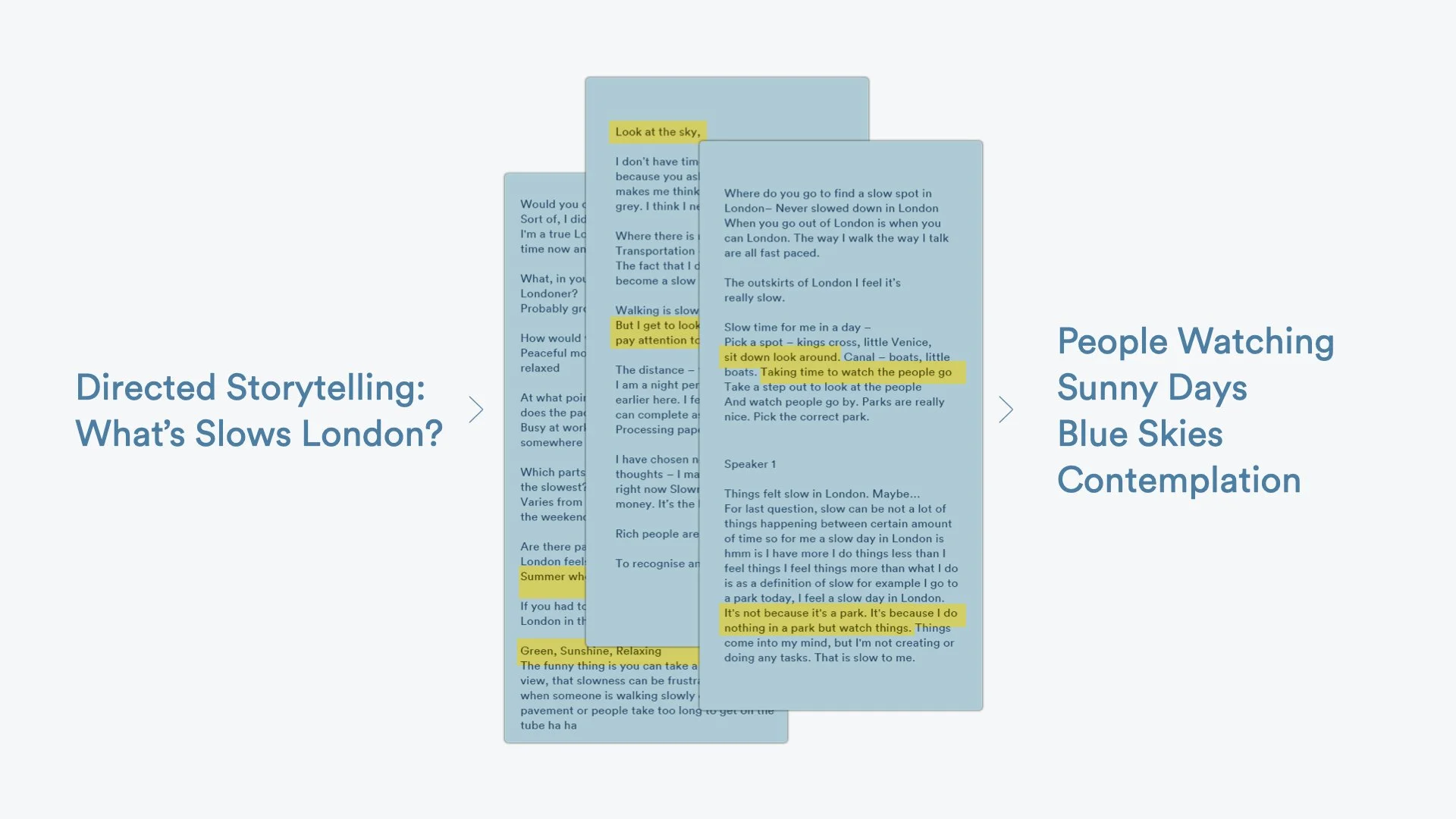
Fig. 1. We conducted a total of eight direct storytelling interviews with Londoners.
One unexpected observation was how hesitant some people were to call themselves Londoners, even after living here for over ten years. The word felt loaded, as though belonging needed to be earned rather than lived. While some spoke about frustration and impatience, moments when the city feels painfully slow, others described something much gentler. People-watching. Sunshine. Summer evenings. A nice sky. pausing to contemplate.
The sky kept coming up.
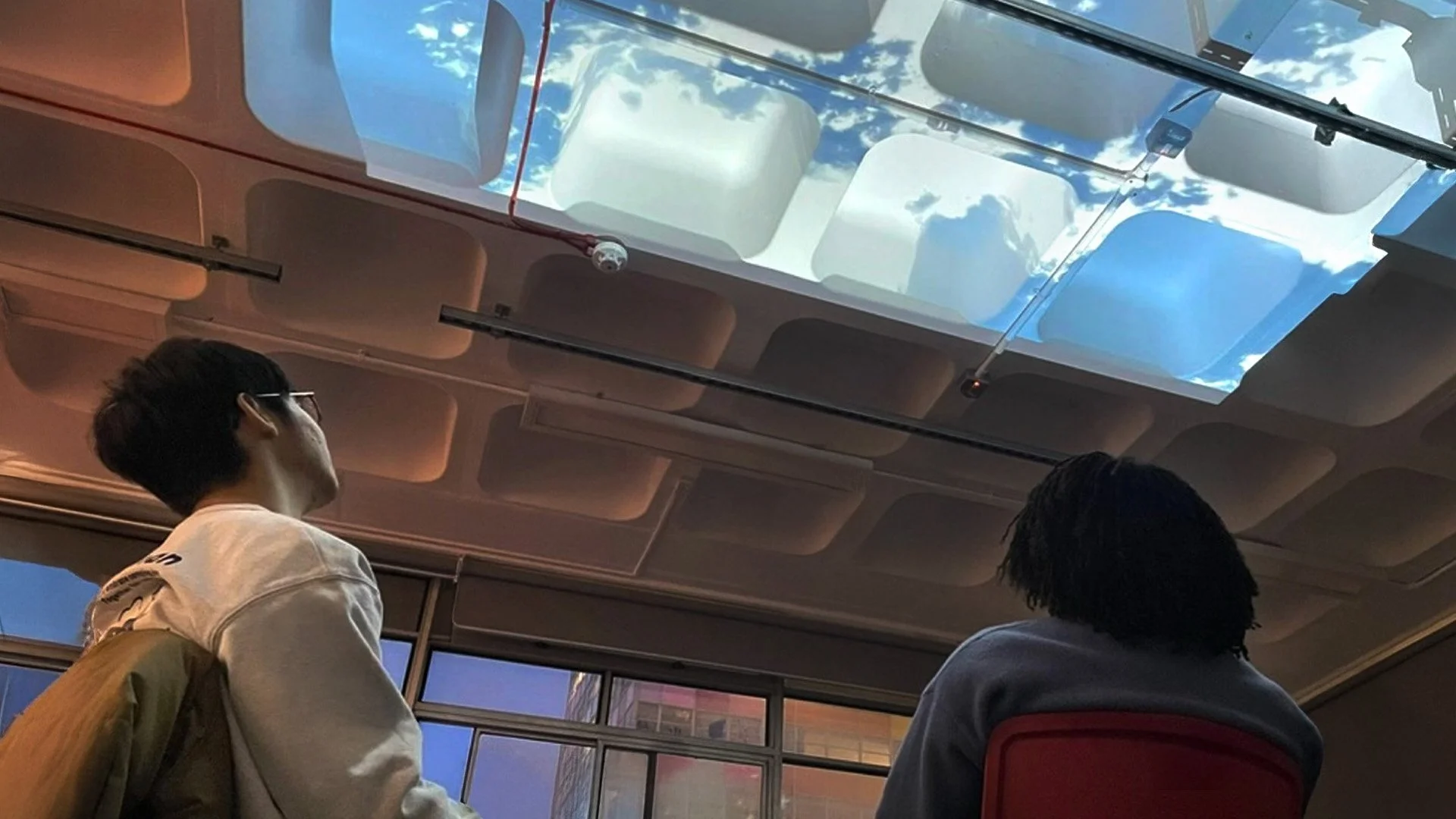
At the time, the sun was setting around 4:50 to 5pm. We were spending most of our days indoors and the contrast between the darkening classroom and a bright blue sky felt significant. We began thinking about how we could bring that sense of openness and light into our space.
We were also recommended to look at Nick Sousanis’ graphic novel Unflattening to better understand how perspective can be guided. It became a useful reference as we visualised projecting a sky onto the ceiling. Instead of presenting our findings on a screen at the front of the room, we wanted the entire experience to unfold overhead, with everyone looking up. By breaking from the usual format of staring straight ahead at a screen.
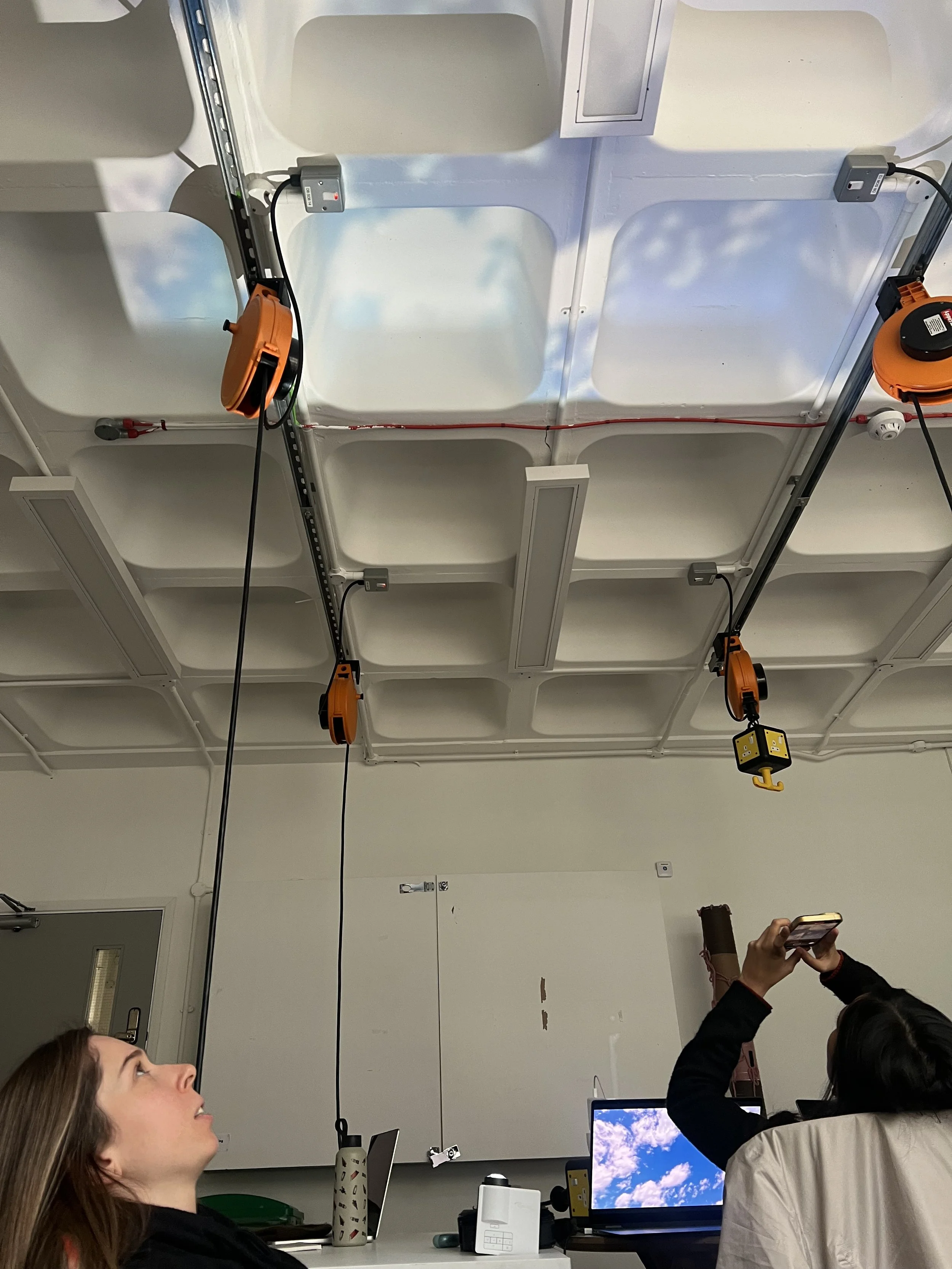
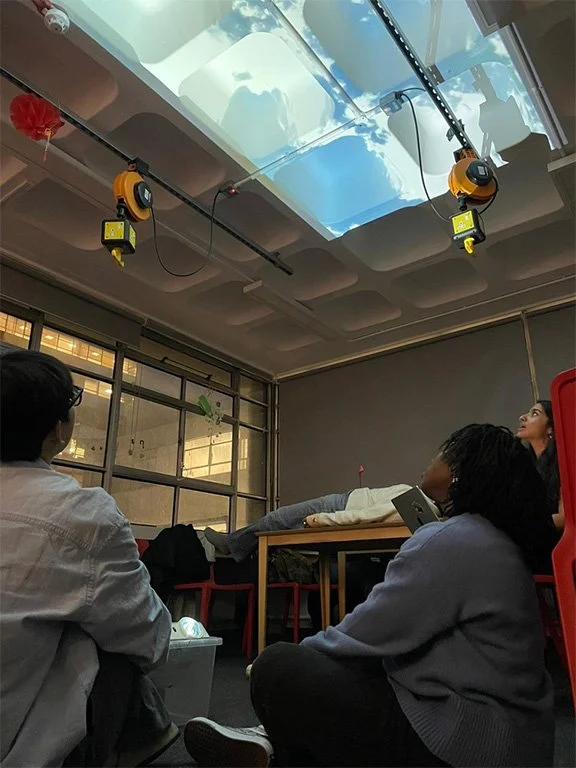
Our final outcome was a cloud meditation. Drawing on ritual design, we created a shared experience using calming music, a darkened room, a projected blue sky and a guided meditation led by Shivangee.
Participants were invited to lie down on picnic mats and imagine themselves as clouds, rising from the floor and feeling weightless.
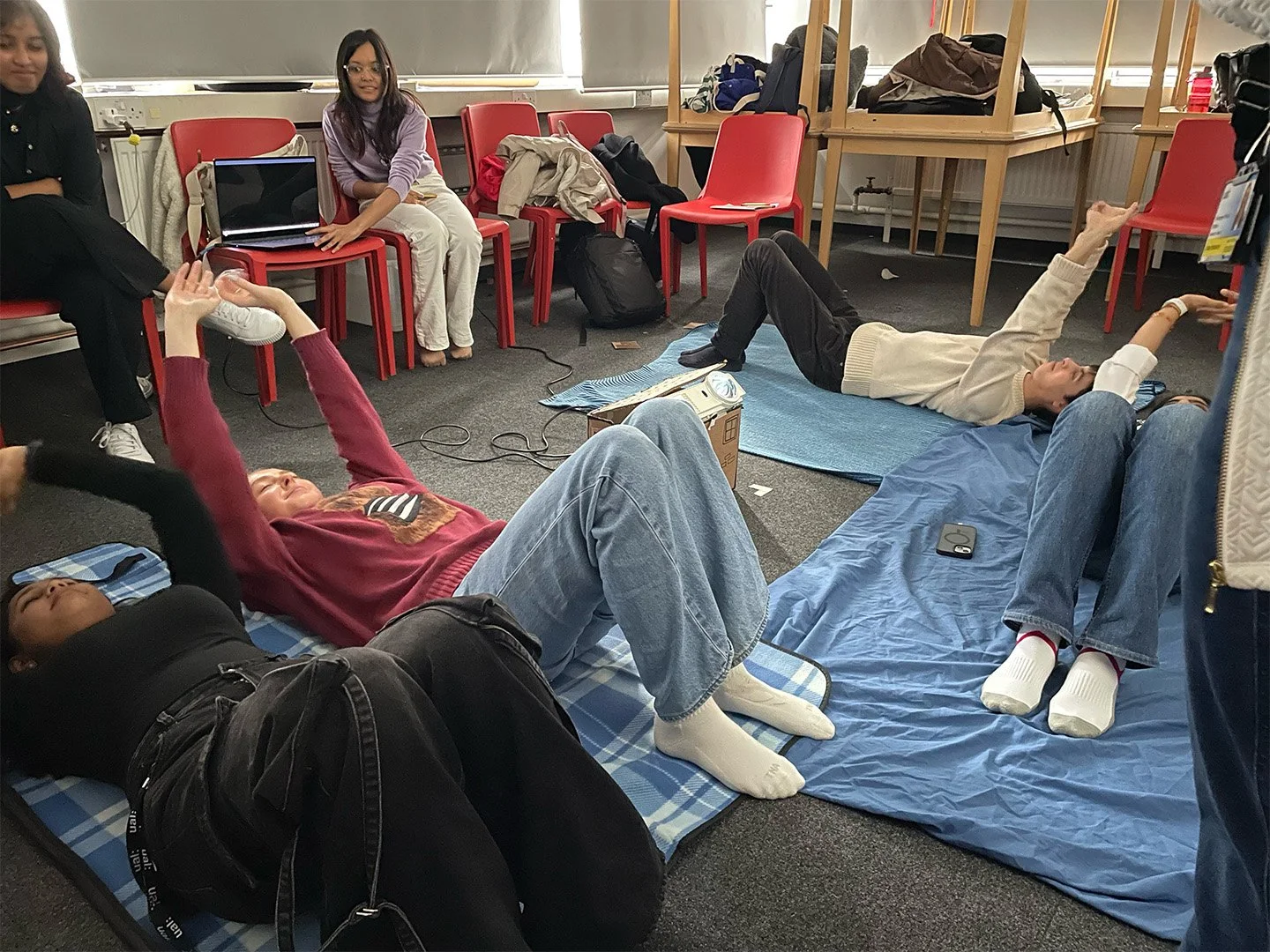
Fig. 2. Unflattening by Nick Sousanis, which challenges traditional reading perspectives.
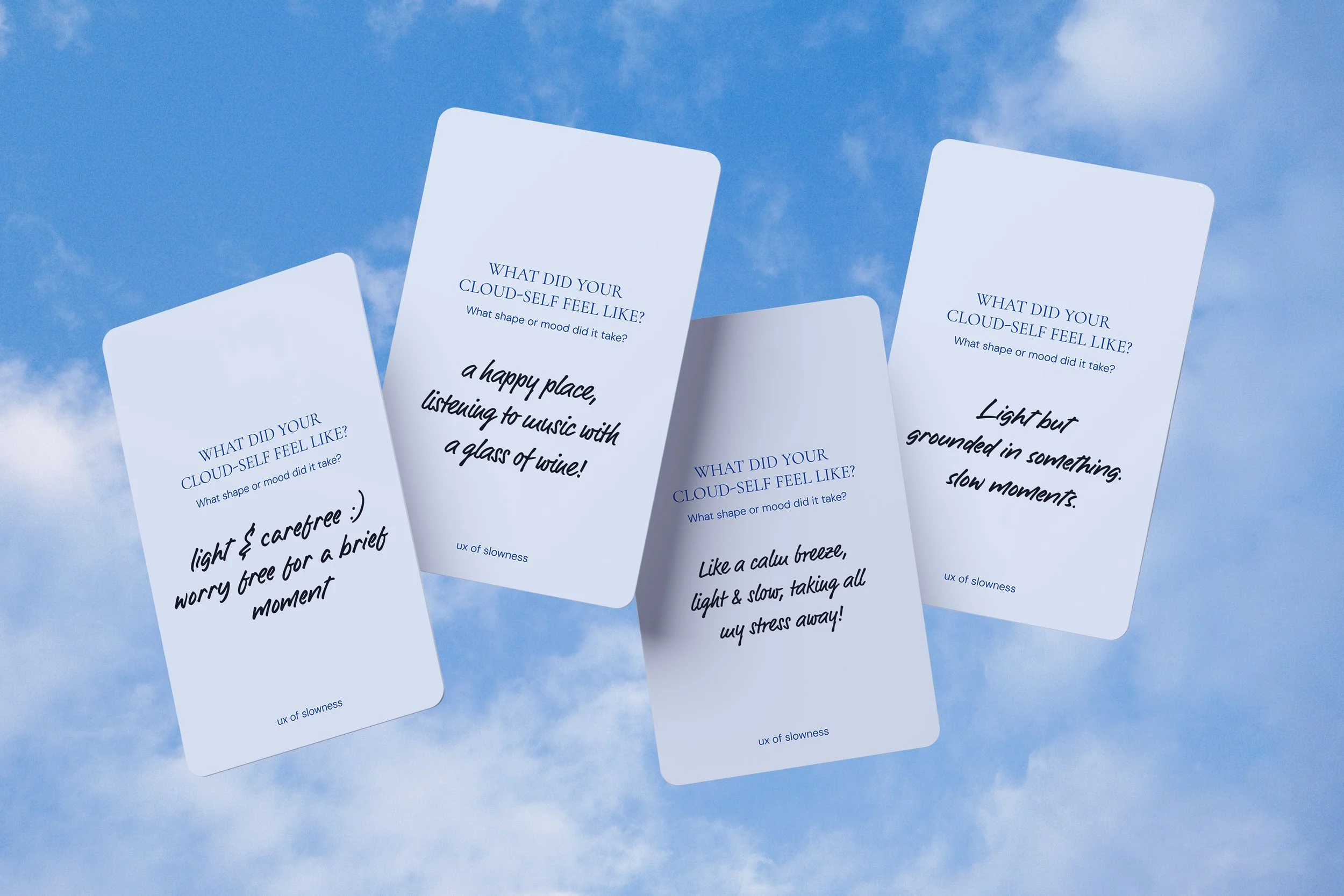

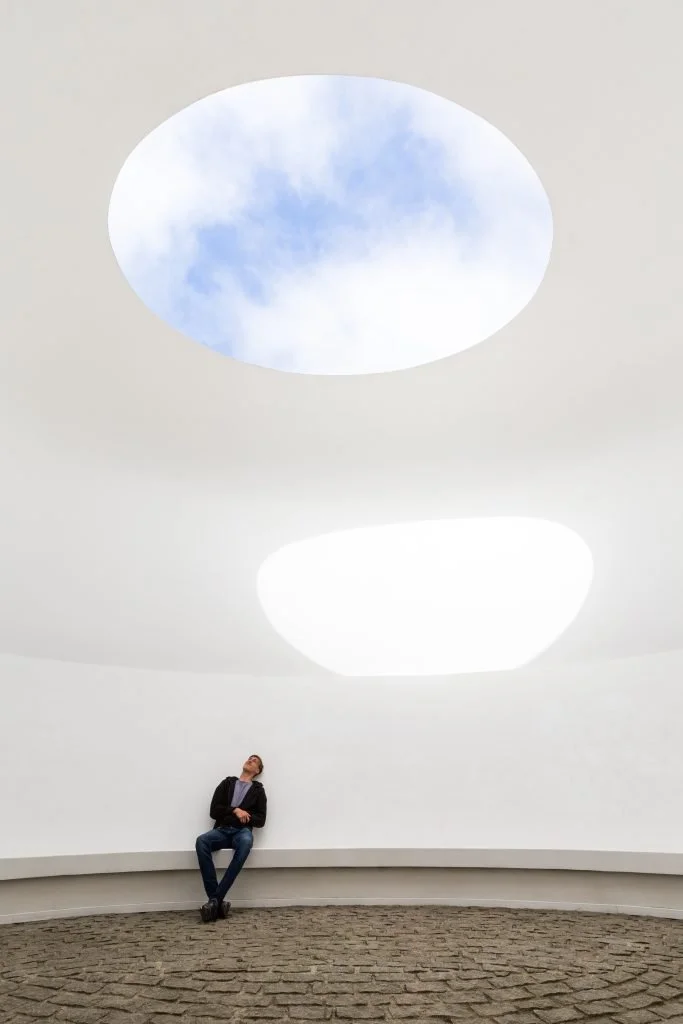
Fig. 6. James Turrell Skyscapes.
The session was received well and achieved a sense of slowness. Feedback suggested we could have pushed the idea further by including additional elements that slow London down. As we are relatively new to the city, we hesitated to introduce more personal or specific references and the sky felt like a safe, universal entry point.
Alaistair later shared the work of James Turrell, whose use of light and sky closely aligned with our approach (referenced above).
References:
Sousanis, N. (2015). Unflattening. Cambridge: Harvard University Press.
Turrell, J. (n.d.) Selected works. Available at: https://jamesturrell.com (Accessed: 15 January 2026).
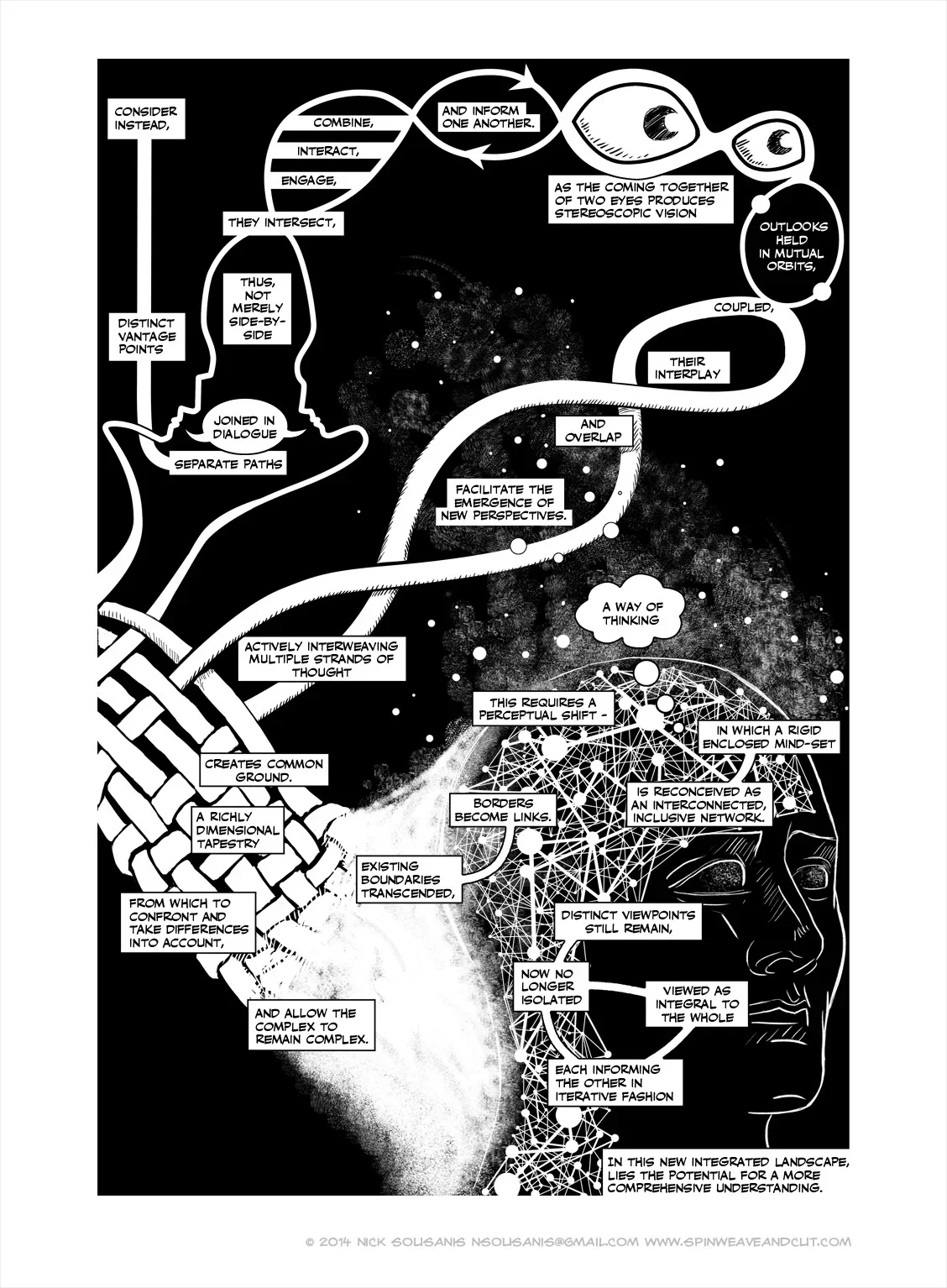
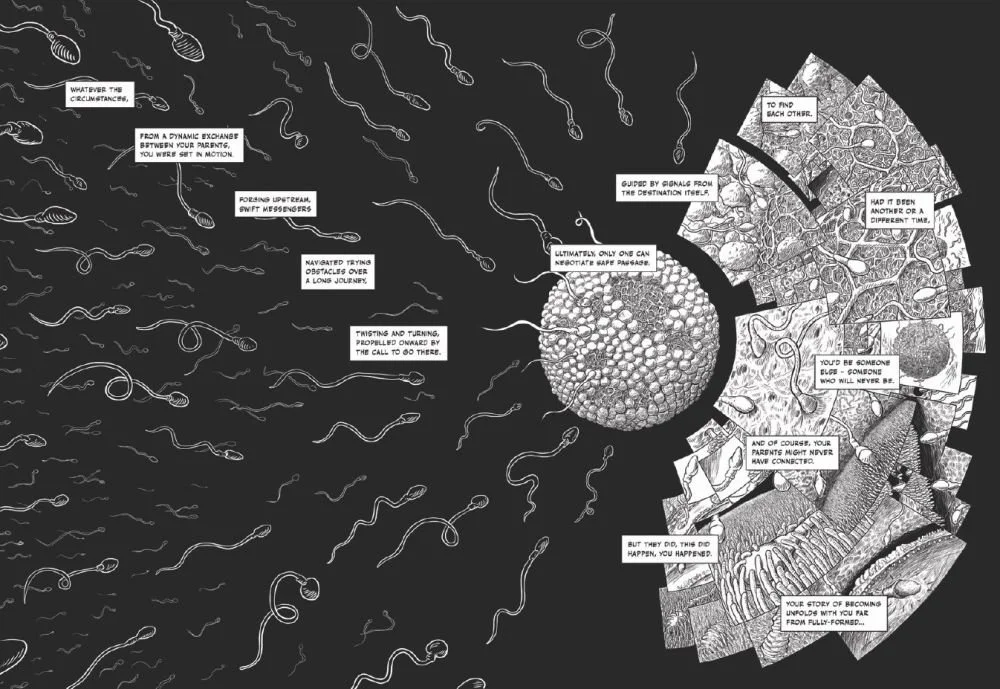
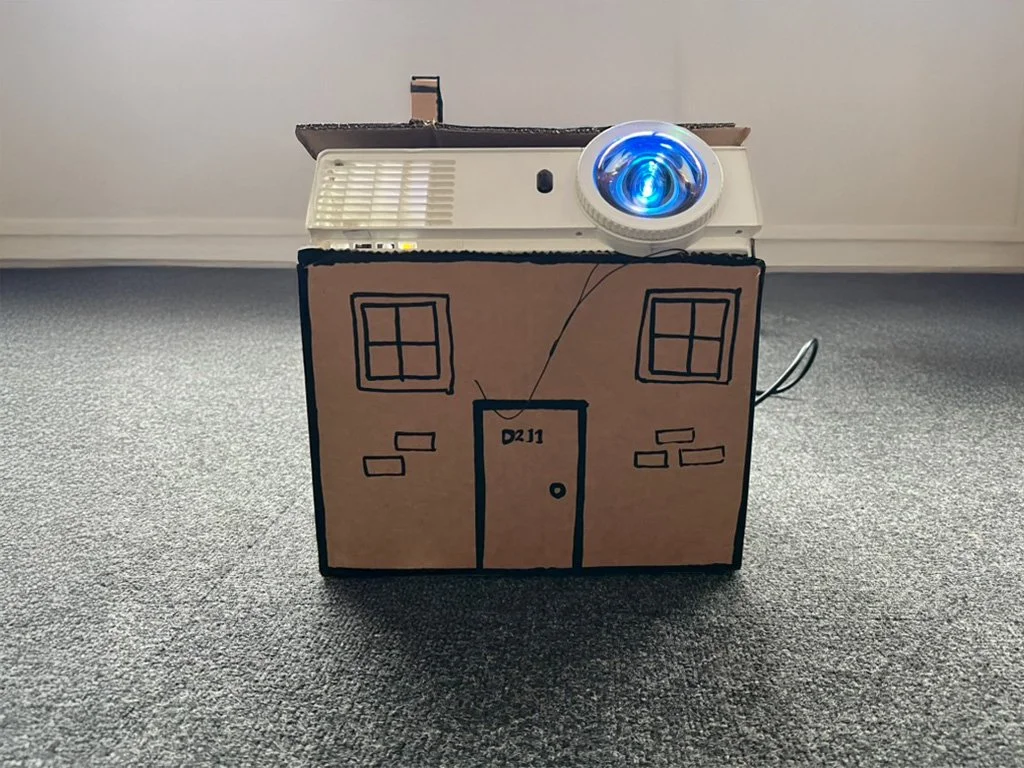
Fig. 5. Cloud meditation reflection card responses from participants.
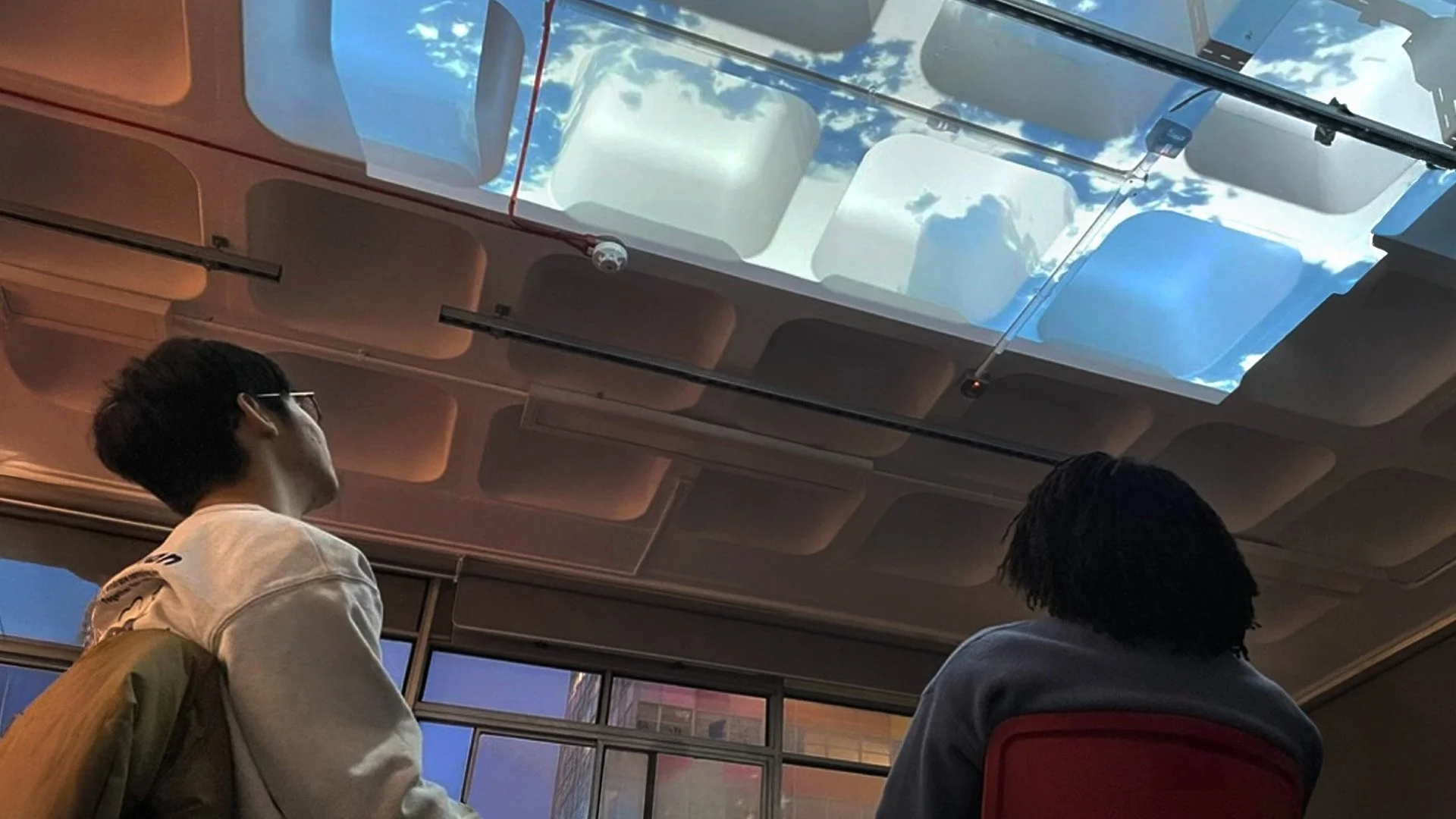
Even though we ran a quick speed-dating exercise, we relied on storyboards, which didn’t fully account for comfort. As a result, our initial idea of asking participants to lift their heads and look up at the sky didn’t work, as the chairs were not comfortable or supportive for the neck, particularly for taller participants.
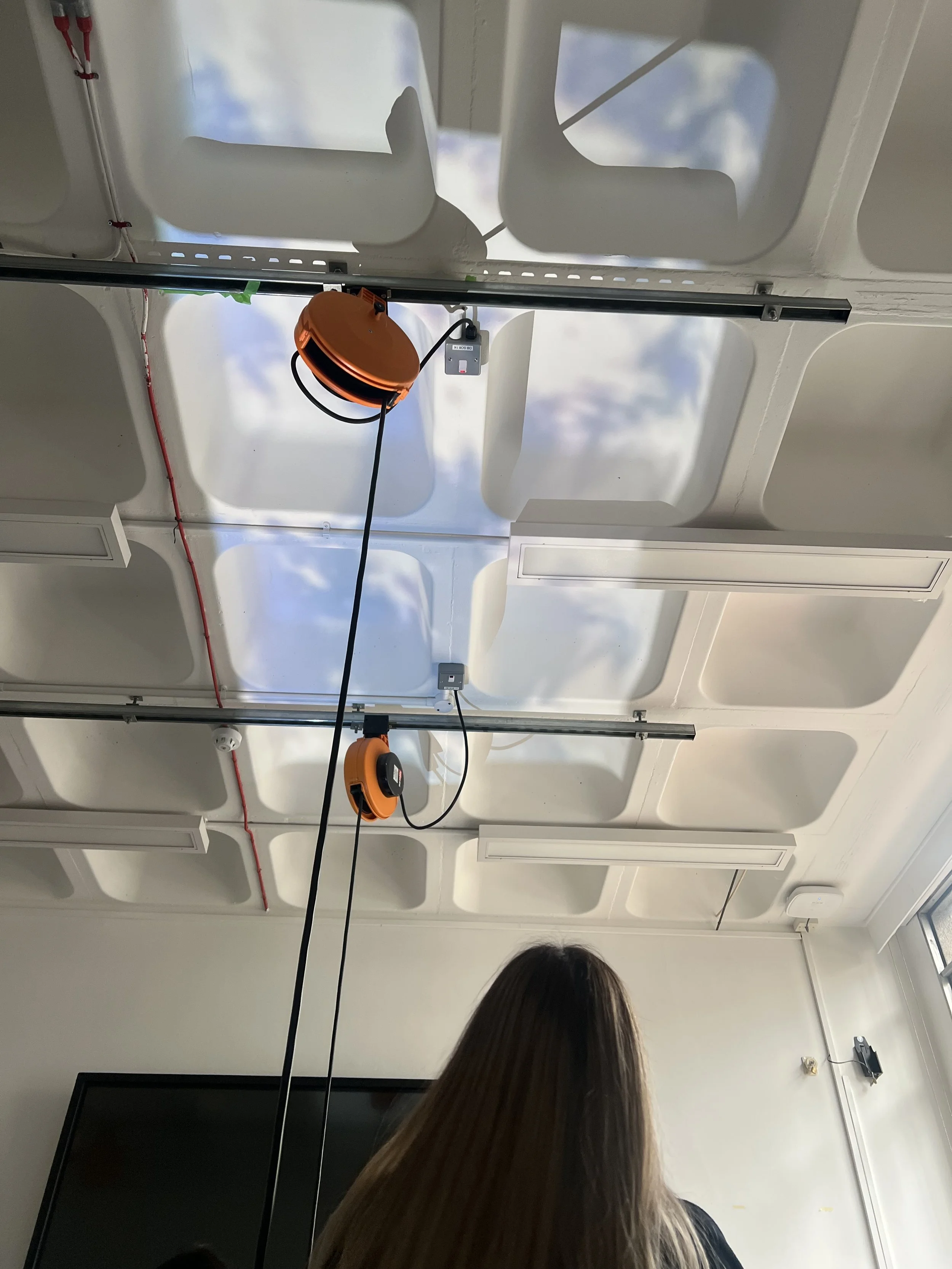
Fig. 3. Testing different positions to determine comfort. The projection worked well despite the waffle ceiling.
Outcome
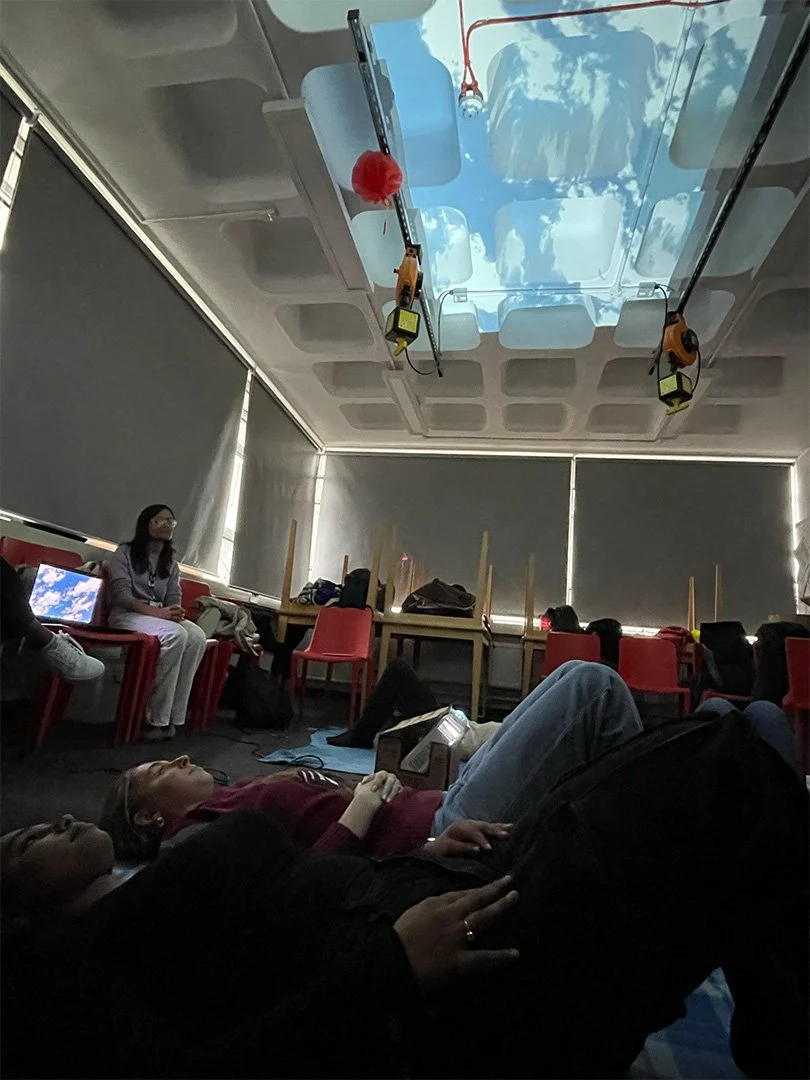
Fig. 4. Cloud meditation experience photography by Veronika Rovniahina.